



Last updated: October 19, 2026
Short answer: On October 12, 2026, Salesforce signed a definitive agreement to acquire Loops, a small AI analytics company whose agent, Scout, watches business KPIs and explains why they move. Salesforce plans to fold the Loops technology and team into Tableau. The deal is expected to close in early November 2026, the price was not disclosed, and Salesforce has not yet said how the features will be packaged or priced. For most Tableau customers nothing changes today. The useful work now is getting your KPI definitions and data in shape so an explain-why agent has something reliable to explain.
The Salesforce Loops deal is small by Salesforce standards. Loops has fewer than 50 employees, and one unconfirmed estimate puts the price at around $30 million. Searches for it still jumped more than tenfold in the US over the past week, mostly from Tableau users and analytics leads asking the same two questions: what does Loops actually do, and will it change the way we use Tableau?
This guide covers what is confirmed about the Salesforce Loops acquisition, what is still unknown, and what Salesforce and Tableau customers can sensibly do before the deal closes.
What Salesforce announced about the Loops acquisition
Salesforce announced the agreement on October 12, 2026. The key facts from the Salesforce newsroom announcement and early coverage:
- What Loops is: an AI-powered analytics platform that monitors business performance, explains why key metrics change and suggests where to improve, using machine learning models.
- How it works: it has headless, agentic capabilities and can be triggered from Slack and email to watch KPIs, detect trends and anomalies, and surface what is driving a change.
- Where it goes: after the close, Salesforce plans to bring Loops technology and talent into Tableau as part of its agentic analytics strategy.
- Timing: expected to close in early November 2026, in Salesforce fiscal year 2027, subject to customary closing conditions.
- Price: not disclosed. The Israeli business daily Calcalist estimated about $30 million; neither company has confirmed it (BERI).
Mark Recher, EVP and GM of Tableau, said Loops will help teams “uncover the drivers behind business performance.” Loops CEO and co-founder Tom Laufer described a shared goal of making actionable analytics available to every organization.
What Loops does, in plain terms
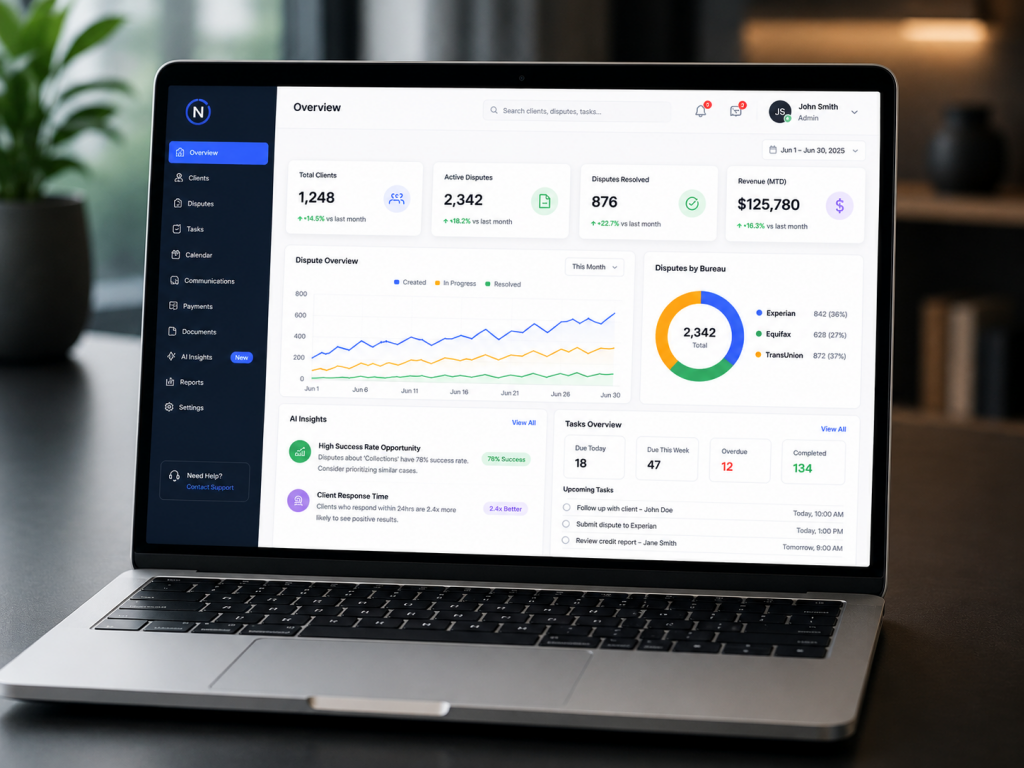
Most dashboards Tableau customers use today answer “what happened”. Revenue dropped 8% last week. Churn ticked up in the Midwest. Someone then has to dig through filters and drill-downs to find out why, and many teams never get past the first chart.
Loops tries to do that second step automatically. According to Salesforce Ben and TechTarget:
- Its agent, Scout, monitors the KPIs you choose and flags unusual movement.
- It runs root cause analysis and ranks the likely drivers by how much each one moved the metric, for example a single region, product line or channel.
- It suggests next steps and sends alerts and short insight summaries to Slack, Microsoft Teams and email.
- Setup is described as no-code, connecting directly to data warehouses and analytics tools. It never required Tableau.
The company was founded in 2020, is based in Foster City, California, and raised a $14 million seed round in 2022 led by Scale Venture Partners. Its website states SOC 2 Type 2 compliance and does not list public pricing.

How Loops compares with what Tableau already has
Tableau customers already have some of this. The question analysts are asking is how Salesforce will stop the products from overlapping.
| Capability | What it does today | What Loops adds |
|---|---|---|
| Tableau Pulse | Tracks metrics and sends insight digests by email, Slack or Teams. | Ranked root cause analysis and improvement suggestions, which Pulse does not offer today (per TechTarget). |
| Explain Data | Uses statistical models to explain outliers and correlations in data points you select. | Runs continuously on chosen KPIs instead of waiting for someone to click a mark. |
| Tableau Next and Tableau agents | Salesforce’s agentic analytics direction for Tableau, built around the Salesforce platform. | A working explain-why agent and a team that has built one, which can speed up that roadmap. |
Analyst David Menninger of ISG told TechTarget that Tableau needs to rationalize its KPI monitoring and agentic features once Loops is inside, or users will be confused about which tool to use. He also expects Loops to be wired into Tableau’s semantic model and single sign-on. Donald Farmer of TreeHive Strategy praised the way Loops ranks causes by impact, but said the real value depends on how quickly native integration arrives.
What we still do not know
Several practical questions about the Loops acquisition are open. Salesforce has not answered them publicly yet, so treat any confident claim you read elsewhere with care.
- Packaging and price. Will Scout-style analysis be a standard Tableau feature, part of the premium Tableau+ tier (where Pulse’s enhanced Q&A sits today), or a paid add-on? Salesforce did not answer this when TechTarget asked.
- Timeline. No date has been given for Loops capabilities appearing in Tableau.
- Existing Loops customers. The announcement only talks about Tableau. It does not say whether Loops stays available as a standalone product for companies that do not use Tableau.
- Data sources. Loops connects to warehouses directly today. Whether that stays true inside Tableau, or everything routes through Tableau or Data Cloud, is not yet clear.
BERI points out that three earlier small Salesforce AI data acquisitions, Waii, Spindle AI and Doti AI, no longer operate as standalone sites. That is not proof of what will happen to Loops, but it is a fair signal to plan for.
Why Salesforce is buying Loops, a small analytics startup
The Salesforce Loops deal fits a pattern. Salesforce has spent 2026 pushing agents into every product line: Agentforce in sales and service, the agentic integration layer it introduced at Dreamforce (first called AIforce and renamed SIforce on October 9, which we covered in our AIforce explainer), and agentic analytics in Tableau.
Analytics is a natural place for agents because the work is repetitive: watch numbers, notice changes, find the cause, tell the right person. Buying a team that already built that loop is faster than building it from scratch. It also gives Salesforce a sharper answer to competitors that sell AI-native analytics. TechTarget notes that startups such as Golden Analytics, founded by former Tableau chief product officer Francois Ajenstat, are pitching themselves to Tableau users who feel underserved.
There is also a trust angle. Tableau users have been wary of Salesforce’s stewardship since the 2019 acquisition. How well Loops is integrated, and how it is priced, will be read as a sign of how seriously Salesforce takes Tableau.
What the Salesforce Loops deal means for Tableau customers
For now, the Salesforce Loops deal changes very little day to day. Tableau keeps working as it does, and no new feature has a release date. The practical impact will come later, and it depends on something you control today: whether your metrics are worth explaining.
An agent that ranks the causes of a revenue dip is only as good as the revenue number it starts with. If finance, sales ops and marketing each calculate pipeline differently, the agent will produce confident explanations of the wrong figure. That is the same lesson many teams learned rolling out Agentforce: AI exposes messy data faster than people do.
Five things Tableau customers can do before Salesforce Loops capabilities reach Tableau:
- Agree on KPI definitions. Write down the formula, filters and owner for the 10 to 20 metrics leadership actually watches. Put them in Tableau as governed metrics rather than in individual workbooks.
- Fix the dimensions that explain changes. Root cause analysis splits a metric by region, product, channel, segment and rep. If those fields are blank, inconsistent or mapped differently across systems, the explanations will be noise.
- Check where the data comes from. Many Tableau dashboards sit on CRM and ERP data. Sync errors between Salesforce and an ERP show up as “anomalies” that are really integration failures. Clean that up first.
- Decide who receives alerts. An agent that posts to a busy Slack channel nobody owns will be muted within a month. Name an owner for each KPI and route alerts to them.
- Ask your account team about packaging. If you are renewing Tableau in the next six months, ask directly whether Loops capabilities will be included in your edition or priced separately, and get the answer in writing.
If your data foundation already runs through Salesforce, our Salesforce Data Cloud consulting team can help unify the customer and revenue data an explain-why agent depends on.
What we see in our own Salesforce projects
In the projects our team delivers, the blocker for AI analytics is rarely the analytics tool. It is almost always the data underneath it.
For a B2B industrial supply distributor, customer-specific contract rates and volume tiers lived in dozens of spreadsheets, different reps used different versions, and pricing errors only surfaced after invoicing (read the case study). An agent asked to explain a margin dip in that business would have pointed at the wrong cause every time, because the price itself was unreliable. The fix was moving pricing into Sales Cloud and CPQ with one source of truth, connected to the ERP.
For a multi-brand retailer, marketplace orders from Amazon, Walmart and eBay were reconciled outside the CRM and support tickets sat in a separate help desk (read the case study). Revenue and service KPIs could not be explained from one place until those channels were brought into a single Salesforce org.
In both cases analytics became useful only after the data had one home. That is the order we suggest for any Tableau customer looking at what the Salesforce Loops deal could add: data first, agent second.
What existing Loops customers should do now
If you use Loops today and do not run Tableau, the Salesforce Loops announcement leaves you with open questions. Sensible steps before the early November close:
- Check your contract for renewal dates, price protection and termination terms.
- Make sure you can export your KPI definitions, alert rules and history.
- Ask your Loops contact in writing whether standalone service will continue and for how long.
- List which data sources Loops connects to, so you can plan a replacement or a move to Tableau if needed.
How this fits a wider Salesforce analytics strategy
Seen alongside its other 2026 moves, the Salesforce Loops acquisition shows Salesforce shaping a stack where data is unified in Data Cloud, actions happen through Agentforce and the agentic integration layer, and Tableau becomes the place where agents watch the numbers and explain them. Loops is a small piece, but it fills a visible gap: the “why” behind a metric.
For CRM leaders this is a reminder that analytics, data and CRM projects are converging. The KPI an agent explains in Tableau is often built on opportunity, case and order data inside Salesforce. Getting the CRM side right, from field ownership to clean integrations, is now part of getting AI analytics right. Our Salesforce implementation checklist covers the 40 decisions that most affect data quality after go-live.
What Salesforce admins and analytics teams can prepare this quarter
Admins often end up owning the data behind Tableau dashboards even when they do not build the dashboards themselves. A few practical checks will make any explain-why agent, whether it comes from the Salesforce Loops deal or elsewhere, far more useful.
- Picklists over free text. Region, industry, product family and lead source are the fields root cause analysis splits by. If reps type them by hand, you get “TX”, “Texas” and “texas” as three different drivers. Convert the important ones to restricted picklists and clean the history.
- Stage and close date hygiene. Pipeline metrics move when opportunities slip. If close dates are pushed in bulk at quarter end without a reason code, the agent will report the slip but cannot explain it. A simple required reason on close date changes fixes that.
- One source for revenue. Decide whether booked revenue comes from Salesforce opportunities, CPQ quotes or the ERP invoice, and label the Tableau metric accordingly. Mixing them is the most common reason two dashboards disagree.
- Field history on the metrics that matter. Turn on field history tracking for the handful of fields that feed leadership KPIs, so a sudden change can be traced to a person, an automation or an integration.
- A short data dictionary. One page that says what each KPI means, where it comes from and who owns it. It costs an afternoon and saves weeks of debate once alerts start arriving in Slack.
None of this depends on when the Loops acquisition closes or how Salesforce prices it. It is the same groundwork that makes Agentforce, Tableau Pulse and ordinary reporting more reliable, which is why we usually recommend it before any AI analytics rollout.
Salesforce Loops acquisition timeline
| Date | Event |
|---|---|
| August 2019 | Salesforce completes its acquisition of Tableau. |
| 2020 | Loops is founded in Foster City, California. |
| 2022 | Loops raises a $14 million seed round led by Scale Venture Partners. |
| September 2026 | Salesforce introduces its agentic integration layer at Dreamforce, first called AIforce. |
| October 9, 2026 | Marc Benioff announces that AIforce is now SIforce. |
| October 12, 2026 | Salesforce signs a definitive agreement to acquire Loops. |
| Early November 2026 | Expected close, subject to customary closing conditions. Tableau capabilities to follow. |
Questions to ask your Salesforce account team
If you are among the Tableau customers watching the Loops acquisition, these are fair questions to raise at your next account review. Ask for the answers in writing, because packaging decisions are often made after a deal closes.
- Will Loops capabilities be included in our current Tableau edition, in Tableau+, or sold as a separate add-on?
- Will the explain-why features work on our existing published data sources, or only on data in Data Cloud or Tableau Next?
- How will Loops alerts sit alongside Tableau Pulse, so our users are not getting two sets of notifications for the same metric?
- What data stays inside our Salesforce or Tableau environment when the agent runs root cause analysis, and what is logged?
- Is there an early access or pilot program we can join once the deal closes?
None of these questions commit you to anything. They do make sure the Salesforce Loops features are evaluated on your terms rather than discovered in a renewal quote.
Frequently asked questions
What is Loops, the company Salesforce is acquiring?
Loops is an AI-powered analytics platform founded in 2020 and based in Foster City, California. Its agent, Scout, monitors chosen KPIs, explains why they change by ranking the likely causes, and sends alerts and insight summaries to Slack, Microsoft Teams and email.
When will the Salesforce Loops acquisition close?
Salesforce expects the deal to close in early November 2026, in its fiscal year 2027, subject to customary closing conditions.
How much is Salesforce paying for Loops?
The price was not disclosed. One estimate reported by the Israeli business daily Calcalist put it at about $30 million, but neither company has confirmed that figure.
Will Loops features be included in Tableau?
Salesforce plans to bring Loops technology and talent into Tableau after the close. It has not said when the features will appear or whether they will be standard, part of a premium tier or a paid add-on.
How is Loops different from Tableau Pulse?
Tableau Pulse tracks metrics and sends insight digests. Loops adds continuous root cause analysis that ranks the drivers behind a metric change and suggests next steps, which Pulse does not do today.
What should Tableau customers do before Loops arrives?
Agree on KPI definitions and owners, clean up the dimensions used to explain changes, fix CRM and ERP sync problems that create false anomalies, and ask your account team how Loops capabilities will be packaged before your next renewal.
Getting started
Ashapura Softech works with US businesses from Irving, Texas, with a development center in Ahmedabad. If you want your Salesforce data ready for agentic analytics, from clean integrations to unified customer data, our Salesforce CRM development and integration services are a good place to start.
About the author. Ankur Pandey is Marketing Manager at Ashapura Softech, a Salesforce and Odoo consulting partner based in Irving, Texas, with a delivery center in Ahmedabad, India. He works with the company’s Salesforce delivery teams on CRM, Data Cloud and integration projects for US businesses and writes about what Salesforce product changes mean in practice.
Disclosure. Ashapura Softech is a Salesforce consulting partner. We have no business relationship with Loops and were not paid to write this article. Facts were checked against the sources below on October 19, 2026, and the article will be updated when the deal closes or Salesforce announces packaging.
Sources
- Salesforce newsroom: Salesforce Signs Definitive Agreement to Acquire Loops (October 12, 2026)
- Salesforce Ben: Salesforce Acquires Analytics Platform Loops to Boost Tableau (October 13, 2026)
- TechTarget: Salesforce expands Tableau agentic analytics push with Loops buy (October 15, 2026)
- BERI: Salesforce Buys Loops, Silent on Customers Who Don’t Run Tableau (October 12, 2026)
- BigDATAwire: Salesforce Signs Definitive Agreement to Acquire Loops