Before a major release
A large change on top of hidden problems multiplies them. Fixing conflicts first keeps the release on schedule.

Security, Data, Automation, Adoption
A Salesforce health check that reviews your whole org, from security settings to data quality, automation and license use. It ends with a prioritized fix plan, not just a score.
What the audit covers
Want a quick self-check first? Score your own org with our free CRM health check template.
Built-in check or full audit?
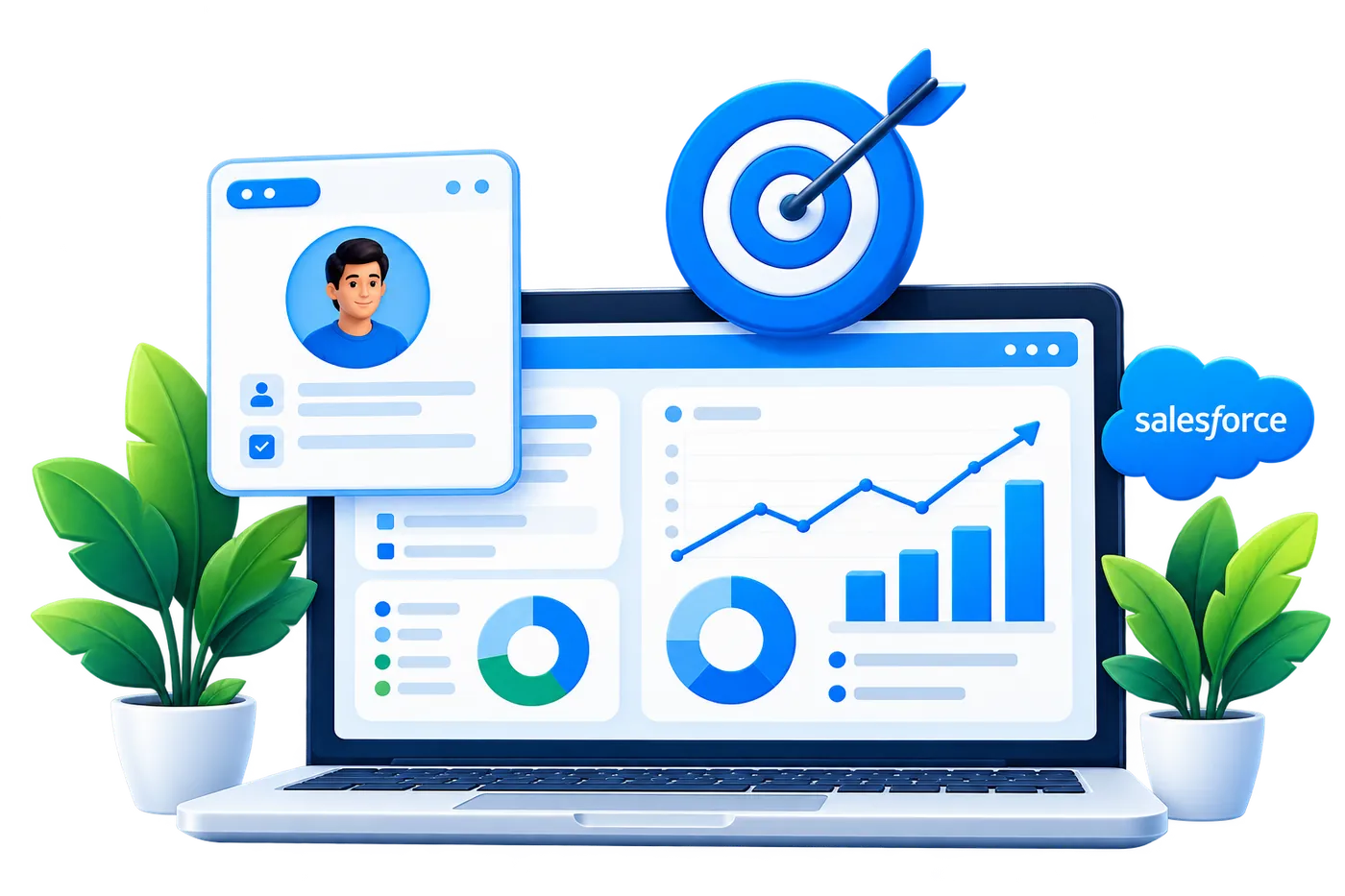
The Health Check in Setup compares your security settings with the Salesforce Baseline Standard and gives a score from 0 to 100. It is a useful start, but it does not look at duplicate data, conflicting automation, adoption or license use. A full audit reviews all of those, and ends with a plan rather than a score.
When to run one
Most teams book a health check when something is about to change, or when something already feels wrong.
A large change on top of hidden problems multiplies them. Fixing conflicts first keeps the release on schedule.
You have inherited an org you did not build. The audit shows what is in it before anyone merges or rebuilds it.
AI and unified profiles are only as good as the data under them. The audit shows whether that data is ready.
Slow pages, missing fields and reports nobody trusts usually trace back to a handful of causes the audit names.
License use is checked against real logins, so the renewal is based on who actually works in Salesforce.
Even a healthy org drifts. A yearly review catches new duplicates, unused fields and permissions that grew too wide.
What you receive
How it runs
Your goals, known pain points and the access we need. Output: an agreed scope.
Security, data, automation, limits, adoption and licenses checked. Output: raw findings with evidence.
Each finding rated by impact and effort. Output: a ranked list.
Fixes grouped into 30, 60 and 90 days. Output: the backlog and plan.
A call with your team to go through it all. Output: the final report.
From findings to fixes
Technical debt and messy data are the most common findings. Here is how they were fixed for clients.
Years of Classic customizations were audited before a move to Lightning, and only the ones with a real business need were rebuilt.
Read the case study Fewer customizations to maintainCustomer-specific prices kept in spreadsheets across 45,000 accounts were turned into Salesforce CPQ price rules.
Read the case study Pricing exceptions out of spreadsheetsWarranty registrations from several channels were matched to the right customer profiles for a sporting goods retailer.
Read the case study Warranty records matched to customersFAQ
Tell us what feels wrong in your org, and our team will reply within 1 business day.
It is a review of how your org is configured and used. Salesforce has a built-in Health Check that scores security settings. A full audit also covers data quality, automation, limits, adoption and licenses.
Security and access, data quality, automation and code, performance and limits, adoption and usage, and integrations and licenses, ending in a prioritized plan.
It depends mainly on the size of the org and the number of clouds in use. The timeline is agreed at the kick-off, along with the scope.
At least yearly, and before major changes such as a new cloud, an acquisition or an AI rollout.
No. The review is read-only and does not change configuration. The access needed is agreed with your admin at the kick-off.
You receive a prioritized backlog and a 30-60-90 day plan. You can implement it in-house or ask us to.
Get in touch
Have an idea, requirement, or a project in mind? Our team will get back to you within 1 business day.