Introductions
Migrating to Zoho CRM is one of the most impactful decisions a growing business can make. From streamlining operations and automating workflows to centralizing customer data and improving sales visibility, the platform offers advantages that can transform how your teams work. But as your business evolves, so does the complexity of your data ecosystem. This is where many organizations begin to struggle. What starts as a simple import quickly becomes a multi-layered challenge—especially in advanced Zoho CRM migration scenarios that go far beyond what Zoho’s built-in tools can handle.
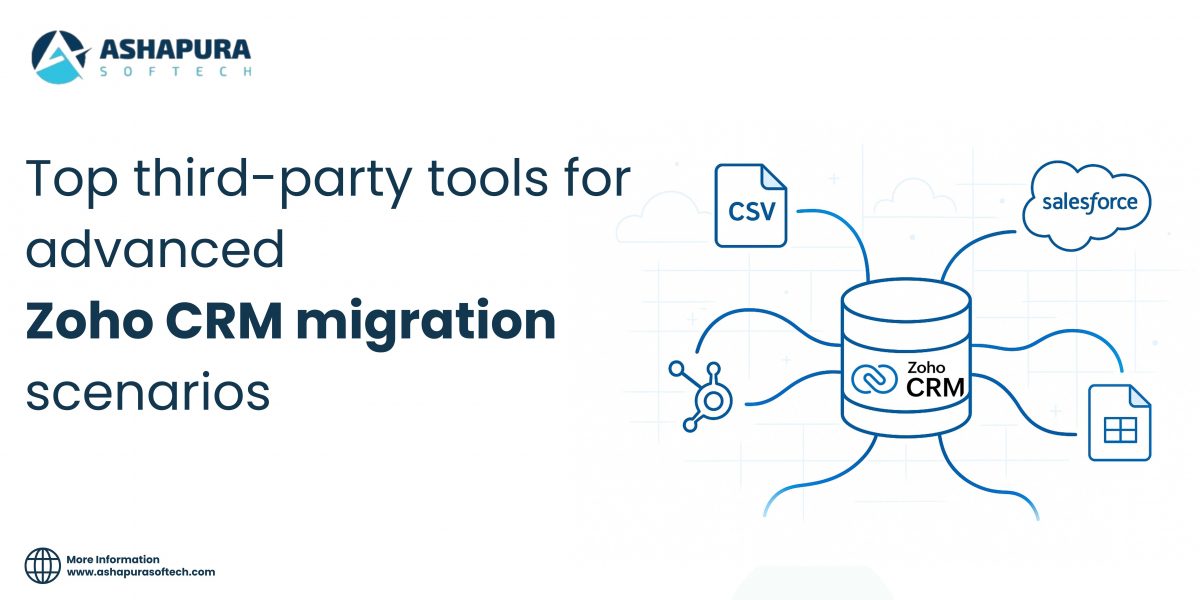
A modern business rarely relies on a single system. Most companies switching to Zoho CRM are migrating from Salesforce, HubSpot, Pipedrive, Insightly, Microsoft Dynamics, or even legacy CRMs built years ago. Others need to combine multiple data sources, such as SQL databases, Excel files, cloud applications, ERP systems, and historical archives. With such diverse data formats and structures, a seamless Zoho CRM migration becomes more than just uploading CSV files—it becomes a strategic project that requires precision, planning, and the right technical tools.
Here’s the truth many teams discover too late:
Achieving a clean, accurate, and secure Zoho CRM migration requires advanced third-party tools—not just manual imports.
Without the right tools, businesses risk serious issues like incomplete data, broken lookup relationships, mismatched fields, API errors, workflow failures, lost attachments, duplicate records, and significant downtime that disrupts operations.
In this comprehensive guide, we break down the top third-party tools for Zoho CRM migration. You’ll discover how each tool works, where it performs best, what limitations to watch out for, and how to choose the right one based on your data complexity, industry requirements, and internal resources. We also include real-world use cases, comparison insights, a step-by-step migration framework, common mistakes to avoid, and answers to the most frequently asked migration questions.
What Is Zoho CRM Migration?
Zoho CRM migration refers to the process of transferring your customer data—such as contacts, accounts, leads, deals, activities, workflows, custom fields, custom modules, and lookup relationships—from an existing CRM or database into Zoho CRM. The goal is to centralize all sales and customer information into a unified platform without losing accuracy, historical context, or relational data integrity.
While small businesses can often handle simple imports manually, most mid-size and enterprise-level Zoho CRM migration projects require a structured, multi-phase strategy. This is because migrating large or complex datasets involves far more than just uploading CSV files. Companies typically need to conduct in-depth data audits, prepare transformation rules, validate relationships, rebuild custom modules, and use third-party tools to ensure nothing breaks during the transition.
Zoho CRM migrations become especially complex when the existing system contains:
- Multiple years of sales, marketing, or support history
- Multi-module relational data (e.g. Accounts → Contacts → Deals → Related Lists)
- Custom fields, conditional fields, and fully custom modules
- Advanced workflow logic, automation rules, and blueprint processes
- High-volume datasets that exceed Zoho’s native import limits
- Export files from legacy or sunset systems (Lotus Notes, SugarCRM, spreadsheets, ERPs, SQL, etc.)
Explore the full process in our A Complete Guide to Zoho Migration Services: Process, Benefits, and Best Practices
Why More Businesses Are Choosing Zoho CRM Migration in 2025
As digital transformation accelerates, more organizations are prioritizing scalable, automated, and cost-effective CRM systems. In 2025, Zoho CRM migration continues to surge as businesses look for better flexibility, stronger automation, and deeper analytics without the high price tag of platforms like Salesforce, HubSpot, or Dynamics 365. Zoho’s newest upgrades—spanning AI, workflows, integrations, and performance—make it a top choice for companies seeking both innovation and affordability.
1. AI-Powered Automation with Zia
One of the biggest drivers behind the rise in Zoho CRM migration is the expanded intelligence of Zia, Zoho’s AI assistant. In 2025, Zia offers predictive lead scoring, anomaly detection, conversation insights, and automated task recommendations. This helps sales teams reduce manual work, prioritize the right deals, and forecast performance with greater accuracy. Businesses migrating to Zoho CRM can leverage AI insights immediately—without relying on expensive add-ons or developer-heavy implementations.
2. Advanced Workflow Orchestration
Zoho’s 2025 workflow engine now supports sophisticated, multi-step automation across sales, marketing, support, finance, and operations. Companies migrating from legacy or limited CRMs gain the ability to automate cross-functional processes, create dependency-based workflows, and implement blueprint-driven sales cycles. This reduces operational complexity and helps teams work more efficiently without custom code.
3. Improved APIs for Real-Time Sync
A major upgrade influencing Zoho CRM migration decisions is Zoho’s enhanced API framework. With higher rate limits, better throttling, and more consistent response times, businesses can achieve reliable, bi-directional sync with ERPs, marketing platforms, eCommerce systems, and databases. For organizations requiring continuous data flow during migration, these API improvements significantly reduce downtime and integration errors.
4. Unified Zoho Ecosystem for End-to-End Operations
Zoho CRM sits at the center of a broader ecosystem of 50+ business apps, including Zoho Books, Zoho Desk, Zoho Analytics, Zoho Projects, and Zoho Campaigns. Companies migrating to Zoho CRM gain an all-in-one platform that reduces tech stack fragmentation, cuts costs, and improves overall data visibility.
Simple vs. Advanced Zoho CRM Migration Scenarios
Not every organization requires a full-scale or highly complex CRM transition. Understanding the difference between simple and advanced Zoho CRM migration scenarios helps determine whether your business can rely on Zoho’s native tools—or whether you need expert assistance or third-party data migration solutions.
Simple Zoho CRM Migration Scenarios
Simple Zoho CRM migration use cases typically apply to smaller businesses or teams with limited historical data and minimal customization. These migrations focus on transferring basic records and require little to no data restructuring.
Common examples of simple migration tasks include:
- Importing standard CRM records such as leads, contacts, and accounts
- Uploading structured CSV files using Zoho’s native data import tool
- Performing basic field mapping with default Zoho modules
- Migrating data without lookup fields, related lists, or complex relationships
- Limited or no workflow automation, blueprints, or custom processes
- No custom modules or advanced field dependencies
Advanced Zoho CRM Migration Scenarios
1. Cross-CRM Migration (Salesforce, HubSpot, Dynamics, Pipedrive → Zoho CRM)
Migrating from enterprise CRMs such as Salesforce or Dynamics requires more than exporting and importing data. Teams must move multi-object structures, recreate custom fields, migrate historical activities, rebuild deal pipelines, and preserve related lists. To maintain reporting accuracy, these elements must be faithfully reconstructed inside Zoho CRM. This ensures a seamless transition with no loss of context or data relationships.
2. Multi-Database or Multi-Source Data Consolidation
Many organizations operate across SQL databases, ERP platforms, legacy systems, or scattered spreadsheets. These sources must be merged, cleaned, deduplicated, normalized, and validated before entering Zoho CRM. This prevents issues like mismatched fields, duplicates, and broken lookups—common pitfalls in complex CRM data migration processes.
3. Custom Module & Relationship Reconstruction
Custom modules, parent-child relationships, dependency fields, and multi-level lookups are standard in modern CRMs. Advanced Zoho CRM migration must replicate these structures so the new environment reflects how teams actually work, ensuring seamless adoption after go-live.
4. Workflow, Blueprint & Automation Rebuilding
Workflows, triggers, blueprints, and automated processes do not transfer automatically from other CRMs. Each automation rule must be recreated within Zoho to maintain operational continuity and ensure teams experience no disruption.
5. High-Volume Data Migration & API-Based Incremental Sync
Enterprises often migrate hundreds of thousands—or millions—of records. High-volume projects require API-based incremental sync to update data in real time during the transition. This is crucial for businesses that cannot afford system downtime while teams remain active in the legacy CRM.
Why Use Third-Party Tools for Zoho CRM Migration?
Migrating to a new CRM is rarely simple—especially when your business manages years of customer interactions, multi-module relationships, and data stored across several platforms. While Zoho offers built-in import tools, these features are designed mainly for simple CSV uploads. As soon as your migration involves complex structures, large datasets, or data from multiple systems, using third-party Zoho CRM migration tools becomes not just helpful—but essential.
These advanced platforms eliminate the limitations of manual imports and ensure your Zoho CRM migration is accurate, secure, and efficient. Below are the key reasons businesses rely on professional tools for medium to enterprise-level CRM migration in 2025.
1. Automated Field Mapping & Schema Matching
Modern migration tools use AI-assisted field mapping to automatically detect and align fields between systems such as Salesforce, HubSpot, Dynamics 365, Pipedrive, and Zoho CRM. This reduces human error and speeds up migrations—especially when dealing with custom modules or large datasets.
2. Accurate Lookup & Relationship Reconstruction
Advanced migrations often involve parent-child relationships, custom objects, and multi-module data structures. Third-party platforms ensure relationships remain intact, preserving sales history, deal associations, activity logs, and reporting accuracy. This is critical for maintaining full CRM usability after the migration.
3. Incremental & Real-Time Sync for Zero Downtime
Businesses that cannot pause sales operations rely on incremental syncing. Third-party tools support real-time or scheduled updates, allowing teams to continue using their legacy CRM until the final cutover.
4. Data Transformation, Cleansing & Validation
CRM data is rarely “migration-ready.” Tools like Zoho DataPrep, Skyvia, Hevo, and Talend help cleanse, normalize, and validate data before import. This prevents duplicates, inconsistent formats, missing values, and mismatched fields—issues that can break workflows inside Zoho CRM.
5. Multi-Source Data Integration Across CRMs & Databases
Most modern businesses store customer data in multiple places, including SQL databases, ERP systems, spreadsheets, cloud apps, and older CRM platforms. Migration tools consolidate everything into one structured pipeline to ensure a smooth transition into Zoho CRM.
6. Error Logging, Versioning & Rollbacks
Enterprise migrations demand accountability. Third-party tools provide detailed error logs, retry options, rollback features, and monitoring dashboards—essential for regulated industries or large-scale migrations.
7. Enhanced Security for Compliance-Focused Organizations
Encrypted pipelines, role-based access, and audit trails help businesses remain compliant with standards like GDPR, HIPAA, and SOC 2. This level of data control is often beyond what native Zoho tools offer.
Top Third-Party Tools for Advanced Zoho CRM Migration
1. Skyvia — Best Cloud-to-Cloud Zoho CRM Migration Tool
Skyvia continues to dominate the cloud integration market in 2025, offering one of the most seamless data migration solutions for businesses moving between SaaS CRMs. Known for its no-code interface and powerful automation engine, Skyvia excels at handling direct CRM-to-CRM migration without requiring advanced developer involvement.
Why Skyvia Leads in Zoho CRM Cloud Migration
Skyvia’s architecture is built specifically for cloud-to-cloud data movement, making it incredibly efficient for organizations shifting from Salesforce, HubSpot, or Pipedrive into Zoho CRM. Instead of relying on scripts or complex ETL pipelines, Skyvia uses automated connectors to extract, map, cleanse, and transfer data.
Key Features
- No-code data migration interface
- Automated field mapping with relationship preservation
- Cloud data syncing and scheduled pipelines
- Robust deduplication and data cleansing tools
- Secure API-based execution
- Support for large datasets and multiple CRM objects
2. Talend — Best for Enterprise ETL & Complex Transformations
Talend stands out as one of the most powerful enterprise ETL platforms for complex Zoho CRM migrations involving large-scale, multi-system, and heavily customized environments. Unlike cloud-only tools, Talend supports hybrid infrastructure, making it ideal for organizations with on-premise CRMs, legacy ERPs, SQL databases, and custom data warehouses.
Why Talend Is Perfect for Complex Zoho CRM Migration
Talend allows businesses to extract data from practically any source—SAP, Oracle, MySQL, PostgreSQL, Microsoft Dynamics, legacy CRM systems—and transform it with deep logic before loading it into Zoho CRM.
Key Features
- Advanced ELT/ETL capabilities
- Real-time and batch data pipelines
- Custom transformation logic using Java components
- Built-in data quality and validation frameworks
- Data standardization and cleansing at scale
- Support for master data management (MDM)
3. Data2CRM — Best Automated Migration Tool for Standard CRMs
Data2CRM focuses on automated CRM-to-CRM data migration, making it highly effective for businesses with standard CRM structures and minimal customization. Its strength lies in its simplicity—users simply choose the source CRM, the target Zoho CRM account, and Data2CRM handles the mapping, transfer, and validation automatically.
Why Data2CRM Works Well for Zoho CRM
Data2CRM eliminates the need for manual CSV exports, scripts, or API handling. The platform’s prebuilt templates accelerate migration from popular CRMs.
Key Features
- Pre-configured CRM mapping templates
- Fully automated migration workflow
- Support for standard CRM entities (Contacts, Deals, Accounts)
- Quick setup and minimal technical requirements
- Affordable pricing for SMBs
4. Hevo Data — Best Real-Time Data Pipeline for Zoho CRM Migration
Hevo Data is preferred by data engineering teams and high-volume organizations needing real-time ingestion rather than one-time migration. With zero-maintenance pipelines and automated schema detection, Hevo ensures that data continues flowing into Zoho CRM without disruption.
Why Hevo Excels for Zoho CRM Migration
Hevo supports more than 150 data sources and offers real-time syncing, making it ideal for businesses that operate continuously and cannot afford downtime.
Key Features
- Real-time streaming pipelines
- Automated schema mapping
- AI-powered data cleaning and transformation
- Fault-tolerant infrastructure
- Support for large, complex datasets
5. Workato — Best Automation-Driven Zoho CRM Migration Tool
Workato combines data integration with enterprise workflow automation, making it unique among Zoho CRM migration tools. It not only migrates your CRM data but also helps build automated workflows before and after the migration.
Why Workato Is Great for Zoho CRM
Workato allows businesses to automate complex sequences involving data transformation, enrichment, validation, and syncing. For organizations that want more than data transfer, Workato enables automation of lead routing, onboarding flows, pipeline triggers, and post-migration workflows.
Key Features
- Multi-step workflow builder
- Enterprise-grade security and encryption
- Automated data validation
- Post-migration automation and optimization
- AI-driven workflow suggestions
How to Choose the Best Zoho CRM Migration Tool
Selecting the right Zoho CRM migration tool is crucial for ensuring a smooth, accurate, and secure transition from your current platform. The ideal tool depends on several factors, including the structure of your existing CRM, the complexity of your data, and your organization’s internal capabilities.
Key Factors to Consider
- Data Volume: Large datasets require tools with high-performance pipelines, real-time syncing, and API-efficient processing.
- Complexity of Relationships: If you rely on multi-level relationships (Accounts → Contacts → Deals → Activities), choose a tool with strong mapping and relationship preservation.
- Source CRM or System: The migration path—from Salesforce, HubSpot, SAP, or a custom database—significantly influences which tool is best suited.
- Compliance Requirements: Industries with strict data governance need encrypted pipelines and audit-friendly workflows.
- Budget & Licensing: Some tools offer enterprise-grade features while others are optimized for SMBs with simpler needs.
- In-House Skill Level: No-code platforms work best for non-technical teams, while ETL tools fit data engineering environments.
Recommendations Based on Common Migration Scenarios
1. Salesforce → Zoho CRM
Best tools: Skyvia or Data2CRM
Both platforms offer cloud-friendly connectors, automated field mapping, and pre-built templates tailored to Salesforce objects. They minimize manual work and reduce mapping errors, making them perfect for mid-sized businesses.
2. ERP / Database → Zoho CRM
Best tools: Talend or AWS Glue
These tools are built for large, complex, and heavily customized datasets. They handle deep transformations, cleansing, and relational mapping before pushing data into Zoho CRM.
3. Large-Scale Ongoing Sync
Best tool: Hevo
Hevo’s real-time ingestion pipelines are ideal for organizations that need continuous updates while migration occurs. This prevents downtime and ensures both systems remain synchronized during the transition.
4. Migration + Workflow Automation
Best tool: Workato
Workato excels when the migration is only part of a larger digital transformation effort. After moving to Zoho CRM, Workato can automate lead routing, data validation, enrichment processes, and cross-system integrations.
Step-by-Step Process for a Successful Zoho CRM Migration
1. Establish Clear Migration Goals and Scope
The first step in any CRM migration is defining the purpose behind the transition. Organizations should take time to outline what they aim to achieve—whether it’s improving sales visibility, consolidating data sources, upgrading outdated systems, or leveraging automation. Clear objectives help determine the scope of the migration, including which modules need to be moved, how much historical data to carry over, and which integrations are essential. By identifying these early, the team can avoid unnecessary complexities later and maintain focus on what truly matters.
2. Conduct a Thorough Audit of Existing Data
Before any data is transferred, it is crucial to audit the existing CRM or data source. This step involves evaluating the volume, structure, quality, and relevance of current information. Organizations often discover duplicate entries, incomplete records, outdated contacts, or fields that no longer serve a purpose. Understanding the current state of data enables teams to decide what should be migrated and what should be archived or removed. A detailed audit also reveals potential inconsistencies that could cause errors during the import phase.
3. Clean and Prepare the Data for Migration
Data cleansing is one of the most important phases in the migration process. Once unnecessary or inaccurate data has been identified, the next step is to correct, standardize, or eliminate it. Format inconsistencies—such as phone numbers, dates, capitalization, or naming conventions—should be resolved to ensure seamless mapping into Zoho CRM fields. Removing duplicates, merging records, and filling in missing information help improve data integrity and prevent issues later. Clean, organized data ensures a more accurate and efficient migration.
4. Map Existing Fields to Zoho CRM Structure
Field mapping involves aligning the data fields from the old system with those available in Zoho CRM. Since every CRM platform has its own structure, customizations, and naming conventions, careful mapping ensures that information is transferred accurately and stored in the right location. At this stage, teams may need to create custom fields in Zoho CRM to accommodate unique data points. Proper field mapping prevents misplaced information, maintains relational accuracy, and supports future reporting and automation workflows.
5. Configure Zoho CRM According to Business Needs
Before importing data, it is essential to set up Zoho CRM to reflect the organization’s processes. This includes defining roles and permissions, customizing modules, building sales pipelines, and setting up dashboards or automation rules. Configuring the system beforehand ensures that once the data is migrated, it lands in a functional and ready-to-use environment. Teams may also integrate relevant applications—such as email platforms, marketing tools, or accounting software—to create a unified ecosystem.
6. Test the Migration with a Pilot Import
A pilot migration acts as a safety check before performing a full data transfer. This involves selecting a small batch of sample data and importing it into Zoho CRM. The pilot test helps identify mapping issues, formatting errors, workflow mismatches, or missing fields. Reviewing this sample ensures that data appears accurately in modules such as Leads, Contacts, Accounts, and Deals. Any inconsistencies discovered can be corrected before the final migration, significantly reducing the risk of large-scale errors.
7. Execute the Full Migration Carefully
After confirming that the pilot import is successful, the complete data migration can begin. This process should be executed gradually and systematically, especially when handling large volumes of information. Teams should monitor the process closely, validating data transfer success and ensuring that relationships between modules remain intact. Depending on the size of the migration, the process may take hours or even days. Proper communication with internal teams ensures minimal disruption to daily operations.
8. Validate and Reconcile the Migrated Data
Once the full migration is complete, thorough validation is necessary. This involves checking data accuracy, completeness, and consistency throughout the system. Teams should compare pre-migration data with the information in Zoho CRM to confirm that nothing is missing or improperly mapped. Reports, custom fields, and pipeline stages must be inspected to ensure they function as intended. Reconciliation ensures confidence in the new CRM and prevents issues that could impact customer relationships or sales workflows.
9. Train Users and Support Adoption
A successful CRM migration is not only about data transfer—it also requires effective user adoption. Training sessions should be conducted to familiarize team members with Zoho CRM’s interface, modules, features, and best practices. Providing documentation, tutorials, or role-based training helps users adapt quickly. Encouraging feedback during the learning stage can help refine workflows and ensure that the system meets team needs.
10. Optimize and Monitor Post-Migration Performance
The final step involves continuous monitoring and optimization of Zoho CRM. After users begin working with the system, organizations may discover opportunities for improvement, such as enhanced automation, refined reports, or additional integrations. Regular system audits, workflow adjustments, and performance reviews help maximize the value of Zoho CRM and ensure long-term success. Ongoing support and refinement keep the CRM aligned with evolving business goals.
Common Zoho CRM Migration Mistakes to Avoid
1. Importing Modules in the Wrong Order
Importing CRM modules in an incorrect sequence is one of the most common migration mistakes. Zoho CRM maintains relationships between records—such as Accounts, Contacts, and Deals—so importing them out of order can break these dependencies. When relationships fail to import properly, lookups become mismatched, activity history may become disconnected, and teams often need to perform lengthy manual fixes. Following the correct module import hierarchy ensures a smooth and accurate data transfer.
2. Ignoring Duplicate Data Before Migration
Many organizations move forward with a migration without cleaning their existing data. Duplicate records—especially leads, contacts, and accounts—cause confusion, reduce sales efficiency, and distort reporting accuracy. If duplicates are not removed beforehand, they tend to multiply during migration, making cleanup even harder later. Deduplicating data before import ensures cleaner CRM insights and a more productive environment for your sales and support teams.
3. Incorrect Lookup Field Mapping
Lookup fields connect related records, such as linking a Contact to its parent Account. When mapping fields from your old system to Zoho CRM, incorrect lookup mapping can break these relationships entirely. This results in lost connections, missing historical interactions, and inaccurate organizational structures. Spending time on precise mapping—and testing it—helps maintain data integrity throughout the migration.
4. Skipping Pre-Migration Testing
A pilot or test migration is essential, yet many teams skip this step to save time. Unfortunately, this often leads to unexpected formatting issues, incompatible fields, and broken workflows during the final import. Running a pre-migration test with a small dataset allows you to detect problems early, refine your mapping, and avoid large-scale data errors. A short test phase can save hours—or even days—of post-migration cleanup.
5. Overlooking Workflow and Automation Mapping
A frequent misconception during CRM migration is that workflows, rules, and automations will transfer automatically. Zoho CRM does not migrate automation logic from other systems. Failing to recreate workflows, assignment rules, email alerts, and blueprints leads to major process disruptions after go-live. Reviewing and rebuilding your automation framework in Zoho CRM ensures your business processes continue operating smoothly.
Advanced Tips to Improve Zoho CRM Migration Success
1. Use Incremental Sync to Reduce Downtime
A full one-time migration can interrupt daily operations, especially for teams dependent on real-time customer data. Incremental sync solves this by transferring information in controlled batches instead of all at once. This approach keeps both systems active during the transition and minimizes downtime for sales, support, and operations. With incremental sync, teams can continue working while data quietly updates in the background, creating a smoother and less disruptive migration experience.
2. Respect Zoho CRM API Limits During High-Volume Imports
Large-scale migrations rely heavily on API calls, and exceeding Zoho CRM’s daily or minute-based limits can cause delays or failed imports. Planning data transfers around these API thresholds helps maintain a continuous migration flow. Techniques like throttling requests, scheduling imports during off-peak hours, or dividing datasets into smaller chunks ensure a more reliable and efficient data migration process.
3. Leverage AI-Powered Data Cleansing Tools
AI-driven cleansing tools can dramatically improve pre-migration data quality. These tools identify duplicates, correct formatting inconsistencies, detect incomplete fields, and validate relationships far more accurately than manual reviews. Using AI ensures the migrated data is clean, standardized, and reliable. Cleaner data leads to better reporting, smoother workflows, and faster user adoption once Zoho CRM goes live.
4. Build Post-Migration Automation Before Go-Live
Many businesses wait until after migration to rebuild workflows and automations, which delays onboarding and disrupts processes. Instead, prepare Zoho CRM automation—blueprints, assignment rules, email alerts, and scoring rules—before the final migration. When users first log in, they gain access to a fully functional environment, reducing confusion and enabling faster operational continuity.
5. Validate Custom Modules and Blueprints Early
Custom modules and blueprints often hold unique business logic, yet they are frequently overlooked during planning. Validating these custom components early ensures the correct fields, layouts, and workflow structures are in place before data import. Early validation prevents data misalignment, broken processes, and user frustration. This step also ensures that complex business workflows, especially sales or onboarding blueprints, function correctly from day one.
FAQs
1. What is the best tool for Zoho CRM migration?
There is no single “best” tool—your choice depends on data volume, migration complexity, and required integrations. Popular and reliable solutions include Skyvia, Talend, and Hevo Data, all of which support automated data mapping, incremental sync, and cross-platform migration. For highly customized setups, tools with advanced transformation and lookup capabilities tend to perform best.
2. How long does a Zoho CRM migration take?
The timeline can vary significantly. A simple migration may take 2–3 days, while complex migrations involving custom modules, large datasets, or multiple integrations can take 4–6 weeks. Factors such as data cleanliness, field mapping accuracy, and workflow rebuilding also influence overall duration.
3. Can I migrate from Salesforce to Zoho CRM?
Yes, migrating from Salesforce to Zoho CRM is entirely possible. Tools such as Skyvia, Data2CRM, and Talend help automate field mapping, relationships, and modular transfers. Businesses typically migrate Leads, Contacts, Accounts, Deals, Activities, and custom fields with minimal disruption.
4. What data cannot be migrated automatically?
While most core modules can be moved, certain components need to be built manually within Zoho CRM. These include workflow rules, email templates, process automations, blueprints, and assignment rules. This is because CRM automation logic varies between platforms, requiring manual recreation to ensure proper functionality.
5. Can I migrate custom modules to Zoho CRM?
Yes, custom modules can be migrated as long as your migration tool supports custom field mapping and lookup relationship mapping. Before migrating custom modules, it’s important to validate field structures, data types, and dependencies to ensure data integrity once transferred.
Tooling only takes a migration so far. What separates a clean move from a messy one is the planning around it, which we cover in what a personalized CRM implementation involves.
Conclusion
Zoho CRM can transform the way your business manages customers—but its true value depends on how clean, accurate, and well-structured your data is from day one. Leveraging the right third-party migration tools and a strategic approach ensures faster execution, stronger data integrity, fewer errors, and minimal operational downtime. Whether you’re transitioning from Salesforce, HubSpot, ERP systems, legacy CRMs, or multiple disconnected databases, a well-planned migration makes your Zoho CRM environment secure, scalable, and future-ready. For a smooth, reliable, and expertly managed migration, Ashapura Softech is your trusted partner. Our team delivers end-to-end Zoho CRM migration, implementation, and long-term optimization tailored to your business needs. Contact us at [email protected] and start your seamless Zoho CRM transformation today.