Categories
ERP System

Maximizing ROI: Smart Strategies for Cost-Effective ERP Implementation

Introduction

In today’s fast-paced and digitally driven business environment, companies across industries are under increasing pressure to operate more efficiently, reduce costs, and deliver enhanced customer experiences. To meet these demands, many organizations are turning to Enterprise Resource Planning (ERP) systems — centralized platforms that integrate core business functions such as finance, HR, supply chain, and customer relationship management.

But simply investing in an ERP system isn’t enough. True success lies in how effectively the ERP solution is implemented — with careful strategy, precise budgeting, and an unwavering focus on long-term value. A poorly planned implementation can lead to delays, budget overruns, and underwhelming results. Conversely, a well-executed ERP strategy can boost agility, increase productivity, and deliver significant ROI.

This article explores smart, cost-effective ERP implementation strategies that help businesses maximize returns while minimizing risks. From defining clear objectives and understanding costs to selecting the right solution and avoiding common pitfalls, we provide a step-by-step guide. You’ll also gain insights from a real-world case study and learn how to measure success in meaningful terms.

Understanding ERP ROI

Implementing an ERP system is a significant investment — not just in terms of money, but time and organizational change. Therefore, understanding the Return on Investment (ROI) is critical. ROI refers to the tangible and intangible benefits a company gains from the ERP system compared to the cost of implementation.

What Does ROI in ERP Implementation Mean?

In the context of ERP, ROI refers to the measurable improvements an organization experiences with the cost of deploying the system. These improvements come in two forms:

  • Tangible Benefits: These include reduced operational costs, streamlined supply chain processes, improved financial accuracy, better inventory control, and increased revenue due to enhanced sales efficiency.
  • Intangible Benefits: These are harder to quantify but equally critical. They include improved decision-making through real-time data access, higher employee productivity, increased customer satisfaction, and stronger compliance with industry regulations.
Key Metrics to Measure ERP ROI

To understand and demonstrate ROI, organizations should monitor metrics such as:

  • Operational Efficiency: Shortened process cycle times and minimized manual tasks.
  • Cost Savings: Reduction in administrative, IT, and overhead expenses.
  • Revenue Growth: Increased sales from better lead management, faster service, and enhanced customer experiences.
  • Compliance and Risk Management: Improved audit readiness, reduced errors, and adherence to regulations.

Organizations that proactively track these indicators are better positioned to make data-informed decisions and continuously optimize the value they derive from their ERP investment.

Pre-Implementation Planning

The foundation of a successful ERP implementation lies in careful, strategic planning. Rushing into deployment without a well-thought-out roadmap can lead to confusion, inefficiencies, and mounting costs. This phase is about aligning the ERP project with your business vision, building internal consensus, and making informed decisions that lay the groundwork for long-term success.

Setting Clear Objectives

Before any software is selected or configured, organizations must define clear, actionable goals that are aligned with broader business strategies. These objectives should follow the SMART framework — Specific, Measurable, Achievable, Relevant, and Time-bound. Whether you’re aiming to reduce inventory costs, accelerate financial reporting, or improve customer service, clear goals help guide decisions and measure success.

Stakeholder Engagement

ERP implementations affect every corner of an organization. That’s why it’s essential to involve stakeholders from all key departments — finance, HR, operations, sales, and IT — from the beginning. Early involvement encourages ownership, minimizes resistance to change, and ensures the system is configured to meet real-world needs. Regular meetings, feedback sessions, and cross-functional teams can all strengthen this engagement.

Selecting the Right ERP Solution

Not all ERP systems are created equal. Organizations should assess solutions based on:

  • Functionality: Does it align with your current processes and future needs?
  • Scalability: Can it evolve as your business grows?
  • Customization & Configuration: Is it flexible enough to adapt to your workflows?
  • Vendor Support: What kind of onboarding, training, and long-term assistance is offered?

Budgeting and Cost Management

A well-defined budget is essential for avoiding unexpected costs and maintaining project control. Understanding the full scope of ERP costs helps organizations plan effectively and avoid hidden pitfalls.

Understanding Cost Components

ERP implementation costs typically include:

  • Software Costs: Licensing or subscription fees for the ERP platform.
  • Hardware Costs: Servers, storage, and networking infrastructure, particularly for on-premise systems.
  • Implementation Services: Consulting, configuration, integration, and project management.
  • Training & Change Management: Educating users and managing the cultural shift within the organization.
  • Ongoing Maintenance & Support: Regular updates, technical support, and system monitoring.

Strategies for Cost Optimization

To keep expenses in check without compromising quality:

  • Phased Implementation: Rolling out modules in stages spreads costs and eases the learning curve.
  • Cloud-Based ERP: Reduces upfront infrastructure investment and lowers long-term maintenance.
  • Use Existing Infrastructure: If compatible, leveraging current systems can significantly cut costs.
  • Vendor Negotiation: Don’t shy away from negotiating licensing terms, bundled services, or extended support.

By combining clear planning with strategic cost management, businesses can set the stage for a smooth and successful ERP journey.

Smart Strategies for Cost-Effective ERP Implementation

Implementing an ERP system is a major investment, both financially and in terms of time. To ensure that this investment delivers maximum ROI, organizations must adopt smart, forward-thinking strategies that prioritize long-term value over short-term convenience.

Emphasizing Configuration Over Customization

While customization may seem appealing for tailoring the ERP system to precise business processes, it often leads to increased implementation costs, extended timelines, and future upgrade challenges. Instead, focus on configuration — adjusting settings and workflows within the ERP’s native functionality. This approach offers flexibility and ensures the system remains scalable and easier to maintain.

Investing in Training and Change Management

Even the most powerful ERP system is only as effective as the people using it. Investing in user training ensures employees understand how to navigate and fully utilize the platform. Simultaneously, implementing robust change management helps address resistance and encourages user adoption. This includes transparent communication, leadership involvement, and continuous support.

Utilizing Agile Methodologies

Unlike traditional “big bang” ERP rollouts, adopting agile methodologies allows for modular, phased deployment. By breaking the project into sprints with continuous feedback loops, businesses can make iterative improvements, respond to user needs faster, and minimize costly rework.

Ensuring Data Quality and Seamless Integration

High-quality data is the backbone of an effective ERP system. Poor data leads to inefficiencies, inaccurate reporting, and operational hiccups. Establish data governance policies, clean historical data, and ensure seamless integration with other critical systems to maintain accuracy and continuity.

Common Pitfalls and How to Avoid Them

Even with the best intentions, ERP projects can go off track. Here’s how to recognize and steer clear of common pitfalls:

Lack of Clear Objectives

Without specific, measurable goals, ERP initiatives often lack direction. Clearly defining success metrics ensures the project stays aligned with business outcomes.

Inadequate Training

Many ERP failures stem from underprepared users. Effective training programs tailored to different user roles are essential to unlock the system’s full potential.

Over-Customization

Custom features can balloon costs and complicate future upgrades. Stick to standard features and adopt industry best practices wherever possible.

Ignoring Change Management

Organizational resistance can quietly undermine implementation efforts. Invest in a structured change management framework that includes stakeholder engagement, communication plans, and continuous feedback channels.

FAQs

1. What is the average ROI from ERP implementation?

The average ROI from ERP implementation can vary based on the organization’s size, industry, and execution strategy. However, studies show that companies can expect a return of $7 for every $1 spent over time, especially when the ERP system is well-integrated and aligns with business goals. Tangible benefits like reduced operational costs and improved data accuracy significantly contribute to ROI.

2. How long does it take to see ROI from an ERP system?

Most organizations begin to see measurable ROI from an ERP system within 12 to 24 months post-implementation. The timeline depends on factors such as user adoption, the complexity of the ERP solution, data quality, and the effectiveness of change management practices.

3. Is cloud-based ERP more cost-effective than on-premise ERP?

Yes, cloud-based ERP systems are generally more cost-effective for most businesses. They eliminate upfront infrastructure costs, offer subscription-based pricing models, and reduce ongoing maintenance expenses. Additionally, cloud ERP systems provide easier scalability and faster deployment, contributing to quicker ROI.

4. What is the biggest challenge in ERP implementation?

The biggest challenge in ERP implementation is often user resistance to change and inadequate training. Without proper change management and training programs, employees may underutilize the system, leading to inefficiencies and a slower ROI.

5. How can businesses ensure a successful and cost-effective ERP implementation?

To ensure success, businesses should set clear goals, involve stakeholders early, choose the right ERP vendor, focus on configuration over customization, and invest in training and data quality. Adopting agile methodologies and phasing the implementation can also significantly reduce costs and risks.

Conclusion

Implementing an ERP system is a significant undertaking that requires careful planning, strategic execution, and ongoing optimization. By focusing on clear objectives, stakeholder engagement, cost management, and continuous improvement, organizations can achieve a cost-effective ERP implementation that delivers substantial ROI. Ready to transform your business operations with a cost-effective ERP solution? Ashapura Softech specializes in ERP Implementation, ERP Software Development, and Custom ERP Development tailored to your unique needs. Contact us today at [email protected] to learn how our ERP Solutions can drive your business forward.

Categories
ERP System

How UK Businesses Are Using ERP to Accelerate Digital Transformation

Introduction

In today’s fast-moving and highly competitive market, UK businesses are leaning more and more on technology to stay ahead. The days when digital tools were a “nice-to-have” are long gone. Now, digital transformation is a must—not just to grow but to survive.

At the heart of this transformation is Enterprise Resource Planning (ERP). Once seen as a behind-the-scenes tool used only by large enterprises, ERP systems have evolved into powerful, strategic platforms. They help businesses connect their operations, improve efficiency, and drive innovation from the inside out.

In this article, we’ll explore how ERP development services are helping UK companies digitally transform. We’ll look at the benefits these businesses are seeing and why choosing the right ERP development agency makes all the difference.

What Does Digital Transformation Really Mean?

Digital transformation goes beyond simply adopting new software or switching to cloud apps. It represents a fundamental shift in how businesses operate, make decisions, and serve their customers. At its core, it’s about using modern digital tools to become more agile, efficient, and customer-focused.

In the UK, several key trends are accelerating this change. Customers now expect quicker, more personalized experiences. Remote working and digital collaboration tools have become standard. Government initiatives continue to push for innovation, and competition from tech-savvy startups is forcing traditional businesses to evolve.

For many companies, the first step toward successful digital transformation is implementing a smart, scalable ERP system.

For UK companies, there are a few key reasons digital transformation is gaining speed:

  • Customers today want faster, more personalized services.
  • Remote working and online collaboration are the new norm.
  • The UK government is encouraging digital innovation across industries.
  • New tech-savvy startups are increasing the pressure to modernize.

Successful digital transformation often starts with the right foundation, and for many companies, that foundation is an ERP system.

What Is ERP and Why Is It Important?

ERP, or Enterprise Resource Planning, is a powerful software solution designed to integrate and streamline all your essential business functions into one centralized platform. Instead of using separate systems for finance, HR, inventory, and customer management, an ERP system brings everything together, making operations smoother, data more accessible, and teams more connected.

Core modules of an ERP system often include:

  • Finance & Accounting for real-time financial control and reporting
  • Supply Chain Management to enhance procurement, logistics, and distribution
  • CRM to manage customer interactions and sales pipelines
  • Human Resources to simplify employee management and recruitment
  • Inventory Management to track stock levels, shipments, and demand

Today’s businesses, especially in the UK, are shifting from outdated, on-premise systems to cloud-based ERP platforms. Why? Because they offer better scalability, lower costs, and easier maintenance. Engaging with the right ERP development agency ensures the system is tailored to your needs. Trusted ERP development services empower businesses to become more agile, efficient, and future-ready.

The Impact of ERP on Business Processes

An ERP system does more than just streamline operations—it transforms the way businesses work. By integrating key departments such as finance, HR, sales, inventory, and customer service into one unified platform, companies gain real-time visibility and control over their operations.

With the help of expert ERP development services, businesses can automate routine tasks, improve cross-department collaboration, and make more informed decisions backed by live data and analytics. The benefits are significant:

  • Efficiency Gains – Automation frees employees from manual work, allowing them to focus on higher-value tasks.
  • Real-Time Insights – Live dashboards and performance reports enable faster, data-driven decisions.
  • Improved Collaboration – A centralized system keeps all departments aligned and informed.
  • Cost Reduction – Smart resource planning and inventory management help reduce waste and optimize budgets.
  • Regulatory Compliance – Standardized processes support legal and industry-specific compliance.

Partnering with the right ERP development agency helps tailor these systems to meet specific business needs, enhancing agility, innovation, and competitiveness.

How UK Businesses Are Embracing ERP for Digital Transformation

Across the UK, businesses in every sector are using ERP technology to drive digital transformation and gain a lasting edge in their industries. From retail and manufacturing to healthcare and services, ERP is reshaping business operations.

Real-World Examples:

  • Retail: A major UK retailer implemented a cloud-based ERP system to sync inventory, logistics, and sales. The result? A 25% drop in stockouts and improved customer satisfaction.
  • Manufacturing: A growing manufacturer partnered with an ERP development firm to automate production planning. This reduced lead times by 40% and improved supply chain transparency.
  • Healthcare: A private clinic adopted an ERP solution to manage appointments, billing, and patient records, enhancing the patient experience and strengthening data security.

More UK businesses are choosing custom ERP development to match their unique challenges. By working with experienced ERP development firms, they ensure not only smooth implementation but also scalability and long-term support.

Whether cloud-based, hybrid, or fully customized, ERP is becoming the digital backbone for modern UK enterprises.

The ROI of ERP in a Digital Era

Investing in an ERP system can feel like a major financial decision, but when done right, the return on investment (ROI) is both measurable and substantial. Modern ERP platforms are not just expenses; they’re long-term assets that streamline processes, reduce manual labor, and enable real-time data access, all of which directly impact your bottom line.

Key Metrics to Measure ERP ROI:

  • Reduction in Operational Costs: By automating repetitive tasks and streamlining workflows, businesses save significantly on labor and process inefficiencies.
  • Increased Employee Productivity: Teams spend less time on admin and more on strategic tasks, boosting output across departments.
  • Enhanced Customer Satisfaction: Faster response times, better service delivery, and accurate order tracking lead to happier customers and increased loyalty.
  • Improved Inventory Turnover: Real-time inventory data helps optimize stock levels and reduce waste.
  • Faster Time-to-Market: Integrated planning and resource management accelerate product development and delivery cycles.

Most UK businesses working with a reliable ERP development agency report recovering their ERP investment within 18 to 24 months. With the right implementation strategy, an ERP system becomes a growth engine, reducing costs, increasing revenue, and supporting sustainable scalability. That’s why so many companies now view ERP development services as a strategic necessity in the digital era.

7. Choosing the Right ERP Partner

Choosing the right ERP development partner is one of the most important steps in your digital transformation journey. While the software itself is essential, it’s the ERP development agency behind it that determines whether your implementation will succeed or struggle.

What to Look for in an ERP Development Firm:

  • Proven Industry Expertise: Look for a partner with experience in your specific sector—whether it’s manufacturing, retail, healthcare, or services.
  • Custom ERP Development Capabilities: Off-the-shelf solutions don’t fit every business. Your ERP partner should offer tailored solutions that align with your workflows and goals.
  • Cloud Integration Experience: Today’s ERP systems must be cloud-ready or hybrid. Ensure your agency can manage seamless cloud integrations.
  • Post-Implementation Support: Ongoing support, staff training, and system upgrades are critical to long-term success.
  • Positive Reviews and Case Studies: A proven track record with real client stories adds credibility and trust.

An experienced ERP development firm does more than write code—they act as strategic advisors, helping you future-proof your business with scalable and adaptable technology. By partnering with a trustworthy ERP development agency, UK businesses can unlock the full value of ERP and ensure every pound invested returns multiple times in operational efficiency and business growth.

Future Trends in ERP and Digital Transformation

The world of ERP development is constantly evolving, driven by cutting-edge technologies that are reshaping how businesses operate and compete. As UK companies continue their digital transformation journeys, staying ahead of these emerging ERP trends is essential to maintain agility and innovation.

Key Future Trends to Watch:

  • Intelligent ERP (i-ERP): The integration of artificial intelligence (AI) and machine learning (ML) into ERP systems is revolutionizing data analysis. Intelligent ERP can predict trends, automate decision-making, and provide actionable insights, helping businesses stay proactive rather than reactive.
  • Mobile ERP: With the rise of remote work, mobile ERP solutions are becoming vital. These systems allow employees to access critical business data and perform tasks from anywhere, boosting productivity and flexibility.
  • IoT Integration: Internet of Things (IoT) devices connected to ERP systems enable real-time monitoring of assets, equipment, and supply chains. This enhances operational efficiency and supports predictive maintenance.
  • Sustainability Tracking: ERP solutions are beginning to include features that track carbon footprints, resource usage, and ethical sourcing, helping companies meet environmental and regulatory goals.
  • Hyperautomation: Combining robotic process automation (RPA) with AI, hyperautomation automates complex business processes end-to-end, reducing errors and speeding up workflows.

Leading ERP development agencies are embracing these innovations to deliver smart, scalable, and future-proof ERP solutions that empower UK businesses to thrive in the digital era.

FAQs

  1. What is ERP and why is it essential for digital transformation?
    ERP (Enterprise Resource Planning) integrates various business functions into a single platform, enabling real-time data access, improved collaboration, and streamlined processes — all critical for successful digital transformation.

  2. How can ERP systems improve efficiency and reduce costs for UK businesses?
    ERP automates routine tasks, enhances resource planning, and provides real-time insights, helping companies reduce operational costs, minimize waste, and boost overall efficiency.

  3. What are the key benefits of choosing a cloud-based ERP system?
    Cloud-based ERP offers scalability, lower upfront costs, easier maintenance, remote access, and faster deployment, making it ideal for modern UK businesses adapting to changing market demands.

  4. How do I select the right ERP development partner for my business?
    Look for a partner with proven industry experience, custom development skills, cloud integration expertise, strong post-implementation support, and positive client testimonials to ensure a successful ERP deployment.

  5. What future trends in ERP should UK businesses prepare for?
    Emerging trends include Intelligent ERP powered by AI and machine learning, mobile ERP for remote access, IoT integration for real-time monitoring, sustainability tracking, and hyperautomation to optimize end-to-end processes.

Conclusion

Digital transformation is reshaping the UK business landscape, and ERP systems are at the heart of this evolution. From improving internal efficiencies to delivering better customer experiences, ERP development services play a pivotal role in helping businesses stay competitive. Investing in the right ERP system through a trusted ERP development agency empowers organizations to harness the full potential of digital transformation. As technologies evolve, UK businesses that prioritize ERP will continue to lead in innovation, resilience, and growth. Ready to accelerate your digital transformation with a customized ERP solution?Partner with Ashapura Softech, your trusted ERP development agency. Contact us today at [email protected] to start your journey toward a smarter, more connected future.


Categories
ERP System

ERP Development: Guide to ERP Systems, Solutions, and Implementation

Introduction

Modern businesses cannot work without an Enterprise Resource Planning system, wherein the prime objectives become ‘integration’ and ‘smoothening of operations. The Development of ERP software is a highly intricate yet gratifying job that helps leverage the efficiency and productivity of any company to a large extent. We will talk about how to develop ERP software in steps, the latest technologies engaged in the development process, and the benefits of implementing ERP software solutions in any firm in this all-inclusive coverage. Whether one is considering the development services for ERP software or even understanding the role of an ERP software developer, this guide helps a lot in that. 

ERP Software

ERP software is one package of interconnective applications designed to manage a firm’s integral processes, such as finance, HR, manufacturing, supply chain, services, and procurement, among others. The systems ease the flow of information among all business functions within the boundaries of an organization and manage outer boundary connections with outside stakeholders.

Benefits of ERP Software

Enterprises can gain several advantages by implementing ERP software solutions, which include:

  • Improved Efficiency: Concerning that, ERP systems reduce time and effort in performing day-to-day activities by automating and developing integration between business processes. 
  • Improved Reporting: Advanced reporting tools offered by the ERP system aid a business in making informed decisions based on real-time data. 
  • Data Security: This solution has powerful security features that protect sensitive business data from any unauthorized access.
  • Scalability: An ERP system can also scale up quite easily with the growth of a business by the addition of new processes, users, and departments.

Guide to ERP Software Development

Needs Assessment and Requirement Gathering

Any process related to ERP software development needs to start with a detailed needs assessment. This includes the specific requirements of the business, key processes that need integration, and the goals of the implementation. The phase more often comprises the following activities:

  • Stakeholder Interviews: This includes engaging with various stakeholders to garner their input and understand their needs.
  • Process Mapping: Documenting the as-is process to highlight areas of improvement.
  • Gap Analysis: Comparing the current process with the desired process to point out the gaps that the ERP system should fill.

Planning and Design

After the requirement gathering, the plan and design of the ERP system came into the picture. This phase involves:

  • Right ERP Software Selection: Selection of the best ERP solution for the business needs from either a custom-built system or off-the-shelf product.
  • ERC System Architecture Design: The architecture of the ERP system to be designed shall include detailed specifications for databases, application servers, and user interfaces.
  • Module Selection: It means which modules need to be implemented as part of the ERP system; for example, some of them can be finance, human resources, inventory management, etc.

Development and Customization

Once the design is in place, it is followed by the development phase, comprising the following activities:

  • Coding: Writing of code for the ERP system in proper programming languages and frameworks.
  • Customization: Tailoring the ERP software according to the particular business needs—unique features and functionalities.
  • Integration: The ERP system is integrated with other prevalent software and hardware seamlessly.

Testing

Testing is a critical phase in ERP software development. It ensures that the system is functioning correctly and meets the requirements specified. This phase includes:

  • Unit Testing: This involves testing the unit components of the ERP system for functionality. 
  • Integration Testing:  Testing the integration points to ensure that different modules work together seamlessly. 
  • User Acceptance Testing (UAT): Engaging the end-user to test the system in real-world scenarios, and then giving feedback.

Deployment and Implementation

After the testing is successfully done, the ERP system is ready to implement. It involves the following activities:

  • Data Migration: The existing data is transferred to the new system of the ERP.
  • System Configuration: Setting up the ERP system according to the business requirements.
  • Training: Training is given to the end-users so that they get comfortable with the new system.
  • Go-Live: The ERP system gets launched officially and is transitioned from old processes to new ones.

Maintenance and Support

An ERP system requires a lot of maintenance and support after deployment for its smooth running. This would entail the following:

  • Regular Updates: The ERP software is supposed to be updated regularly so that the latest features and security patches are added.
  • Technical Support: Technical support should be provided to end-users against problems they encounter regarding the working of an ERP system.
  • Performance Monitoring: It is important to periodically monitor the performance of an ERP system so that problems are identified and resolved in time.

Technologies used in the development of ERP Software

Developing ERP systems requires various technologies, such as:

  • Programming Languages: Common languages used in developing an Enterprise Resource Planning system are Java, C#, Python, and JavaScript.
  • Databases: The type of databases used in ERP systems are relational. Thus, MySQL, Oracle, and SQL Server are extensively employed.
  • Cloud Computing: Almost all the recent ERP solutions use cloud computing because of their associated advantages, such as scalability, flexibility, and lesser cost on infrastructure.
  • Artificial Intelligence: New AI technologies are being integrated into ERP systems to increase capabilities related to predictive analytics and automation.
  • Internet of Things: IoT devices may be integrated with ERP systems to provide real-time data, thereby enhancing decision-making.

How to Choose the Right ERP Software Development Services

You must choose the right ERP software development services, as it forms the bedrock of your ERP implementation. While selecting a service provider, these are some criteria that you must consider:

  • Experience: The provider needs to have past experience in developing and implementing ERP solutions.
  • Experience: Ensure that the vendor has experience in the technologies and industry areas your business deals with.
  • Customization: Select a vendor who will tailor-make an ERP system to suit your individual business needs.
  • Support: Engage with a vendor who can give you end-to-end support and maintenance services post-product deployment.

Role of the ERP Software Developers

ERP software developers play a vital role in the development and implementation of ERP systems. Their responsibilities include:

  • Requirement Analysis: incorporation of activities related to working with stakeholders for gathering and analyzing requirements.
  • System Design: The architecture and modules of the ERP system will be designed in this phase.
  • Coding and Customization: This is the stage where the code is written, and the ERP software is customized according to specific business requirements.
  • Testing and Debugging: Testing the system for proper functioning and debugging errors.
  • Deployment and Training: Deployment of the ERP system and training of end-users.

Conclusion

ERP software development is a complex yet rewarding endeavor that can transform the way businesses operate. By following a structured development process and leveraging the right technologies, organizations can create ERP solutions that drive efficiency, enhance collaboration, and support growth. Whether you’re looking for custom ERP software development services or exploring off-the-shelf ERP software solutions, understanding the steps involved and the technologies available will help you achieve a successful implementation. Ready to transform your business with a customized ERP solution? Contact Ashapura Softech today for expert ERP development services tailored to your unique needs! Email us at [email protected] to get started.

Categories
ERP System

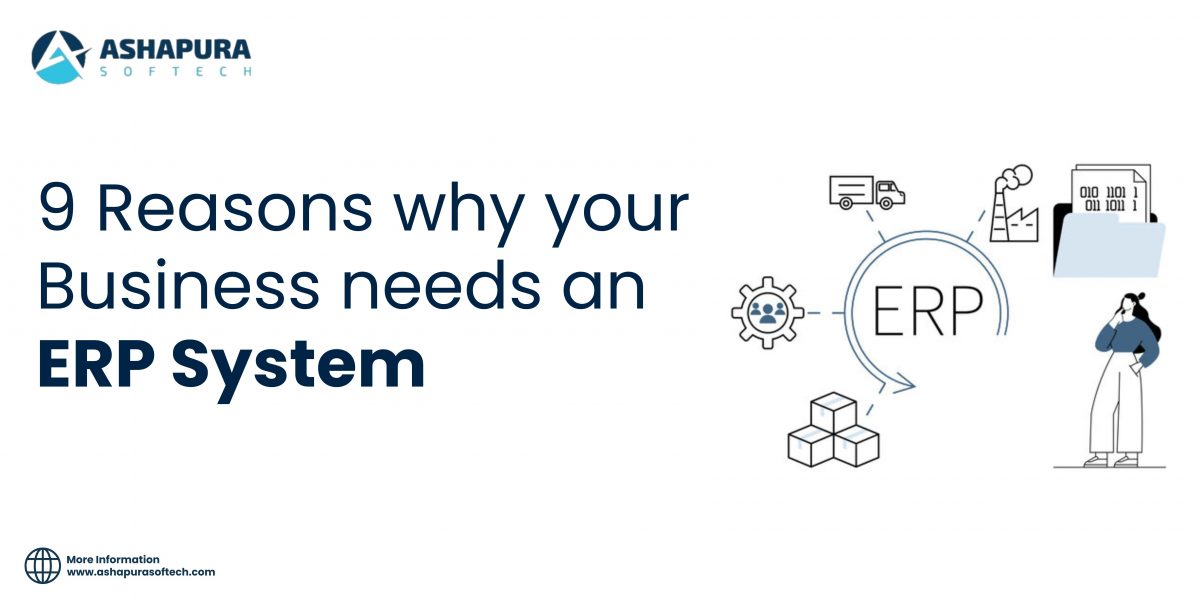
9 Reasons Why Your Business Needs an ERP System

This is an agreed fact that in the current business environment, there is a lot of competition, thus for any business, the desire should be to compete in a way that will not incur a lot of cost in running the business venture while at the same time improving efficiency. But this is where the Enterprise Resource Planning (ERP) software comes in, which plays a very central function in the whole process. These prescriptive meanings of an ERP system are based on the determination of an ERP system as a material and methodical complex that includes the key business processes of enterprises, such as financing, accounting, purchase and product storage, personnel management, customer relations management, etc.

Maybe now you might be thinking, “Does my business require an ERP System for this you get a positive response.”‘Yes’ for all business federations of any size and of any establishment. Here are 9 compelling reasons why implementing an ERP system is an investment that will pay off in the long run: The following list contains nine compelling reasons that will make it worthwhile to implement an ERP system in the future:

1. Quicker Work:

Using multiple spreadsheets and storing data in different places can slow down work. ERP software brings all your business tasks together in one place, making it easy to find important information. This stops the same information from being entered more than once and cuts down on mistakes, making work smoother throughout the company. the software also helps with boring tasks like keeping track of orders, making bills, and seeing what we have in our inventory.

2. Clearer Information and Better Decisions:

ERP systems collect information from all areas of the business, giving you a quick overview of how things are doing. Imagine it as a big dashboard showing key numbers like how much stuff we have, how well we’re selling, and how good our money situation is. Seeing this up-to-date info helps you make good choices with the freshest data, not outdated stuff.

3. Better Inventory Control:

ERP software gives you great tools to handle your stock. You can keep an eye on what you have, make ordering easier, and avoid running out of things or having too much. This means you handle your money better, spend less on keeping stock, and make customers happier.

4. Improved Customer Management:

Lots of ERP systems also help with customer stuff, letting you keep track of orders, conversations, and any help they need right in the same system. This helps you keep better relationships with customers and gives better service because you see everything in one place.

5. Strong Money Management:

ERP software makes money tasks like paying bills and collecting payments easier, helps with planning and guessing future money needs, and lets you see how your money is doing right away. This helps you understand your money better, find ways to improve, and make smart money choices.

6. Advantages Of Improved Collaboration And Communication:

An ERP system provides a central platform for communication and collaboration between various departments. When different teams have access to the same information, they can work together more efficiently. This fosters unity at work and eliminates breakdowns in communication.

7. Scalability To Match Business Growth:

The ability of the ERP software to scale should be considered as your company grows. Keep in mind that modern solutions can be scaled up or down so they should allow for the addition of new users, and functions, as well as integration with other software when necessary in the future. Thus, this guarantees you many years of usage without rendering it obsolete

8. Increased Data Protection Levels And Security Measures:

Any security breach may have serious implications for any organization. To prevent this, you need to use systems that have strong security features, for instance, data encryption, among others. Additionally, disaster recovery protocols such as those present within most ERP systems will ensure that your business continuity plan is well-implemented

9. Better Compliance Management Systems:

If you want to comply with the various regulations or meet specific reporting requirements within a given industry, then ERPs can help you achieve that easily through the automation of data collection and reporting. This makes it easier to maintain compliance while reducing the chances of making errors, which could lead to severe penalties being imposed against the company.

Picking the Best ERP Software :

With so many options out there, it can be tough to choose the right ERP software for your business. Here are some things to think about when making your decision:

1. Industry

Consider if the software is tailored to your specific industry or if it’s more of a general-purpose tool.

2. Company size:

Make sure the software is scalable and won’t become a bottleneck as your business grows.

3. Budget:

ERP systems can range in price, so decide how much you’re willing to spend and look for options that fit your budget.

4. Features:

Identify the key features you need, and make sure the software you choose offers them. Don’t get caught up in unnecessary bells and whistles.

Keep these factors in mind when comparing different ERP solutions. Don’t be afraid to ask for demos or free trials to get a better feel for how each one works. Trust your gut instinct and choose the software that feels right for your business.

Benefits of Partnering with ERP Software Development Services:

Putting into practice the information technology of the ERP system is considered a complex task. But a partnership with a qualified team of ERP software developers facilitates the smooth and efficient assimilation of the system into your organization.

Needs assessment:

Find your special company specifications and select the accurate ERP method.

Customization:

The approach of many ERP providers to applying custom options to your company’s suit is to tweak the system to meet your company’s unique requirements.

Implementation:

Assist you in the entire implementation process, from data migration to user training.

Integration:

Integrate the ERP system with your existing software applications.

Ongoing support:

Ensure your ERP system continues to address your emerging needs by providing continuous support and maintenance.

Conclusion

Implementing an ERP system is no longer a luxury; it’s a necessity for businesses aiming to stay competitive in today’s fast-paced market. From streamlining operations and improving productivity to enhancing decision-making, the benefits of an ERP system are undeniable. By integrating all your business processes into one cohesive system, you not only gain a real-time view of your operations but also position your business for growth and success. At Ashapura Softech, we specialize in delivering customized ERP solutions tailored to meet the unique needs of your business. Our expert team ensures a seamless transition and ongoing support, so you can focus on what matters most—growing your business. Are you ready to take the next step? Contact us today at [email protected] and let us help you unlock the full potential of your business with our cutting-edge ERP solutions.

Categories
ERP System

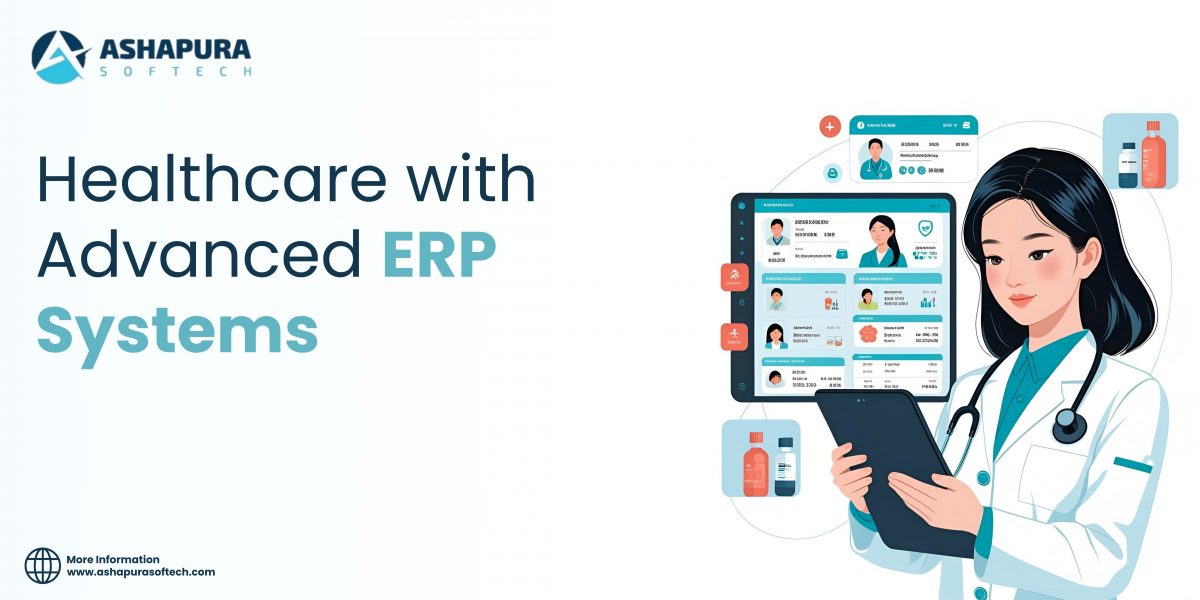
Healthcare with Advanced ERP Systems

What Is ERP?

Before talking about ERP systems in the healthcare industry, I just wanted to give some information about ERP. ERP stands for enterprise resource planning, but what does ERP mean? The simplest way to define ERP is to think about all the core processes needed to run a company: finance, manufacturing, HR, supply chain, services, procurement, and others. At its most basic level, ERP integrates these processes into a single system.

ERP in healthcare industry uses the latest technologies – such as machine learning and artificial intelligence (AI) – to provide intelligence, visibility, and efficiency across every aspect of a business.

Any ERP software will have a long list of features based on the industry they serves. However, all ERPs should have these characteristics:

Up-to-date information and alerts, with self-service reporting across all operations

Visual presentation of the information with analytics to help

The choice of types of ERP, such as cloud, on-premise, or hybrid

Standard and advanced business processes, like, automation with AI and Machine learning,

Configuration tools for processes and users (including customers and suppliers), as well as for business units, locations, and product lines, for example

easy integration with other software solutions, including third-party systems

Technology platform that is fast, proven, and stable for this long-term investment

Technology support for the (IoT), security and privacy, mobile, e-commerce, and other business priorities

Multinational support including languages and business practices, as well as cloud, training, help desk, and implementation services

Benefits Of ERP In Healthcare Industry:

Higher productivity: automate your core business processes to help everyone

Deeper insights: Eliminate information mismatch and get fast answers to mission-critical business questions.

Accelerated reporting: Fast-track business and financial reporting and easily share results. Act on insights and improve performance in real time.

Lower risk: Maximize business visibility and control, ensure compliance with regulatory requirements, and predict and prevent risk.

Improved agility: With efficient operations and ready access to real-time data, you can quickly identify and react to new opportunities.

Due to All of these benefits, ERP is now a Modern-day essential.

The business needs of ERP software in the healthcare industry are no different. Healthcare providers around the world are under intense pressure to achieve two goals: high-quality care and significant cost reductions. To date, healthcare facilities are increasingly investing in the development of their ERP systems to improve the availability and quality of patient care. In addition, reducing clinical errors and increasing the productivity of healthcare providers are key reasons for adopting ERP solutions.

The emergence of more patents and technologies has necessitated the need for hospitals and other healthcare providers to compile a database of patients with important information for doctors and staff. Physicians and nurses need real-time information on their patient’s diagnostic reports to facilitate communication and make their treatments more effective. In addition, various hospital departments require automated solutions to integrate their primary services, support services, and back-office operations. Reducing costs and overwork is one of the main reasons for adopting an ERP solution. Dissemination of information throughout the pharmacy, laboratory system, radiology, imaging and communication system (PACS), and electronic medical records (EMRs) for patients is essential. Patients, on the other hand, gain access to the consolidated information of their medical reports to plan timely appointments and make immediate decisions.

Some Of The Main Benefits Of Using ERP Solutions Are:

Improved patient care: ERP software enables healthcare providers to provide patients with remote access to critical information resources and reports. It helps patients to be informed about treatment and to make quick decisions. Advanced automated software scheduling simplifies follow-up tests and treatment procedures. The ERP solution ensures the availability of critical patient information across multiple systems.

Reduce maintenance costs: ERP as part of automated IT software leads to improved process efficiency. ERP offers a wide variety of services, such as accounting, finance, and human resources, and brings them under a single domain. It helps to perform various backup functions such as staff management, account management, and asset management.

General health care policies: This is achieved by integrating basic services such as patient registration, electronic medical records management, the radiology department, OPD, and emergencies.

Financial Planning: ERP ensures that payments from various operating care providers are fair, which becomes a win-win situation for providers and payers. It helps maintain healthcare facilities and benefits in less expensive patient care.

Following best practices: Health facilities can better manage all policies and procedures related to member benefits, claims, registrations, and provider networks, which will eventually be updated with the best industry practices.

Patient Safety: ERP software gives healthcare providers the ability to improve safety by making the communication between physicians and patients visible. Many organizations view interactive ERP as an organization’s mandate to provide a culture of patient safety.

Conclusion

ERP systems in the healthcare industry are revolutionizing the way medical institutions operate. By integrating various functions such as patient management, billing, supply chain, and human resources, ERP solutions streamline processes, reduce errors, and improve overall efficiency. With real-time data access and improved communication across departments, healthcare providers can enhance patient care, manage resources better, and make more informed decisions. As the industry continues to evolve, adopting an ERP system becomes crucial for staying competitive and delivering high-quality care. At Ashapura Softech, we offer tailored ERP solutions for the healthcare industry, designed to meet the unique needs of medical institutions. Looking to optimize your healthcare operations? Contact us at [email protected] to explore our ERP solutions and take your healthcare services to the next level.