Categories
eCommerce

Start Your E-commerce Business in 2024: A Complete Checklist

Starting an e-commerce business can seem like a daunting task, but with the right plan and resources, you can set yourself up for success. In this guide, we’ll provide a comprehensive checklist to help you launch your online store in 2024, leveraging the latest e-commerce services and technologies.

E-commerce Services: Understanding

E-commerce Services are the backbone of your online business. This comes in the form of website development and hosting, processing payments, and marketing tools, among others. These services will help smooth out your operations and create a greater experience for customers.

Types of E-commerce Services

  • Website Development and Hosting: Keeps your online store up.
  • Payment Processing:  Secure transaction processing is facilitated.
  • Marketing Tools: Reach your Target Audience and Drive Sales.

Market Research: Detailed market research is needed before venturing into e-commerce.

Identifying Your Niche: A specific market segment allows you to dominate a particular market segment or claim a particular territory. Alternatively, sells those highly unique products by finding gaps in the market.

Competitor Analysis: Know your competitors and research their strengths and weaknesses. The information will help you position your business accordingly.

Understand Your Target Audience: Know your potential customers and what they need. Know how they shop. This will help you with product and marketing strategies.

Preparing a Business Plan: A good business plan serves as a blueprint for success.

Scope of Business Plan: It gives direction; states your objectives and helps raise capital.

  Basic Elements of a Business Plan

  • Executive Summary: A concise but complete summary of the business.
  • Market Analysis: Your market research findings.
  • Marketing Strategy: How you plan to attract and retain customers.
  • Financial Projections: Estimates of your revenue, costs, and profits.

Choosing an E-commerce Platform For E-commerce Business: Selecting the finest e-commerce platform is essential.

Overview of Popular Platforms

  • Shopify: Known for its ease of use
  • WooCommerce: Great if you already have a website on WordPress.
  • BigCommerce: offers robust features for scaling.

Factors to Consider

  • Ease of Use: How user-friendly is the platform?
  • Customization: The level of customization available.
  • Scalability: Can the platform grow with your business?

Domain Name and Hosting: Your domain name is your online identity. Choose something memorable and relevant to your brand.

Selection of a Domain Name

  • Simple: Easy to remember, easy to type.
  • Brandable: Tells about your business

Choosing a Hosting Provider: Seek reliable services for hosting with high uptime and good customer support.

E-commerce Cloud Services

Using e-commerce cloud services will shed light on flexibility and scalability.

     Why Cloud Services?

  • Scalability: Spin up/down resources as demand dictates.
  • Economical: Pay for what you use.
  • Security: Better security features are in place to protect your business data and those of customers.

Top E-commerce Cloud Service Providers

Website Development: Your webpage is like a storefront; therefore, it must look beautiful and interactive.

Why You Need a User-Friendly Design: A well-designed site will bring out the best user experience and increase sales.

Hire e-commerce development services: Professional developers can help create a seamless and customized version of an online store.

Product Sourcing and Inventory Management: Finding reliable suppliers and managing products in stock is the key to your success.

     Finding Suppliers

  • Wholesalers: Buy in bulk and get better prices.
  • Manufacturers: Buy directly from the manufacturer’s source.

How to Manage Inventory Effectively: Controls stocks with the help of inventory management software. Track inventory levels to prevent overselling.

Setting Up Payment Gateways: More payment gateways can be added so that buyers have a wider choice to select from.

Popular Payment Options 

  • Credit/Debit Cards
  • PayPal
  • Stripe

Ensuring Secure Transactions: Activate SSL certificates. Implement all PCI compliance requirements.

Developing a Marketing Strategy: A strong marketing strategy can drive traffic and boost sales.

Why Digital Marketing: Establish an online presence to build brand awareness and prospects.

      Principal Marketing Channels

  • Social Media: Engage with your audience on platforms such as Facebook and Instagram.
  • Email Marketing: Running targeted campaigns to your Leads.
  • Content Marketing: Creating valuable content that you would want to attract and retain your customers.

Search Engine Optimization (SEO): SEO is essential to generate in-store organic traffic.

     SEO Basics 

  • Keyword Research: Identify relevant keywords like “E-commerce services” and “E-commerce Cloud services”.
  • On-page SEO: Product description, meta tags, image optimization.
  • Off-page SEO: Build backlinks from respectable sites.

Launch Your Store: Now that you have all the basics covered, it’s finally time for the final and most important step is go live.

     Final Checks Before Launch

  • Test All Features: Make sure everything is running as expected.
  • Get Feedback: A soft launch should be carried out to get some early feedback.

     Soft Launch vs Hard Launch

  • Soft Launch: Limited release to test the waters.
  • Hard Launch: Hit the launch button hard for full-scale releases to the public.

Post-Launch Activities: Your work doesn’t stop after launching your store

  • Monitoring Performance: Use analytics tools to monitor store performance and customers’ behavior.
  • Continuous Improvement: Update your store periodically; add features and change them upon request.

Conclusion

Starting an e-commerce business in 2024 requires careful planning, strategic decision-making, and a clear understanding of the market landscape. By following this step-by-step checklist, you’ll be well-equipped to build a successful online store that meets the needs of your target audience and stands out in a competitive market. Remember, the key to long-term success is continuous learning, adapting to changes, and always prioritizing the customer experience. At Ashapura Softech, we specialize in helping businesses like yours navigate the complexities of e-commerce with tailored solutions that drive growth. Whether you’re just starting or looking to scale, our team of experts is here to support you every step of the way. Get in touch with us today at [email protected] to learn how we can help you achieve your e-commerce goals.
Categories
Web

Top Websites Development Companies in the United States

In today’s digital world having an online presence is a must for any business. A well-designed website is often the first point of contact between a company and its potential customers. To make sure your website stands out and represents your brand well, partnering with a good web development company is key. Here we list out the top website development companies in the US that offer web development services and custom web development.

1. Ashapura Softech

Ashapura Softech is a web development company offering web and mobile app development services. They are custom web development experts so each project is built to the client’s requirements. Their team of developers uses the latest technologies to build robust and user-friendly websites for businesses.

2. Toptal

Toptal connects businesses with top freelance web developers. Their network has top talent that has gone through a thorough screening process so clients get the best web development solutions. Whether you need a simple website or a complex web application, Toptal’s developers can deliver.

3. Blue Fountain Media

Blue Fountain Media is a company that manages all things digital or web-related, especially designing websites. They develop various types of websites for commerce, responsiveness, and content management. They have cool designs and the latest technology in making websites look great and work well.

4. WillowTree

WillowTree does websites for phones and tablets, yet another really good company. Again, special websites, easy to use, work smoothly; the people working there are very good at what they do. Together with their client, they work closely to get a website that will help their business and make the people using it happy.

5. DotcomWeavers

DotcomWeavers is one of the most reputed web development companies that provides services in the areas of eCommerce development, web application development, and custom web development. In all, they aim to provide maximum web development solutions that are aimed at leveraging the functional utility and usability of clients’ websites. The experience and expertise of the developers in this company can be gauged by the fact that they have so far provided top-notch services to different types of companies across the globe.

6. Iflexion

Iflexion is an experienced web development company that offers a string of web development services of any complexity: from web portal development, and e-business solutions, to enterprise web applications and custom web development services. Iflexion developers’ portfolio is full of successful web projects, bringing its clients business success and growth.

7. Mercury Development

It offers full-cycle web development services, meaning its work starts with understanding the initial concept and continues till its final deployment. Having a set of experts in custom web development services, each website is built as uniquely as possible. With quality and innovation, Mercury Development helps businesses construct a website that stands out among any other place in the digital world.

Conclusion:

These reasons help in choosing the right web development company. From the content mentioned above, companies from the United States are among the best. Characterized by their expertise, innovations in offering solutions, and quality of service, which can help turn your web presence into a successful one. Whether you need to build a simple website or a complex web application, the companies above can offer web development solutions that are required to achieve success. Also, in this regard, one can get in touch with Ashapura Softech, which is a team of experienced professionals offering custom web development services according to one’s specific business needs, ready to help one have a website that stands out and thus, drives growth. Looking for a top-tier web development partner in the United States? Choose Ashapura Softech for innovative solutions that elevate your business. Get in touch today at [email protected] to start your digital transformation!

Categories
ERP System

9 Reasons Why Your Business Needs an ERP System

This is an agreed fact that in the current business environment, there is a lot of competition, thus for any business, the desire should be to compete in a way that will not incur a lot of cost in running the business venture while at the same time improving efficiency. But this is where the Enterprise Resource Planning (ERP) software comes in, which plays a very central function in the whole process. These prescriptive meanings of an ERP system are based on the determination of an ERP system as a material and methodical complex that includes the key business processes of enterprises, such as financing, accounting, purchase and product storage, personnel management, customer relations management, etc.

Maybe now you might be thinking, “Does my business require an ERP System for this you get a positive response.”‘Yes’ for all business federations of any size and of any establishment. Here are 9 compelling reasons why implementing an ERP system is an investment that will pay off in the long run: The following list contains nine compelling reasons that will make it worthwhile to implement an ERP system in the future:

1. Quicker Work:

Using multiple spreadsheets and storing data in different places can slow down work. ERP software brings all your business tasks together in one place, making it easy to find important information. This stops the same information from being entered more than once and cuts down on mistakes, making work smoother throughout the company. the software also helps with boring tasks like keeping track of orders, making bills, and seeing what we have in our inventory.

2. Clearer Information and Better Decisions:

ERP systems collect information from all areas of the business, giving you a quick overview of how things are doing. Imagine it as a big dashboard showing key numbers like how much stuff we have, how well we’re selling, and how good our money situation is. Seeing this up-to-date info helps you make good choices with the freshest data, not outdated stuff.

3. Better Inventory Control:

ERP software gives you great tools to handle your stock. You can keep an eye on what you have, make ordering easier, and avoid running out of things or having too much. This means you handle your money better, spend less on keeping stock, and make customers happier.

4. Improved Customer Management:

Lots of ERP systems also help with customer stuff, letting you keep track of orders, conversations, and any help they need right in the same system. This helps you keep better relationships with customers and gives better service because you see everything in one place.

5. Strong Money Management:

ERP software makes money tasks like paying bills and collecting payments easier, helps with planning and guessing future money needs, and lets you see how your money is doing right away. This helps you understand your money better, find ways to improve, and make smart money choices.

6. Advantages Of Improved Collaboration And Communication:

An ERP system provides a central platform for communication and collaboration between various departments. When different teams have access to the same information, they can work together more efficiently. This fosters unity at work and eliminates breakdowns in communication.

7. Scalability To Match Business Growth:

The ability of the ERP software to scale should be considered as your company grows. Keep in mind that modern solutions can be scaled up or down so they should allow for the addition of new users, and functions, as well as integration with other software when necessary in the future. Thus, this guarantees you many years of usage without rendering it obsolete

8. Increased Data Protection Levels And Security Measures:

Any security breach may have serious implications for any organization. To prevent this, you need to use systems that have strong security features, for instance, data encryption, among others. Additionally, disaster recovery protocols such as those present within most ERP systems will ensure that your business continuity plan is well-implemented

9. Better Compliance Management Systems:

If you want to comply with the various regulations or meet specific reporting requirements within a given industry, then ERPs can help you achieve that easily through the automation of data collection and reporting. This makes it easier to maintain compliance while reducing the chances of making errors, which could lead to severe penalties being imposed against the company.

Picking the Best ERP Software :

With so many options out there, it can be tough to choose the right ERP software for your business. Here are some things to think about when making your decision:

1. Industry

Consider if the software is tailored to your specific industry or if it’s more of a general-purpose tool.

2. Company size:

Make sure the software is scalable and won’t become a bottleneck as your business grows.

3. Budget:

ERP systems can range in price, so decide how much you’re willing to spend and look for options that fit your budget.

4. Features:

Identify the key features you need, and make sure the software you choose offers them. Don’t get caught up in unnecessary bells and whistles.

Keep these factors in mind when comparing different ERP solutions. Don’t be afraid to ask for demos or free trials to get a better feel for how each one works. Trust your gut instinct and choose the software that feels right for your business.

Benefits of Partnering with ERP Software Development Services:

Putting into practice the information technology of the ERP system is considered a complex task. But a partnership with a qualified team of ERP software developers facilitates the smooth and efficient assimilation of the system into your organization.

Needs assessment:

Find your special company specifications and select the accurate ERP method.

Customization:

The approach of many ERP providers to applying custom options to your company’s suit is to tweak the system to meet your company’s unique requirements.

Implementation:

Assist you in the entire implementation process, from data migration to user training.

Integration:

Integrate the ERP system with your existing software applications.

Ongoing support:

Ensure your ERP system continues to address your emerging needs by providing continuous support and maintenance.

Conclusion

Implementing an ERP system is no longer a luxury; it’s a necessity for businesses aiming to stay competitive in today’s fast-paced market. From streamlining operations and improving productivity to enhancing decision-making, the benefits of an ERP system are undeniable. By integrating all your business processes into one cohesive system, you not only gain a real-time view of your operations but also position your business for growth and success. At Ashapura Softech, we specialize in delivering customized ERP solutions tailored to meet the unique needs of your business. Our expert team ensures a seamless transition and ongoing support, so you can focus on what matters most—growing your business. Are you ready to take the next step? Contact us today at [email protected] and let us help you unlock the full potential of your business with our cutting-edge ERP solutions.

Categories
CRM Custom Software

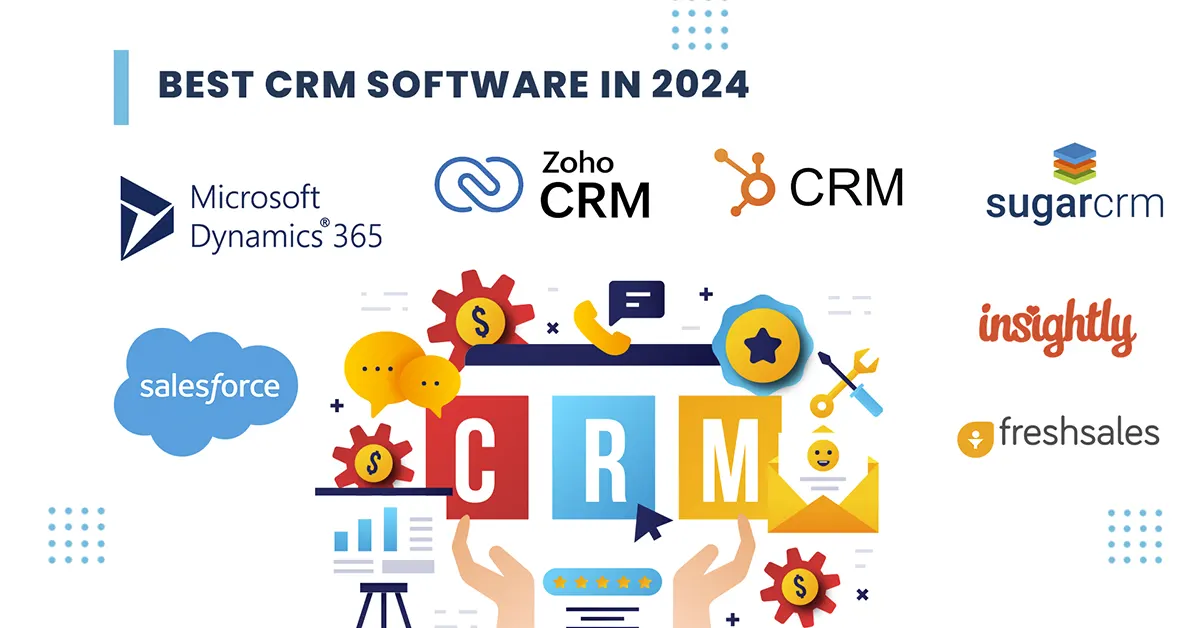
Best CRM Software in 2024: Top 7 Platforms

Introduction –

In today’s hyper-connected digital era, managing customer relationships has become more critical than ever for businesses striving to stay competitive. Enter (Customer Relationship Management) CRM software development – the cornerstone of modern business operations. As we step into 2024, the landscape of CRM solutions continues to evolve, offering a myriad of features and benefits to businesses worldwide. Let’s delve into the top 7 CRM software platforms of 2024, each offering unique capabilities to streamline processes, enhance customer engagement, and drive growth.

1. Salesforce

Salesforce stands as the undisputed leader in the CRM development, offering a comprehensive suite of tools designed to streamline sales, marketing, and customer service processes. From lead management and opportunity tracking to advanced analytics and AI-driven insights, Salesforce provides unparalleled customization and scalability.

Salesforce’s feature-rich platform includes lead management, sales forecasting, marketing automation, and customer service functionalities. Its scalability, extensive third-party integrations, and user-friendly interface make it a top choice for businesses seeking a versatile CRM solution.

2. Microsoft Dynamic 365

Microsoft Dynamics 365 is a powerhouse CRM platform that integrates seamlessly with the Microsoft ecosystem, including Office 365 and Azure. Its modular approach allows businesses to tailor the platform to their specific needs, whether it’s sales, marketing, customer service, or operations.

Dynamics 365’s AI-driven insights, customer journey mapping, and predictive analytics enable organizations to gain deeper insights into customer behavior. Its flexible deployment options, enterprise-grade security, and seamless integration with Microsoft’s suite of productivity tools make it a preferred choice for large enterprises.

3. Zoho CRM

Zoho CRM caters to businesses of all sizes with its extensive range of features, including sales automation, workflow automation, social media integration, and AI-driven insights. The platform’s flexibility and customization options make it adaptable to diverse business requirements.

Zoho CRM’s affordability and scalability make it an attractive option for businesses looking to enhance their customer relationships without breaking the bank. With built-in telephony features and a plethora of add-on apps, Zoho CRM offers a comprehensive solution for managing sales and marketing processes. Its affordability, scalability, and seamless integration with third-party apps make it an attractive option for businesses looking to enhance productivity and drive growth.

4. HubSpot CRM

HubSpot CRM excels in simplifying complex tasks with its intuitive interface and powerful automation capabilities. Features like contact management, email tracking, lead scoring, and marketing automation are seamlessly integrated. HubSpot CRM enables businesses to nurture leads and track customer interactions effortlessly.

HubSpot CRM’s free version offers essential features, making it accessible to startups and small businesses. Its comprehensive reporting tools, customizable workflows, and exceptional customer support. HubSpot CRM is a preferred choice for businesses looking to optimize their sales and marketing efforts.

5. SugarCRM

SugarCRM Platform offers a highly customizable platform with features like sales automation, marketing automation, and customer support. Whether deployed in the cloud or on-premises, SugarCRM adapts to the unique needs of each business, providing flexibility and control.

SugarCRM’s open-source availability and extensive customization options make it a preferred choice for businesses seeking tailor-made CRM solutions. With a focus on customer experience and flexible deployment options, SugarCRM empowers organizations to deliver exceptional customer service and drive loyalty.

6. Insightly

Insightly combines CRM and project management capabilities, providing a holistic solution for businesses managing both customer relationships and projects. With features like contact management, email integration, task automation, and reporting tools, Insightly helps teams stay organized and productive.

Insightly’s robust project management features and seamless integration with G Suite and Office 365 make it an ideal choice for service-based businesses and project-driven organizations. Its user-friendly interface and customizable workflows enable businesses to streamline processes and drive collaboration across teams.

7. Freshsales:

Freshsales leverages AI technology to provide actionable insights and automate repetitive tasks, enabling sales teams to focus on building relationships and closing deals. With features like lead scoring, email tracking, and a built-in phone, Freshsales empowers businesses to drive efficiency and productivity.

Freshsales’ ease of setup and use, integration with third-party apps, and robust customer support make it an attractive choice for businesses seeking a modern CRM solution. Its customizable options and focus on user experience enhance productivity and drive meaningful interactions with customers. Freshsales adapts to the unique needs of each business, driving better outcomes and higher ROI.

Conclusion

In the ever-evolving landscape of CRM software, the year 2024 presents businesses with an array of innovative platforms designed to revolutionize customer relationship management. Each of the CRM software platforms discussed above offers a unique blend of features, functionalities, and benefits, catering to diverse business needs and objectives.

1. Salesforce: As businesses navigate the complexities of the modern marketplace, choosing the right CRM solution is paramount to success. Salesforce leads the pack with its comprehensive suite of tools, scalability, and extensive third-party integrations, making it a top choice for businesses of all sizes.

2. Microsoft Dynamic 365: It’s empowering enterprises with its modular approach, seamless integration with Microsoft’s ecosystem, and AI-driven insights, enabling organizations to deliver personalized experiences at scale.

3. Zoho CRM: It offers affordability, flexibility, and extensive customization options, making it a preferred choice for businesses seeking to streamline sales and marketing processes without breaking the bank.

4. HubSpot CRM: HubSpot CRM stands out for its user-friendly interface, powerful automation capabilities, and free version, making it an attractive option for startups and small businesses looking to optimize their sales and marketing efforts.

5. SugarCRM: It provides a highly customizable platform with a focus on customer experience, flexibility, and open-source availability, empowering businesses to deliver exceptional customer service and drive loyalty.

6. Insightly: Its CRM and project management capabilities, cater to service-based businesses and project-driven organizations with its robust features and seamless integration with G Suite and Office 365.

7. Freshsales: Freshsales leverages AI technology to provide actionable insights and automate repetitive tasks, enhancing efficiency and productivity for businesses seeking a modern CRM solution.

In conclusion, the best CRM software platforms of 2024 offer businesses a wealth of opportunities to optimize customer relationships, streamline processes, and drive growth. By carefully evaluating their unique needs, objectives, and budgetary constraints, businesses can choose the CRM solution that best aligns with their goals and aspirations, propelling them toward success in the competitive marketplace of today and tomorrow. CRM development Company.

Categories
Salesforce

Salesforce vs Odoo: Choosing the Best CRM for Your Business

Introduction –

In the rapidly evolving landscape of e-commerce, selecting the right Customer Relationship Management (CRM) platform is critical for businesses to effectively manage customer interactions, drive sales, and optimize operations. Salesforce and Odoo stand out as leading CRM solutions, each offering unique features and functionalities tailored to the diverse needs of Ecommerce Services.

This detailed comparison aims to provide e-commerce entrepreneurs with an exhaustive analysis of Salesforce and Odoo, enabling them to make well-informed decisions that align with their business objectives and growth strategies.

Understanding Salesforce Ecommerce Cloud Services –

Salesforce, a frontrunner in cloud-based CRM solutions, offers a comprehensive suite of ecommerce services through its renowned Commerce Cloud platform.Salesforce Ecommerce Services equips online retailers with advanced tools and capabilities to create personalized shopping experiences, optimize sales channels, and foster customer engagement. Key features of Salesforce Commerce Cloud include AI-powered personalization, predictive analytics, omnichannel commerce integration, and seamless scalability. The platform empowers ecommerce businesses to deliver tailored product recommendations, targeted promotions, and dynamic content across various digital touchpoints, thereby enhancing customer satisfaction and driving conversion rates.

Moreover, Salesforce ECommerce Cloud Services facilitates seamless integration with third-party ecommerce platforms and marketplaces, enabling businesses to expand their reach and maximize sales opportunities. With features such as predictive analytics, real-time inventory management, and omnichannel commerce integration, Salesforce Commerce Cloud provides ecommerce businesses with the agility and scalability needed to thrive in today’s competitive market landscape.

Exploring Odoo Ecommerce Services

Odoo, an all-in-one ERP and CRM platform, offers a flexible and customizable ecommerce solution tailored to the needs of small to medium-sized businesses. Odoo’s ecommerce module provides entrepreneurs with an intuitive platform to launch and manage online stores with ease.

Unlike traditional CRM platforms, Odoo’s modular architecture allows businesses to customize and extend the platform according to their specific requirements, ensuring a tailored solution that aligns with their unique business objectives.

From responsive website design to integrated payment gateways and multi-channel sales capabilities, Odoo’s ecommerce offering provides a comprehensive yet accessible platform for entrepreneurs looking to establish a strong online presence.

With its user-friendly interface and affordable pricing plans, Odoo’s ecommerce module is particularly well-suited for startups and SMBs seeking a cost-effective CRM solution without compromising on functionality or scalability.

Feature Comparison –

Conducting a thorough feature comparison between Salesforce and Odoo is essential to understand the strengths and weaknesses of each platform. Salesforce Commerce Cloud boasts advanced features such as AI-powered personalization, predictive analytics, and real-time inventory management, making it an ideal choice for medium to large-scale ecommerce businesses with complex requirements. On the other hand, Odoo’s ecommerce module stands out for its affordability, flexibility, and ease of use, catering to the needs of small to medium-sized retailers seeking a customizable yet accessible CRM solution.

By examining key features such as customization options, integration capabilities, and scalability, ecommerce entrepreneurs can determine which platform aligns best with their business objectives and growth aspirations.

Service and Price-wise Comparison –

Service and price are crucial factors for ecommerce businesses when choosing a CRM platform. Salesforce Commerce Cloud offers comprehensive services, including AI-driven personalization, predictive analytics, and omnichannel commerce integration, making it suitable for medium to large-scale enterprises. However, these advanced features come at a higher price point, with subscription fees and additional costs for customization and integrations. In contrast, Odoo’s ecommerce module provides a more affordable option for small to medium-sized businesses, offering customizable features, responsive website design, and integrated payment gateways. While Odoo may lack some of the advanced functionalities of Salesforce Commerce Cloud, its flexible pricing plans and open-source framework make it an attractive choice for budget-conscious entrepreneurs.

Benefits of Salesforce Ecommerce Services –

Salesforce Commerce Cloud Services offers a plethora of benefits for ecommerce businesses looking to elevate their online presence and drive revenue growth. The platform’s scalability and reliability ensure a seamless shopping experience for customers, even during peak traffic periods. By leveraging Salesforce’s AI-driven personalization capabilities, ecommerce businesses can deliver targeted product recommendations, promotions, and marketing campaigns, leading to increased conversion rates and customer satisfaction. Additionally, Salesforce Commerce Cloud’s seamless integration with other Salesforce products enables businesses to streamline operations, improve collaboration, and deliver consistent experiences across all digital channels.

With features such as predictive analytics, real-time inventory management, and omnichannel commerce integration, Salesforce Commerce Cloud empowers ecommerce businesses to stay ahead of the competition and achieve long-term success in today’s dynamic market landscape.

Benefits of Odoo Ecommerce Services –

Odoo’s ecommerce module offers several distinct advantages for small to medium-sized businesses seeking an affordable and customizable CRM solution. With its modular architecture and user-friendly interface, Odoo empowers entrepreneurs to launch and manage online stores with ease, without the need for extensive technical expertise or upfront investment. Additionally, Odoo’s flexible pricing plans and open-source framework provide businesses with the flexibility to scale their ecommerce operations according to their evolving needs and budget constraints.

By leveraging Odoo’s extensive suite of business management applications, ecommerce businesses can streamline operations, optimize workflows, and drive efficiency across the organization, ultimately enhancing productivity and driving growth in the competitive ecommerce landscape.

Support and Community –

Salesforce

Salesforce is known for its extensive support services, including extensive documentation, user forums, and professional support services. The Salesforce community, known as the Trailblazer Community, is very active and offers collaboration, networking, and learning resources. Salesforce also offers more structured support and training through its official channels.

Odoo

Odoo’s support structure comes largely from its active community. Because it’s open source, it has a large network of developers and users who contribute to forums, offer troubleshooting, and share custom modules. Official Odoo support is available but may vary by service plan.

Use Cases and Industry Verticals –

Salesforce Commerce Cloud and Odoo’s e-commerce module cater to a diverse range of industry verticals, each offering tailored solutions to meet the unique needs and challenges of ecommerce businesses. Salesforce Commerce Cloud is widely adopted across industries such as retail, consumer goods, fashion, electronics, and B2B commerce, thanks to its advanced features and scalability. Conversely, Odoo’s e-commerce module finds favor among startups, niche markets, and local businesses seeking an accessible and customizable CRM solution that aligns with their specific requirements and budget constraints.

By examining real-world use cases and industry-specific applications, ecommerce entrepreneurs can gain valuable insights into how Salesforce and Odoo can address their business needs and drive success in their respective markets.

Conclusion –

In conclusion, the decision between Salesforce Commerce Cloud and Odoo’s ecommerce module requires careful consideration of various factors, including business size, budget, customization requirements, and growth objectives.

Salesforce Commerce Cloud excels in providing advanced features, scalability, and innovation, making it an ideal choice for medium to large-scale ecommerce businesses seeking to stay ahead of the competition. On the other hand, Odoo’s e-commerce module offers affordability, flexibility, and ease of use, making it particularly well-suited for small to medium-sized retailers seeking a customizable and accessible CRM solution.

By carefully evaluating these factors and considering real-world use cases, e-commerce entrepreneurs can select the CRM platform that best aligns with their business goals and positions them for success in the dynamic and competitive e-commerce landscape.

Reasons Businesses Are Transitioning to Salesforce in 2024 –

Businesses are increasingly considering a transition to Salesforce in 2024 for several key reasons.

1. Advanced Technology Integration:

Salesforce’s strong focus on integrating advanced technologies such as artificial intelligence and machine learning provides businesses with state-of-the-art tools for data analysis and customer relationship management.

2. Scalability:

Salesforce’s cloud-based infrastructure offers unparalleled scalability, making it suitable for businesses of all sizes and enabling seamless growth and expansion.

3. Comprehensive CRM Solutions:

Salesforce offers a more complete and integrated approach to CRM, with a wide range of features and tools designed to improve all aspects of customer relationship management.

4. Robust Ecosystem:

The Salesforce ecosystem, including its comprehensive AppExchange marketplace, provides businesses with a variety of applications and integrations that improve operational efficiency and connectivity.

5. Proactive Innovation:

Salesforce’s commitment to innovation and staying ahead of industry trends makes it the future choice for businesses looking to take advantage of the latest technology developments.

To know more about Salesforce and Odoo CRM contact Ashapura Softech Team via [email protected] our experts guide you through which is the best CRM for your business.

If you decide Odoo is the better fit, our Odoo implementation company team can scope the rollout, data migration and integrations for US businesses.

Categories
Salesforce

What Does Salesforce Marketing Cloud Actually Do?

Meaning

Salesforce Marketing Cloud provides digital marketing automation and analytics software and services.

Salesforce Cloud Marketing brings several opportunities & Gives permission the users to connect any interaction from any channel on their terms & conditions.

Marketing Cloud Salesforce intrigues boost into your business with an integrated setup to focus on your social media, e-mail, web advertising, mobile and data interpretations. It helps businesses boost their overall sales & growth.

Salesforce Marketing Cloud automation is a platform that receives the highest praise and boasts the greatest number of features of any product of it is kind. This business is offering one to one customized connections for enhancing customer experience. It also offers unique insights into the customer’s journeys.

Here, Are the major features with the help of Salesforce Marketing Cloud, you can revamp how your customers perceive your company…

Salesforce Marketing Cloud Essential Features

1. Multi-Channel Messaging

E-Mails and SMS routes can be created by using this Salesforce Cloud Marketing Journey builder. Multi-channel messaging comes with myriad of application including:

Service And Support Communication

Customer Content that is related to service & support by SMS/E-Mail to provide more current information.

Post-Purchase Communication

Post-Purchase Messages, such as product shipping status, delivery information, registration details and so on. These are sent by SMS and E-mail

Financial Communication

Financial Communication can be used to send information about credit limits or loan status. For instance, SMS messages are effective on the day of the due date to ensure the customer doesn’t forget their due date. However, E-Mails can be used to remind customers upcoming payments due on loans or credit card.

2. Data-Driven Messaging

Salesforce Marketing Cloud is that the companies can utilize this tool to send out messages to every customer based on the information and details they already have, and then design new messages based on the way in which the customer’s data evolves and how it interacts in real-time. It is possible to make decisions in any of the branches within a customer’s journey, based on below factors:

Contact Data

In the marketing Cloud contacts are the information you give to a specific person. Its changes determine which option to choose. For instance, a person who is in the journey branch searching for potential customers becomes a customer. Thus, the customers could be automatically transferred to the new customer’s journey branch due to the Marketing Cloud Salesforce contact data modification.

Journey Data

Information that can be related to contact involvement in an organization like Salesforce Promoting cloud venture is referred to as venture information. For example, A customer may receive multiple E-Mails like welcome E-Mail, new or existing product registration E-Mail, etc. Following the purchase.

Salesforce Cloud Marketing can determine whether or not customers respond to any E-Mails. For instance, if a person isn’t able to open the registration E-Mail following a set period of a time, the system will deliver it again, or send them the next E-Mail reminder when they have opened the E-Mail and then acted upon it.

3. Dynamic Components

Some of the Dynamic Components that are part of Salesforce Marketing Cloud deployment can provide customised E-Mail service experiences that increase engagement. These are just a few of them:

Profiles for Dynamic Sending

It is possible to create a unique E-Mail I’d for sending E-Mails. For instance, creating an E-Mail with a distinct sender based on a how you interact with your receiver as a salesperson is a typical application for Dynamic E-Mail profiles.

Dynamic Content

Dynamic Content is Making highly personalised topics and content dependent on an individual’s traits as well as the data and the rules that are used to create them. The content for a message will differ for each receiver. This means that you will be able to deliver an experience that is unique and does not come appearing as boring.

Benefits of Salesforce Marketing cloud

  • Salesforce Cloud Marketing can collect and trigger data from first, second and third-party sources.
  • Marketing Cloud Salesforce connect data from various gadgets and sources to combine client data. Also helps to improve the efficiency of marketing by integrating the information with them.
  • Salesforce Marketing Cloud can track customer experiences across different channels and devices by using AI along with Google Analytics 360.
  • Salesforce Cloud Marketing users can utilize AI to handle interactions by combining data and Einstein Technology.
  • Marketing Cloud Salesforce help to map customer journeys across multiple channels, devices, and customer life cycle stages all in one software.
  • Salesforce Marketing Cloud can be integrated with other platforms like Salesforce CRM, Salesforce Sales Cloud and other platforms.

The Key Components of Salesforce Marketing Cloud

Marketing Cloud Salesforce has sophisticated tools and features that let you identify & get to know your clients individually. Salesforce Cloud Marketing allows you to reach them through E-Mail, social media & E-Commerce, Mobile Ads and many other more channels. With the Salesforce Cloud Marketing integration, it is possible to design the right content for each customer & maintain a one-to-one relationship with them. Let’s take a look at each Salesforce Marketing Cloud components in details

1. Journey Builder

Journey Builder is a visual mapping via Marketing Cloud Salesforce. It allows you to push notifications, E-Mails as well as social media advertisements & the web to build every customer journeys.

2. E-Mail Studio

Salesforce Cloud Marketing, E-Mail Studio enables marketers to develop relationships with their customers and increase an engagement.

3. Information Studio

Salesforce Marketing Cloud, Information Studio allows you to collaborate with various distributors and advertisers to provide amazing customer experiences and boost revenue.

4. Social Studio

Marketing Cloud Salesforce Social Studio can help you improve the effectiveness of your marketing on social media networks by listening to your followers, monitoring, and engaging with them.

5. Advertising Studio

Salesforce Marketing Cloud Ad Studio enables you to start large scale ads right through Journey Builder.

6. Mobile Studio

Salesforce Cloud Marketing, Mobile Studio is the most efficient way to send immediate messages to devices that users are using the most.

7. Interaction Studio

Marketing Cloud Salesforce manages online & offline customer interactions with real-time interaction management.

Conclusion

Salesforce Marketing Cloud provides a complete set of beautiful & fascinating tools. In this blog, we have discussed the meaning of Marketing Cloud Salesforce, The Main Marketing Cloud essential features, the benefits of a Salesforce Marketing Cloud and The Key components of Salesforce Cloud marketing. Ashapura Softech Inc is a Salesforce Consulting provider that has experience in the field of Salesforce Marketing Cloud. Ready to harness the power of Salesforce Marketing Cloud’s top features for your business? Partner with Ashapura Softech for tailored solutions that drive results. Contact us today at [email protected] to elevate your marketing strategy!

Categories
Salesforce

Unlocking Salesforce Service Cloud for Business Success

Why investing in salesforce service cloud?

Before utilizing a product, business users frequently consider the return on their investment. The Salesforce Service Cloud offerings are no different. What makes Salesforce Service Cloud worth my money, then?

Businesses can provide a comprehensive and integrated experience thanks to Salesforce Care Apps for customer service, self-service, contact centers, field centers, and staff centers. The extensive Salesforce Service Cloud features enable you to provide customers with individualized and proactive solutions, elevate your agents to the status of your most trusted advisors, and guarantee unqualified customer success. Your consumers are more likely to make further purchases when you provide them with satisfying customer service experiences.Salesforce Service Cloud enables you to:

  • Give your employees the tools they need to provide customer care via any channel and device, including social media, live chat, email, phone, SMS, and self-service websites.
  • To automatically assign cases to agents, automate procedures and processes. Through the Service Console, agents can access comprehensive client data, including their history, behavior, preferences, recent purchases, and more, on a single dashboard, increasing the number of cases that are resolved and the pleasure of the consumers.
  • Make your agents the most dependable counsel for your clients. The Salesforce Support Cloud platform brings together the divisions of sales, marketing, and customer service under one roof, enabling reps to examine all necessary user data and then provide customized solutions, incentives, and special offers based on their purchasing patterns.
  • Salesforce Service Cloud self-service site and portal solutions make it simple for customers to self-service their inquiries and discover answers to their questions. Create branded self-service websites using the Experience Builder templates and provide solutions by utilizing Salesforce Einstein’s AI capabilities.
  • Delivering linked solutions from the phone to the field requires connecting your on-site and off-site personnel to view user journeys using the Salesforce Field Service mobile app.
  • Create macros in the Salesforce Service Console to bring together a few monotonous manual procedures and automate them so they can be executed with a single click.

That’s not all, either! The advantages and functionality of Salesforce Service Cloud go much beyond what has been mentioned thus far. Nevertheless, you now have a general understanding of the Salesforce Service Cloud console, its use, and recommended practices.

8 tips to use Salesforce service cloud in right way

1. Get all of your customer data in one place by using integrations

CRM Integrative offer assistance to supply networks between CRM programs and third-party applications such as customer service program. With the assistance of this include, any interaction between the client benefit computer program can be naturally recorded and captured in your CRM.

2. Utilize customer information and personalization

To construct a great relationship with clients, Salesforce lets you collect and analyze a part of client information inside a single stage. With the assistance of this, you’ll send personalized emails to clients. This makes a difference in building client connections by coming to out to them at the correct time.

3. Enhanced Client Services

Whereas being a highly adaptable stage, Salesforce Service Cloud Experts makes a difference all your current needs when your client base is developing. The client benefit group runs exceptionally effectively with this highly integrated stage of Salesforce.

4. Recognize the reason why clients are taking off

Clients are profitable resources whereas also opening the way to more prominent development openings. They advance the item or benefit to other clients, and thus, offer assistance your company to construct up a awesome client base. Typically, the reason why you should continuously make efforts to know the reason in case you see a decrease within the client base.

5. Utilize social media to reach your clients

If you can’t answer your consumers’ questions on social media, your rate of customer churn will rise by 15%, claims some research. The annual percentage rate at which customers discontinue using a product or service is referred to as the “churn rate.” You must be responsive on social media platforms and available to your customers. Successful social media integration with Salesforce Service Cloud can make this happen.

6. Coordinated Salesforce along with your Client Service Platform

Managing with client complaints successfully has to become an extraordinary portion of the after-sales portion. According to a study, 55% of clients halt utilizing the item or benefit on the off chance that their complaints are not managed appropriately, and instantly. To minimize it, Salesforce has given the option to integrate the information along with your Client service Stage. This encouragement empowers the client service group to have access to all client information and make any doubt to timely resolve client issues.

7. Re-Engage your Inactive Subscribers by identifying them

You should first identify your inactive subscribers after tracking consumer contact as mentioned in the previous step. After that, you can send them customized emails with deals, promotions, or contests. Additionally, this will assist in re-engaging them with you.

8. Convey superior Analytics for better services

Salesforce introduced Salesforce Einstein for its cloud-based analytics. Salesforce Support Cloud makes use of a variety of Einstein Analytics technologies to improve customer service. You can utilize these capabilities to interact with your consumers more effectively and smoothly.

To entirety up, service Cloud makes a difference for you to construct superior client maintenance with overhauled client service. This stage, given by Salesforce, gives you all the conveniences to assist you to form your client base endless. In the event that you’re looking forward to Salesforce Service Cloud Implementation for your trade, you’ve got come to the correct place! Ashapura Softech could be a Salesforce service Cloud Partner and can completely assist you to execute Salesforce service Cloud in the right way so that you simply can utilize its services to their fullest potential.

Effective Benefits of Salesforce Service Cloud

1. Most Recently technology innovation adoption

Salesforce service cloud is continuously adjusted and upgraded with the most recent advances. Lightning Service Console makes a difference the clients to get the right data at whatever point required. Clients can keep all the desired data inside a centralized area. Clients can track valuable KPIs for organizations with the assistance of Service Wave Analytics. Service Cloud gives a 360 view of the clients to know their touchpoints and way better serve them.

2. The Complete Customer Data in One place

The Service Cloud gathers all customer-related data under one roof so you can immediately access crucial data, as opposed to being dispersed among three separate binders, countless Excel sheets, and a OneNote app on your phone. This includes everything from queue management to case management files and multi-channel consumer access. It also contains features like routing and escalation, pre-built integration apps, support ticketing, and connectivity with older systems.

In other words, because everything relevant is put away in an orderly and effective manner, obtaining obscure client data won’t be like searching for a needle in a haystack.

3. Offering Personalization for the Company

The more an organization can get it clients, the more personalized services can be advertised. For this case, live Specialists can give chat back to the guests when they come to the site. Each client should be treated interestingly, so Sales agents should keep all the data around them to provide them a personalized encounter and increment the change rate. Salesforce service cloud performs these tasks exceptionally successfully to supply an upgraded and personalized client involvement.

4. Customer first accroach and support from anywhere

The best feature of cloud services is that you may conduct your business wherever you are. Your agents will be able to respond to consumer inquiries from their homes, the field, or even the office. At the same time, they will be able to monitor specific problems, check client comments, and, if required, link the client with the rest of the company.

5. Help customers with their issues

During the previous two years, self-service was more important than ever, and this isn’t going to shift any time soon. Your customers may resolve their own problems using Service Cloud; they won’t even need to wait for an agent to do it for them.

Additionally, they can interact in groups, give each other power, share challenges and solutions, and even work together when appropriate. Through surveys and quizzes, they can also keep you informed about the things they like and dislike.

6. A Higher Perspective of Things

Salesforce Service Cloud enables you to make a client service stage with your long-term and short-term objectives in intellect. You’ll at that point work towards these goals while keeping an eye on the current patterns and real-time data in client care. Things like KPI dashboards will assist you in keeping track of your measurements, which will to offer assistance your client service group in getting their side of the work done more effortlessly.

7. Collaboration make easier and simple for clients

This platform permits offices, groups, the trade as an entirety, and clients to all interface and share data. Operators will get the leading possible preparation based on contemporary patterns and arrangements, permitting them to form consistent, personalized arrangements for client issues. Not as it were will client intelligence show up common and spontaneously, but they get to real-time information will o make it simpler for other zones of the business to operate.

Conclusion

Embracing Salesforce Service Cloud is a strategic move that can propel your business toward greater efficiency, customer satisfaction, and long-term success. With its robust features, such as case management, omnichannel support, and AI-driven insights, Salesforce Service Cloud empowers your team to deliver personalized, efficient service at every touchpoint. By streamlining your customer service operations and providing a 360-degree view of your customers, you can respond to inquiries faster, resolve issues more effectively, and build stronger, lasting relationships with your clients. At Ashapura Softech, we understand the unique challenges your business faces, and we are here to help you leverage Salesforce Service Cloud to its full potential. Our expert team will work closely with you to tailor a solution that aligns with your business goals and drives meaningful results. Ready to take your customer service to the next level? Contact us today at [email protected] and let Ashapura Softech guide your business to the right path with Salesforce Service Cloud.

Categories
Salesforce eCommerce

Outsourcing in Salesforce E-Commerce: Benefits & Drawbacks

Pros Of ECommerce Outsourcing

1. Focus On Core Operations

Being in charge of every aspect of the business alone is difficult. When you outsource your Salesforce E-commerce cloud operation, you will do fewer non-core duties, giving you more time and resources to concentrate on your main business.

2. Affordable Workforce Expansion

Hiring internal workers is far more expensive than hiring e-commerce cloud outsourcing. You may increase your personnel through outsourcing without investing in new furniture or facilities.

3. Best Practice Recommendations

By addressing the most recent consumer needs, outsourcing partners guarantee service standards that promote client loyalty. They can help you discover the areas that need development for a greater ROI by drawing on their extensive knowledge across a variety of sectors.

4. Increase Productivity

Maintaining an efficient supply chain, responding quickly to issues when they inevitably happen, and effectively managing orders are all tasks that may impair productivity. The complex nuances of international eCommerce are certainly beyond your area of expertise, therefore, outsourcing these tasks allows you to focus on what you do best and ultimately boosts productivity.

5. Staff Expertise

Employees of outsourcing organizations have received rigorous training in their specialties to represent clients. They make sure you have professional customer support, strong brand ambassadors, and IT specialists to manage the entire business with ease.

6. Access To The Best Technology

You won’t need to spend more money on new technology or follow trends since outsourcing service providers will take care of it on your behalf by employing the best tools and machinery.

7. Reduce Business Risks

Since you already know that your outsourced personnel is skilled at dealing with clients and other businesspeople, the chance of a badly handled customer engagement is lowered. Therefore, outsourcing your eCommerce business provides security from a number of hazards.

8. Keep Up With Industry Trends

Brands seek individualized experiences in order to regain control and ownership of the client experience. Additionally, the eCommerce outsourcing partners make sure the companies stand out from the crowd by continuously incorporating the most recent customer demands into new trends.

9. Disaster Preparedness

If a crisis strikes your location, the operations you outsourced to an overseas partner will continue. Additionally, outsourcing helps you and your company during erratic economic times avoid the impacts of any localized tragedy. So, by outsourcing to other countries, you may optimize your profits.

10. Long-Term Profitability

eCommerce outsourcing supports your growth and keeps your operations streamlined over the long term so you may continually develop most profitably.

Cons Of ECommerce Outsourcing

1. Lose Some Control

When you outsource a part of your company, you give up some control over how that function is managed and carried out. This won’t be a major problem if you select a reputable service provider with a positive brand reputation.

2. Data Security Risks

As an online retailer, the information you provide about your company, including payment information and client profiles, is particularly sensitive. You should choose a partner that can provide data security because outsourcing your e-commerce business will require you to give your service provider access to this sensitive information.

3. Miscommunication/Mishap

Without face-to-face connection, it might be challenging to communicate since your distant outsourced workers can misinterpret your signals.

4. Overlooking Your Local Community

Since your company mostly works online, this conundrum and misunderstanding arise from the fact that you do not present local opportunities.

The impact of outsourcing your firm will heavily depend on your choices and approach. The majority of the disadvantages listed above may be avoided if you select the correct service to provide.

Top 5 Salesforce Commerce Cloud Facts You Need To Know

Here are five things to consider before choosing Salesforce B2B Commerce Cloud. Continue reading to find out how these may drive the growth of your company via engaging eCommerce buying experiences.

1. An Integrated Platform Offers A 360-Degree Perspective Of The Client

To stand out in the market and win the favor of digital customers. You may address your customer Since integrating your ordering platform with Salesforce can provide you access to a 360-degree picture of your customers, The fact that it smoothly takes into account all of your buyer’s wants is its finest feature. To increase sales, guarantee client retention, and enhance conversion rates, firms may develop consistent customer experiences.

2. A Quicker Time For Marketing

Businesses are increasingly searching for products that provide thorough and ready-to-use connections. Integrations with processes, data, and applications fall under this category. Organizations place an increasing emphasis on faster time to go live in addition to flawless interfaces. Solutions for Salesforce QuickStart installation offer precisely that.

3. Enhanced Business Growth

Salesforce Commerce Cloud enables businesses to grow quickly. Businesses may use their cloud capabilities to develop more quickly and explore new areas. Because of this, expanding a firm is as easy as pressing a button. Additionally, businesses may customize their digital storefronts to work in a variety of languages, currencies, and geographical regions, depending on the needs of the market. Sellers may easily manage several businesses from a single framework, further integrating the system with more efficient and optimized processes.

4. Self-Service CRM Software For Your Businesses

Salesforce CRM makes use of its already-existing footprint and expertise in commerce cloud technologies. By utilizing a vibrant ecosystem of innovation, it allows them to easily offer a self-service extension for your CRM. Therefore, it provides an organic motivation to expand more by incorporating B2B into the same ecosystem.

5. Whole Software In Just 1 Click

Without writing a single line of code, Salesforce Commerce Cloud’s declarative programming makes customization easy and improves business functionality. This development technique covers business user ownership as well as data, objects, fields, analytics, websites, apps, and processes.

Nowadays, many businesses want a tool that may be supported and maintained by the business unit rather than IT. The Salesforce commerce cloud is one of the greatest options for these businesses. With limited control over business users, it seamlessly converts outmoded, database-driven, and non-configurable technology. All the more reason why your company will benefit greatly from using this strong platform.

Conclusion

Outsourcing in Salesforce E-Commerce can be a strategic move that offers numerous benefits, such as cost savings, access to specialized expertise, and increased flexibility. However, it also comes with potential drawbacks, like communication challenges and the need for careful vendor management. Weighing these pros and cons is crucial for making an informed decision that aligns with your business goals. Contact us at [email protected] to explore how we can tailor our services to meet your unique needs.

Categories
Salesforce

Salesforce Marketing Cloud: A Complete Guide Of Power Marketing Platform

Salesforce marketing cloud is a Customer Relationship Management (CRM) platform for marketers to build a single customer view platform to create and manage marketing relationships and run campaigns with customers.

Marketing Cloud Salesforce is a platform that covers all marketing activity in one single platform. marketer is learning Salesforce Cloud Marketing to run a business easily and grow their business.

Marketing Cloud in Salesforce is a professional online marketing to allows the brand to build customized relationships with customers, Marketing Cloud in Salesforce uses various communication channels and social networking throughout platforms & devices. Marketing Cloud Salesforce includes a predictive analytics marketing platform.

Salesforce Cloud Marketing allows marketers to create and manage marketing relationships and campaigns with customers. And built to identify leads and guide them toward your products and services.

Salesforce Marketing Cloud is a one-to-one customer journey, that sends personalized Mail, guides the exceptional social experience, Delivers personalized content, aligns advertising, automates content delivery, targets specific customers and specific segments, and Reach Customers Anytime and Anywhere. So, there are some features of Salesforce Marketing Cloud to attract marketers to the Marketing Cloud.

Salesforce Marketing Cloud is a Marketing Platform that integrates solutions for the customer Journey Management Builder, Mobile studio, E-mail studio, Social Media Studio, Web Personalization Studio, Advertising Studio, container creation, container management, Data Analysis, and Predictive Analytics.

Marketing Cloud Salesforce Make a strong connection with your customer from the start of the interaction. With the help of Marketing Cloud in Salesforce, you can interact with your customers in real time. Marketing Cloud Salesforce helps to Engage customers via E-Mail, Mobile Messages, and Social Media throw.

Here are some benefits that attract marketers and customers why they choose the Salesforce Marketing Cloud Platform. And how easily they run their marketing platform.

Benefits Of Salesforce Marketing Cloud :

1. Learn From A Customer View:

Always learn from your customers; they guide you for better future opportunities. Marketing Cloud salesforce is built to understand the importance of collecting customer data and presenting it in a meaningful and insightful way. It allows you to create more relevant and targeted content that speaks directly to their pain points and business points.

Significantly, Salesforce Cloud Marketing doesn’t just shaw your past target audience actions, performance & behaviors – it will show you what they do in future & prospects of customers.

2. Create Customers Personalised Experiences:

Marketers know that personalization is a strong key to performance. Gaining an improved understanding of the right customers means engaging them effectively. Marketing Cloud in Salesforce can be the driving force behind your personalization efforts. Salesforce Cloud Marketing is a driving force behind your personalization efforts.

Marketing Cloud Salesforce allows you to set up triggers for prospects that prompt an array of actions. Create a path to purchase – accompanied by tailored messaging & designed to guide Customers. For example, if a customer abandons their cart during the checkout process, opens an email, or downloads an E-book, the marketing team can automatically follow up with targeted messaging.

3. Use Customers Contentment To Guide Communication:

Personalization is not just an understanding of a goal; timing plays a big part too. It doesn’t matter how good your marketing communication is if you are delivering them at the wrong time. It is relevant when it comes to upselling & cross-selling for existing customers. Marketing Cloud in Salesforce has become a very easy factor tool when planning your late marketing activity.

Salesforce Marketing Cloud platform helps to plan your marketing activity with the help of customer satisfaction level. Marketing Cloud Platform automatically adjusts based on signals displayed by key accounts, pausing any communication to a specific customer until the issue they are encountering gets resolved.

4. Take Control Of Your Customer Experience:

With the help of Customer Experience, every marketer achieves their business goals. However, the whole process depends on customers’ previous actions and behaviors.

For instance, if a specific customer buys items that are on sale, wouldn’t make sense to ensure that they always receive updates for your late promotional moment. Salesforce Marketing Cloud helps with predictive analytics.

5. Build One Source Of Truth For Customer Data:

Marketing Cloud Salesforce Allows you to build one single customer view for all potential touchpoints. By Customer profiles, Privacy Management, Marketing journeys, and combining user data. A common single ID runs through your CRM & other data sources, that key can be matched up to a single customer. All the information is gathered together in one single platform, creating a single source of truth for customers. Removing confusion & ensuring that all the customers are on the same page.

Marketing Cloud in Salesforce helps to keep all single data secure in one single platform. And with the help of Marketing Cloud Salesforce reach every single customer individually & make a plan or strategy for that. Salesforce Marketing Cloud is built to manage all of this with great cleverness. And easily manage customer’s needs.

Conclusion

Salesforce Marketing Cloud is a powerful marketing platform that offers a comprehensive set of tools to help businesses connect with their customers in meaningful ways. From personalized email campaigns to data-driven insights and seamless customer journeys, this platform empowers you to maximize your marketing efforts and drive significant business growth. By fully leveraging the capabilities of Salesforce Marketing Cloud, you can elevate your marketing strategy, enhance customer engagement, and achieve better ROI. At Ashapura Softech, we’re dedicated to helping you harness the full potential of Salesforce Marketing Cloud. Whether you’re new to the platform or looking to optimize your current setup, our team of experts is here to guide you every step of the way. Contact us at [email protected] to learn how we can tailor solutions to meet your unique business needs.