Categories
CRM

CRM Solutions: Zoho CRM or Salesforce – Which Fits Your Business?

Introductions: 

Growth in the present competitive business environment demands the right CRM solution. Among many popular ones, two of the most popular ones that have different features, integration, and pricing options that cater to different business needs are Zoho CRM and Salesforce CRM. It becomes very challenging to choose between Zoho CRM and Salesforce CRM, as each offers unique tools that can have a great impact on how a business manages customer relationships and drives sales. Now let’s go through both and see how they compare using characteristics like pricing, integrations, customization options, or anything else that might just allow you to figure out whether a CRM system is better for your business.

Overview of Zoho CRM and Salesforce CRM

Zoho CRM

Zoho CRM is an inclusive CRM system that is affordable, scalable, and built in a manner that is specifically fit for small to medium businesses. It offers a robust set of tools for dealing with sales, marketing, customer support, and analytics. The user-friendly nature of Zoho CRM also makes it very popular because companies want a simple solution yet robust. Zoho applications integrate well with the other products, allowing them to form a seamless ecosystem that is efficient.

Salesforce CRM

The Salesforce CRM is a very robust and powerful CRM used by most of the big enterprise organizations and industry leaders. It is one of the well-known solutions with numerous feature sets; hence, it is somewhat customizable, and businesses may tailor the CRM to match the specific needs of operational activity. Even though it comes with a high price, Salesforce CRM offers extensive integration, advanced analytics, and automation tools, making it much more suitable for companies which have a complex requirement with resources to invest in a premium solution.

Major Feature Comparison

Sales and Lead Management

Zoho CRM emphasizes on lead management through lead scoring, assignment, and also through AI assistant named Zia that gives insights and recommendations. It helps business track leads through different stages and gives important information that helps to better engage with the lead and convert them.

It features Salesforce CRM’s Sales Cloud, which manages the pipeline of sales, makes forecasts, and nurtures leads. Advanced artificial intelligence used by Salesforce, Einstein predicts lead score, allowing for easy selection of the best, high-value deals by a sales team. This is recommended for organizations that deal with highly complex processes in addition to the need for straight-line real-time insight into delivering revenue.

Customization and Scalability

Zoho CRM offers wide-ranging customization options, including custom fields, page layouts, and dashboards, through which companies can tailor the CRM to their needs. However, its customization options may be limited compared to Salesforce, especially for enterprises with highly specific workflows.

Salesforce CRM is the best in customization, providing a robust ecosystem where companies can design custom apps, workflows, and automation rules. The AppExchange marketplace provides access to thousands of third-party applications, ensuring Salesforce can grow alongside any business as needs evolve. This makes Salesforce the preferred choice for companies with complex requirements or those expecting rapid expansion.

User Interface and Ease of Use

Zoho CRM is designed in such simplicity that does not scare away new users by its interface that is user-friendly. A clean, well-structured layout easily minimizes learning curves hence suitable for small teams or businesses that may lack dedicated IT support.

Salesforce CRM offers feature-rich interface that is complex on the first go but will be highly efficient once you get familiar with it. Its Lightning Experience allows designing a dynamic, customizable interface for users. Although, it may need more time for training initially, its advanced functionality will greatly pay off in the long run.

Pricing and Value for Money

Zoho CRM Pricing

Zoho CRM is very affordable, and its pricing is segmented into different tiers to accommodate various business models and budgets. For instance, the free version supports three users, and it can be a very good starting point for start-ups. The paid versions start at a very low price and rise according to features such as analytics, automation, and AI.

Salesforce CRM Pricing

Salesforce CRM is at the top of the pricing spectrum. The pricing plans target more considerable teams and organizations. Add-ons are for extra functionalities. That would make it less accessible for small businesses, but oftentimes, the features and support provided by Salesforce justify this cost for large companies or more complex CRM requirements.

Integration Capabilities

It seamlessly integrates with all Zoho products: campaigns, desks, analytics. Business is simple because all tools for work are used in other areas of operations of that company. On top of this, integration also allows third-party such as Google Workspace and Office 365 with Mailchimp while comparing options are less extended in scope as compared with that provided by Salesforce.

The strength of Salesforce CRM is its wide integration capabilities because of its AppExchange marketplace. It integrates with major software solutions such as Microsoft Dynamics, HubSpot, QuickBooks, and SAP. It also integrates with most industry-specific applications, meaning that businesses can centralize operations. Integration options make it ideal for large organizations which require a CRM that could connect to multiple software ecosystems.

Customer Support and Training

Zoho CRM offers customer support available 24/7 with the more expensive plans and allows contact via phone, chat, and email. There is a significant amount of training available with this software through documentation, webinars, and online forums. Support from Zoho, however, can be less responsive for the customers with lower-tier plans.

Salesforce CRM is also known for customer support: it provides 24*7 support, dedicated account managers, and many training options through Trailhead, Salesforce’s interactive learning platform. This support, along with the massive community that exists in Salesforce, makes Salesforce a good fit for those companies that truly value strong support.

Advantages and Disadvantages

Zoho CRM

Advantages:

  • Lower price
  • Easy to navigate
  • Good integration with the Zoho apps
  • Recommended for small to medium enterprises

Disadvantages:

  • Less customization compared to Salesforce
  • Fewer third-party integrations

Salesforce CRM

Advantages: 

  • Full customization options
  • Advanced AI capabilities with Einstein
  • Large marketplace (AppExchange) for integrations
  • Superb customer support and training

Disadvantages: 

  • More expensive
  • Steeper learning curve

Which CRM System Is Right for Your Business?

The right CRM depends on your business’s size, budget, and specific needs:

  • If your company is a small to medium-sized business looking for an affordable and scalable CRM solution, Zoho CRM might be the best choice.
  • Salesforce CRM is a better fit for large businesses or companies having intricate business processes that would need major customization.

Conclusion: Zoho CRM vs. Salesforce CRM – The Best Choice

In simple words, to cut all this long story short, Zoho CRM and Salesforce CRM both bring something new and better into the market. There’s affordability, as well as ease of use, through Zoho CRM, for smaller organizations or a simple CRM implementation. While on the other hand, Salesforce CRM will be satisfying large corporations in order to cater to all the needs it offers very strong features, numerous integrations, and broad customization facilities. Ultimately, it will be upon each choice to decide which one will best suit your business, according to the size, needs, and budget of your business. An investment in the right CRM solution can make a big difference in customer satisfaction, sales, and growth. If you are looking for the best CRM solution implementation, Ashapura Softech provides expert guidance along with a wide range of CRM development services. Just Contact us at [email protected] to find out how we can tailor the perfect CRM system for your business.
Categories
CRM Custom Software

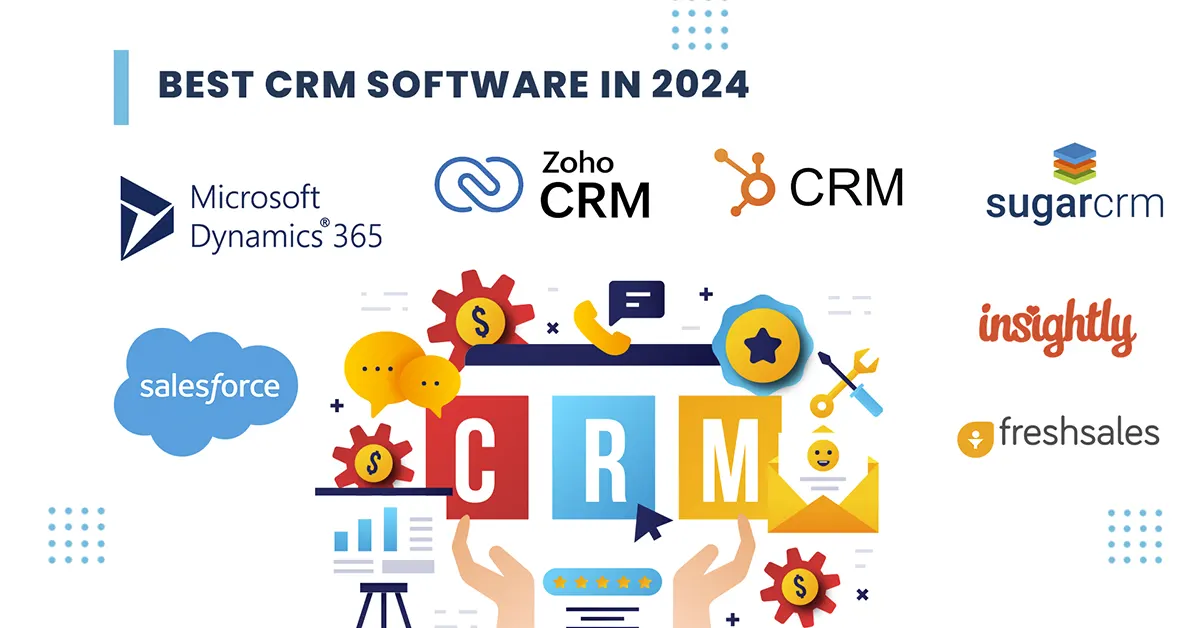
Best CRM Software in 2024: Top 7 Platforms

Introduction –

In today’s hyper-connected digital era, managing customer relationships has become more critical than ever for businesses striving to stay competitive. Enter (Customer Relationship Management) CRM software development – the cornerstone of modern business operations. As we step into 2024, the landscape of CRM solutions continues to evolve, offering a myriad of features and benefits to businesses worldwide. Let’s delve into the top 7 CRM software platforms of 2024, each offering unique capabilities to streamline processes, enhance customer engagement, and drive growth.

1. Salesforce

Salesforce stands as the undisputed leader in the CRM development, offering a comprehensive suite of tools designed to streamline sales, marketing, and customer service processes. From lead management and opportunity tracking to advanced analytics and AI-driven insights, Salesforce provides unparalleled customization and scalability.

Salesforce’s feature-rich platform includes lead management, sales forecasting, marketing automation, and customer service functionalities. Its scalability, extensive third-party integrations, and user-friendly interface make it a top choice for businesses seeking a versatile CRM solution.

2. Microsoft Dynamic 365

Microsoft Dynamics 365 is a powerhouse CRM platform that integrates seamlessly with the Microsoft ecosystem, including Office 365 and Azure. Its modular approach allows businesses to tailor the platform to their specific needs, whether it’s sales, marketing, customer service, or operations.

Dynamics 365’s AI-driven insights, customer journey mapping, and predictive analytics enable organizations to gain deeper insights into customer behavior. Its flexible deployment options, enterprise-grade security, and seamless integration with Microsoft’s suite of productivity tools make it a preferred choice for large enterprises.

3. Zoho CRM

Zoho CRM caters to businesses of all sizes with its extensive range of features, including sales automation, workflow automation, social media integration, and AI-driven insights. The platform’s flexibility and customization options make it adaptable to diverse business requirements.

Zoho CRM’s affordability and scalability make it an attractive option for businesses looking to enhance their customer relationships without breaking the bank. With built-in telephony features and a plethora of add-on apps, Zoho CRM offers a comprehensive solution for managing sales and marketing processes. Its affordability, scalability, and seamless integration with third-party apps make it an attractive option for businesses looking to enhance productivity and drive growth.

4. HubSpot CRM

HubSpot CRM excels in simplifying complex tasks with its intuitive interface and powerful automation capabilities. Features like contact management, email tracking, lead scoring, and marketing automation are seamlessly integrated. HubSpot CRM enables businesses to nurture leads and track customer interactions effortlessly.

HubSpot CRM’s free version offers essential features, making it accessible to startups and small businesses. Its comprehensive reporting tools, customizable workflows, and exceptional customer support. HubSpot CRM is a preferred choice for businesses looking to optimize their sales and marketing efforts.

5. SugarCRM

SugarCRM Platform offers a highly customizable platform with features like sales automation, marketing automation, and customer support. Whether deployed in the cloud or on-premises, SugarCRM adapts to the unique needs of each business, providing flexibility and control.

SugarCRM’s open-source availability and extensive customization options make it a preferred choice for businesses seeking tailor-made CRM solutions. With a focus on customer experience and flexible deployment options, SugarCRM empowers organizations to deliver exceptional customer service and drive loyalty.

6. Insightly

Insightly combines CRM and project management capabilities, providing a holistic solution for businesses managing both customer relationships and projects. With features like contact management, email integration, task automation, and reporting tools, Insightly helps teams stay organized and productive.

Insightly’s robust project management features and seamless integration with G Suite and Office 365 make it an ideal choice for service-based businesses and project-driven organizations. Its user-friendly interface and customizable workflows enable businesses to streamline processes and drive collaboration across teams.

7. Freshsales:

Freshsales leverages AI technology to provide actionable insights and automate repetitive tasks, enabling sales teams to focus on building relationships and closing deals. With features like lead scoring, email tracking, and a built-in phone, Freshsales empowers businesses to drive efficiency and productivity.

Freshsales’ ease of setup and use, integration with third-party apps, and robust customer support make it an attractive choice for businesses seeking a modern CRM solution. Its customizable options and focus on user experience enhance productivity and drive meaningful interactions with customers. Freshsales adapts to the unique needs of each business, driving better outcomes and higher ROI.

Conclusion

In the ever-evolving landscape of CRM software, the year 2024 presents businesses with an array of innovative platforms designed to revolutionize customer relationship management. Each of the CRM software platforms discussed above offers a unique blend of features, functionalities, and benefits, catering to diverse business needs and objectives.

1. Salesforce: As businesses navigate the complexities of the modern marketplace, choosing the right CRM solution is paramount to success. Salesforce leads the pack with its comprehensive suite of tools, scalability, and extensive third-party integrations, making it a top choice for businesses of all sizes.

2. Microsoft Dynamic 365: It’s empowering enterprises with its modular approach, seamless integration with Microsoft’s ecosystem, and AI-driven insights, enabling organizations to deliver personalized experiences at scale.

3. Zoho CRM: It offers affordability, flexibility, and extensive customization options, making it a preferred choice for businesses seeking to streamline sales and marketing processes without breaking the bank.

4. HubSpot CRM: HubSpot CRM stands out for its user-friendly interface, powerful automation capabilities, and free version, making it an attractive option for startups and small businesses looking to optimize their sales and marketing efforts.

5. SugarCRM: It provides a highly customizable platform with a focus on customer experience, flexibility, and open-source availability, empowering businesses to deliver exceptional customer service and drive loyalty.

6. Insightly: Its CRM and project management capabilities, cater to service-based businesses and project-driven organizations with its robust features and seamless integration with G Suite and Office 365.

7. Freshsales: Freshsales leverages AI technology to provide actionable insights and automate repetitive tasks, enhancing efficiency and productivity for businesses seeking a modern CRM solution.

In conclusion, the best CRM software platforms of 2024 offer businesses a wealth of opportunities to optimize customer relationships, streamline processes, and drive growth. By carefully evaluating their unique needs, objectives, and budgetary constraints, businesses can choose the CRM solution that best aligns with their goals and aspirations, propelling them toward success in the competitive marketplace of today and tomorrow. CRM development Company.

Categories
CRM

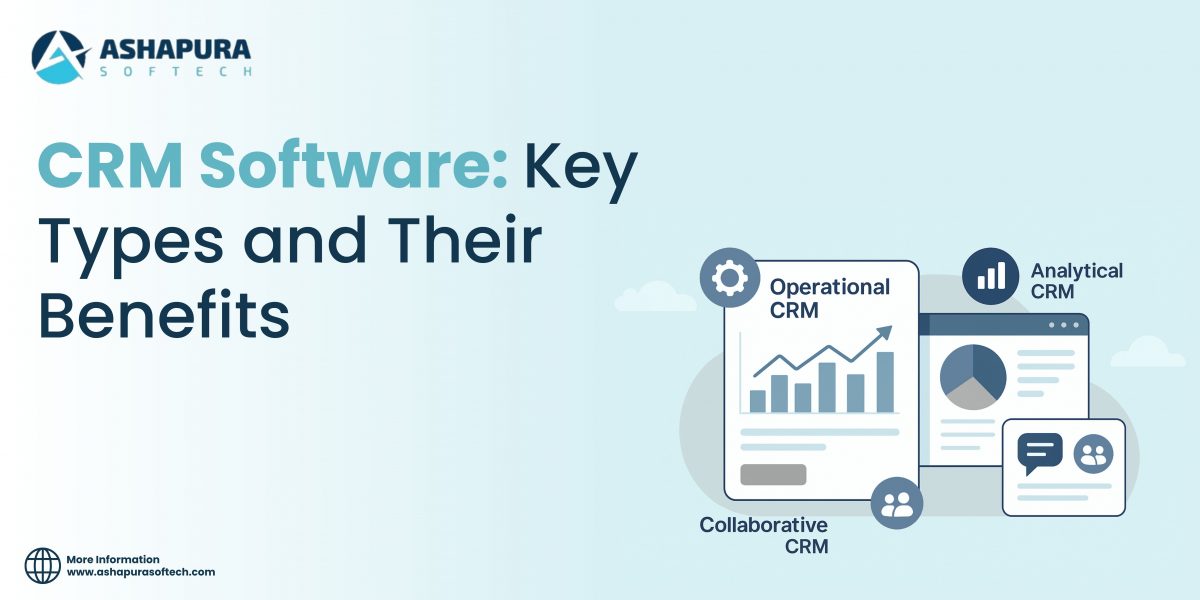
CRM Software: Key Types and Their Benefits

Customer Relationship Management, or CRM, is a system that may help you grow your business by generating leads and converting them into sales. As a result, there are many types of CRM software for various functions.

1. Customer Relationship Management Software

Customer relationship management software is software that helps customer service teams manage their customer interactions. Not only is this software limited to helping companies with customer service, but it can also provide other features such as marketing automation, sales forecasting, and e-commerce solutions. The main purpose of this type of CRM is to help companies prioritize their customers or sales channels based on certain metrics.

There are different types of CRMs. They range from the simplest one-off contact management solutions to more complex customer experience platforms for e-commerce websites. These platforms are intended to provide an integrated overview of all information about a company’s customers or customers in order to improve the efficiency and effectiveness of the organization.

2. Contact Tracking Software

This software is used to keep track of the contacts you make with potential leads. They can be used to plan, manage, and record information about these people. Contact tracking software is more than just a tool for tracking the people you contact. It can be used to organize your public relations and record data on how effective those efforts have been.

The goal of contact tracking software is usually to make it easier to keep track of all of your contacts and their interactions with you. Different types of contracts require different features such as CRMs or sales automation tools that are tailored to their needs. Before making a purchase decision for a product, you should find out whether certain functions you want are supported by the available contact management software.

3. Marketing Automation Software

Marketers can use marketing automation software to automate and streamline their workflow. Marketing automation software is a set of tools that help run marketing campaigns for small and large businesses. It helps companies save time and money by automating the repetitive tasks involved in running a campaign.

The advantages of marketing automation software are:

  • Time-saving in manual work
  • Generate content automatically
  • Building new customer relationships
  • Tracking campaigns

4. Customer Feedback Systems CRM

A customer feedback system is a software program that tracks customer reactions to products, services, or marketing campaigns. Information about the customer can be gathered from surveys and telephone interviews, as well as from online sources such as reviews. The feedback data is then used by the company to improve its service quality. There are many different types of feedback systems that have been developed over the years. Some are geared towards collecting qualitative data, while others provide quantitative data to analyze trends in customer satisfaction.

One of the most popular ways to collect data about customers is through surveys on social media platforms like Facebook, Google+, LinkedIn, Twitter, and Reddit. There are also other ways to collect feedback, such as closed online surveys or personal speaker groups, where consumers come together and discuss their experiences with a product with an interviewer.

Conclusion:

Which CRM Should I Choose For My Company?

Choosing a CRM is difficult. It depends on your business needs and preferences. However, each CRM must have its advantages and disadvantages. Therefore, consider all the factors that are important for your company before making your final decision. So to check which CRM software is best for your company, you can contact any CRM consulting company, They will research your business, leads, and everything else and then suggest the best-performing software. Choosing the right type of CRM software is crucial for optimizing your business operations and enhancing customer relationships. Need expert guidance on CRM software? Contact us at [email protected] to find the perfect CRM solution for your business.