
Categories
Software Development

Sustainable Software Development: Greening Your Tech Solutions

In the software industry, innovation and progress are happening at an epic pace today. However, with every innovation comes consumption: energy, resources, and, bluntly, time. Sustainable software development is not a buzzword but rather a transformative approach that brings the creation of software into harmony with environmental stewardship. Let’s dive in and learn how you can make your tech solutions greener, smarter, and future-ready.

What is Sustainable Software Development?

At its core, sustainable software development refers to designing, building, and maintaining software in a way that minimizes environmental impact by optimizing energy consumption, reducing waste, and promoting long-term usability. The kicker is sustainable software isn’t just ecologically friendly; it’s about efficiency and cost savings by doing more with less to reduce carbon footprint.

Why should sustainability in software matter?

This cost to the environment is tremendous. Data centers alone consume nearly 1% of the world’s electricity, and this is just increasing. Let’s not even talk about e-waste or the outrageous energy costs of bad, unoptimized code.

Consider running an application that is a resource hog. Not only is it costlier to host and maintain, but it also wastes energy unnecessarily. Now imagine scaling that up to millions of users. The impact is immense. Sustainable software development isn’t just a feel-good thing; it’s being responsible and future-proofing your business.

Key Principles of Sustainable Software Development

Optimize Code Efficiency

Efficient code isn’t just faster—it uses less energy. Every redundant computation consumes more energy. Developers should:

  • Use algorithms that have lower time and space complexity.
  • Reduce redundant code execution.
  • Implement caching and optimized database queries.

Utilize Cloud Computing Wisely

Cloud providers like AWS and Azure offer tools to minimize your application’s carbon footprint. They usually run on renewable energy and scale solutions to ensure you use resources only when needed.

Prioritize Long-Term Maintainability

Write cleaner, easier-to-understand, and maintainable code. This reduces a lot of rewriting or update work, saving time and resources.

Use Green Hosting Solutions

Determine hosting providers that take sustainability seriously. Look at certifications such as ISO 14001 or providers powered on renewable energy.

Practical Strategies for Greening Your Tech Solutions

Embrace Agile and DevOps Practices

Faster delivery cycles, fewer wasteful efforts, continuous integration and continuous deployment-the mantra of Agile and DevOps do eliminate some unnecessary rework and waste in terms of energy consumed.

Opt for Energy-Efficient Programming Languages

Not all programming languages are equal. Programming languages like C and Rust use less energy compared to languages like JavaScript or Python. Check your tech stack from this energy-efficient standpoint while keeping the functionality intact.

Reduce Data Storage

Big data often means big waste. There is an efficient compression algorithm and archiving of infrequently accessed data that will cut down on the storage needed and associated energy use.

Monitor and Measure Energy Usage

There are tools available such as Green Software Foundation’s Carbon Aware SDK and AWS’s sustainability reports, which monitor your application’s energy usage. Awareness is the first step towards improvement.

Case Study: Real-Life Transformation

It costs them thousands of dollars in mushrooming server costs and poor performance, with which Ashapura Softech helped out at one leading e-commerce firm. So, we had to rewrite inefficient code and provide them scalable cloud solutions so they move to a greener hosting provider. And so, were able to cut their carbon footprint 30%, as well as costs, 25%. Sustainability: A Practical, Profitable Option -and not just an Ideal.

Common Misconceptions About Sustainable Software Development

  • It’s Too Costly: Initially, it looks like an investment, but the savings of energy, maintenance, and operational cost far outweigh it over time.
  • It’s Just About the Environment: Just about cutting carbon footprint. Sustainability also improves software quality, efficiency, and user satisfaction.
  • It’s Only for Large Enterprises: Any small startup can be green. Even simple steps like code optimization and green hosting make a big difference.

FAQs

Q1.How does sustainable software development add value?

Sustainable reduction of energy use, with cost savings, improved performance, and added value towards environmental conservation for businesses is clearly a win-win for any planet.

Q2.How does my business start?

To start small is to simply optimise your code, switching to a green hosting company or educating your team on such practices. Then, go ahead and look for reliable partners like Ashapura Softech who can lead your race.

Q3.Can Sustainable Practices Impact User Experience?

Absolutely! Efficient software runs faster, crashes less, and delivers a smoother user experience. Users appreciate reliability and speed—both of which sustainability champions.

Conclusion

Sustainable software development isn’t just an ethical choice; it’s a business imperative. By integrating green practices into your development process, you’re not just saving the planet; you’re saving money, boosting performance, and future-proofing your business. Let’s innovate responsibly. For expert guidance in building sustainable, high-performance software, contact us today at Ashapura Softech [email protected]. Let’s shape the future of tech together.
Categories
Custom Software

Why Prototyping is Vital for Software Development Success

Introduction 

Modern software projects are not considered to be complete without prototype development included. A startup, big enterprise, or small, prototyping may have a great influence on the entire lifecycle of software development, especially when it comes to visualization, enhancement, and validation before actual full-scale development. This article explores how prototype development should be essential, its benefits, and different prototyping techniques, which ultimately result in a more successful software project. Now let’s get started with the user-friendly approach and understand the importance of prototyping, while reminding ourselves all the keywords like software development, software development agency, software development services, software developers, software development firms, and companies for software solutions.

Understanding Prototype Development in Software Projects

In other words, prototype development generally refers to the process of designing an early version of an application in the field of software, generally comprising many uninhibited and simplified functionalities. Prototypes focus on displaying many of the significant features and aspects of the final product to various stakeholders, developers, and users who can be sources of feedback. A prototype is said to be a development test version, that is, a product used to try some ideas, test assumptions, and find lessons applicable to the process of development.

This stage of development prevents costly mistakes in software development agencies and companies by embracing user-centered design, even altering their approaches without having an adverse effect on the project timeline. Prototypes bridge the initial ideas to the full working software solution through validating central ideas and ensuring that the product complied with what the user expects to get out of the system.

Benefits of Prototyping in Software Development

Its prototype and prototyping development benefits are many and it makes it an important inclusion of any successful software project. Here is why every software development company and developer should consider it:

Better Understanding of User Needs: Proto-types are permits to users to interact with a version of the software by developing teams finding valuable insights about their expectations and needs. It enables a development team to create a user-friendly product required for the end-user.

Early Feedback and Error Identification: Prototyping provides earlier inputs from stakeholders, providing an eye on potential problems that may arise, allowing correction before final development occurs. Developers of s/w can correct critical commentary much earlier than setbacks can prove disastrous when the support occurs at later stages.

Time and Cost Efficiency: Prototyping saves time and money because problems get caught earlier. Making the changes in a prototype stage is so much less expensive and time-consuming than if the problems are treated after a launch. This ensures that the resource management of the software development agencies is effective and project flow smoother.

Improved Communication with Stakeholders: Prototyping saves time and money because problems get caught earlier. Making the changes in a prototype stage is so much less expensive and time-consuming than if the problems are treated after a launch. This ensures that the resource management of the software development agencies is effective and project flow smoother.

Better Communicating with Stakeholders: Prototypes ensure there is better communication among developers, designers, and the stakeholders to have the same page for the project objectives. That will ensure collaboration, and everyone knows what is expected of the project.

Increased Design Flexibility: Prototypes enable the testing of the design and functionalities so that adaptation can occur even when development takes place. Should something be changed, it is not a necessity to work completely as a halt because the change can be included in the prototype.

Prototypes in Software Development

Prototypes come in several forms based on a specific requirement of a project. Here are some of the common types:

Low-Fidelity Prototypes: Low fidelity is quite a crude representation, either on paper or a digital sketch just to get an idea across, but really with a little notion of trying to demonstrate any heavy functionality. Prototypes of low fidelity can be used in the brainstorming and conceptualization of ideas at an initial stage.

High-Fidelity Prototypes: These are more engaging and almost so close to the final product in design and functionality. Prototypes, high fidelity, are ideal for the thorough testing and user feedback that precedes development work.

Clickable Wireframes: The clickable wireframe is an interactive digital prototype where navigation from one screen to another is possible. Useful in understanding user flow. May be created quickly for testing navigation and layout.

Functional Prototypes: They contain an actual working version of most important features, which makes the user interaction more real. Prototypes in later stages of development are quite well suitable for usability testing.

Rapid Prototyping: Rapid prototyping is the construction of a rapid and an iterative version of a product, which continues to refine itself as per the feedback obtained from users. It has proven to be very effective for software development firms that adopt agile methodologies.

Steps in the Prototyping Development Process

Prototyping involves a well-defined process whereby software developers create, test, and iterate till they achieve the desired result. In general, the process takes a path as below:

Define Goals and Needs: What does your prototype primarily strive to attain? Problems that you are needed to solve? What core features it is going to boast? Collect requirements from stakeholders and make a list of functionalities to feature in your prototype.

Draw a Sketch of a Basic Design: Deliver preliminary sketches or wireframes of what the layout and UI would be. Zoom in on key features that define the user experience using low-fi methods to make understanding ideas easier.

Prototyping: Using prototyping tools create a first version. Low fidelity can be very useful when designing with Sketch or Figma, whereas InVision and Adobe XD is amazing for high fidelity, clickable prototypes.

Testing for Feedback: However, in this critical development phase, the stakeholders, end-users, and developers must comment on the prototype. This is where insights are caught, inconsistencies spotted, and areas for improvements are characterized.

Refine and Iterate: Refine the prototype based on received feedback. This cycle of testing, providing feedback, and iteration should be repeated until the prototype implements all of the requirements for the project. This cycle of iteration will ensure that the final product matches what the user expects.

Best Tools for Prototyping in Software Development

Prototype is developed using various tools that have come to be de facto standards in software projects. Some of the popular ones are:

  • Sketch : Low fidelity wireframing, sketching for getting very rough ideas out
  • Figma: Collaborative design, developing high-fidelity prototypes.
  • InVision: Clickable wireframes and interactive mock ups.
  • Adobe XD: A comprehensive tool for making high-fidelity prototypes and multi-feature components.
  • Axure RP: Good tool for prototyping complex stuff, functional testing.

Real-World Examples of Prototyping Success

Prototyping has been utilized in several successful software projects towards the demonstration of ideas, saving money, and delivering user-centered products. A few examples include the following:

  • Airbnb used rapid prototyping early on to test user interfaces. All modifications required were made for delivery of a highly engaging user experience
  • Slack used prototype development for making a communication tool appealing to its targeted users. Prototype was very important in achieving outstanding usability and efficiency.
  • Dropbox with an easy video prototype ensured that it could move on to validate its core idea and managed to bring huge interest and early adoption.

Conclusion

In today’s fast-paced digital world, prototype development is indispensable for software projects. It enables software development firms and agencies to create products that truly meet user expectations while minimizing risks and costs. Through early testing, feedback gathering, and iterative refinement, prototyping ensures that the final product is robust, user-friendly, and ready to thrive in the market. If you’re looking to bring your software project to life with precision and innovation, Ashapura Softech’s expert team is here to help. Our comprehensive software development services include tailored prototyping solutions designed to fit your unique needs. Contact us at [email protected] to start building your vision today.

Categories
Custom Software

Top 5 Trends in Software Development You Need to Know

They start feeling an evolution in the software development world with the latest technologies and changed perceptions of the user. Accordingly, businesses and developers have to be abreast with the latest trends that bring a change in the industry because competition has become multigame. We discuss the top five trends in software development here, taking into account how they change the field and giving important insights into what may keep businesses, developers, and firms specializing in software development ahead.

Artificial Intelligence (AI) and Machine Learning (ML) Integration

Artificial Intelligence/Machine Learning Integration Artificial intelligence and machine learning are no buzzwords; they are very much present and integral for developing software in recent times. An AI-based solution can be much more intuitive for customers to work with, much more efficient for business processes, and can provide really deep insights into user behavior. Also, ML algorithms let the software learn and improve with experience and eventually make data-driven decisions for business, which gives businesses a head start in the game.

With AI and ML being combined with a software development service, a service can incorporate some functionality such as advanced predictive analytics, automated customer support, recommendations, and even sophisticated cybersecurity. For example, AI will identify complex patterns in data that can hardly be figured out by human senses and would certainly create room for further increases in precision in prediction and personalization. This would allow ML software to learn through experience but at the same time provide data-driven decisions for businesses that will enable them to get an edge in the game.

In a nutshell, the confluence of AI and ML can spearhead the capability of predictive analytics, automated customer support, personalized recommendations, and even advanced features for cybersecurity in the company’s software development service. As such, AI can recognize patterns of data impossible to understand with any human senses but has the room for higher accuracy in the predictive and personalization fields.

Some Key Benefits of Integrated AI/ML in Software Development:

  • High Efficiency: Automates Redundant Works with Reduced Infallibility.
  • Enhanced User Experience: Offering personalized recommendations based on user behavior.
  • Security: There is AI security technologies that sense and react to threats in real-time.

Low-Code and No-Code Development Platforms

Low-code and no-code platforms are revolutionizing the development front for the applications, mainly for the software development agencies and businesses with a small or no dedicated in-house development team. These low-code and no-code platforms enable one with little or no coding knowledge to now develop applications working through the visual interface, using drag-and-drop features, or even from pre-built templates.

Very few companies require an extremely fast deployment and high flexibility. Business individuals can be enabled to participate in the creation of software without a much technical background in programming, hence making project timelines faster with lower costs.

Benefits of Low-Code/No-Code Platforms:

  • Fast Development: Rapid prototyping and application development
  • Cost Saving: The least required big development teams
  • Flexibility: Ease in adaptability of applications according to changing business needs.

Many software developing companies take up this trend to make things look the way their clients want them to see things happening, as well as to push teamwork and innovation within teams.

Cloud-Native Development and Serverless Architecture

As cloud computing tops the head of software development and since the nature of such applications is mainly related to cloud, the demand for cloud-native development and serverless architecture is on the rise. This application has been optimized in the cloud environment to provide the highest possible performance, easy scalability, resilient, and flexible. Serverless architecture allows developers to write software that can run without the management of their underlying infrastructure. They hand it over to the cloud provider and let them take care of it.

The cloud-native solutions are likely to help them in attaining high degrees of customization, while at the same time, it will be cost-effective for software developers and firms. Further, they can provide continuous services even at high usage by users.

Benefits of Cloud-Native Development

  • Scalability: Applications can be scaled quickly to meet the demands of users
  • Cost Efficiency: One pays only for actual usage; there is a reduction in operational costs
  • Resiliency: Self-healing redundancy minimizes the downtime

Ashapura Softech provides cloud-native development services to help clients enhance their digital transformation journey with cutting-edge solutions which are scalable and resilient.

Cyber Security in Software Development

Cybersecurity must be one of the fundamental considerations in today’s digital-first world for both the software developer and the organization. Adding software security to the lifecycle of the software cannot be anything but an afterthought in today’s evolving smart threats, rather one integrated into a collaborative development process known as DevSecOps.

The adoption of remote work, cloud storage, and the Internet of Things has increased in higher proportions thereby making the software development agencies more crucial when it comes to security. The solutions for real-time threat detection, encryption, and biometric authentication have become quite common while looking to guard user data and remain compliant with global data protection regulations.

Cyber Security Key Measures in Development

  • Secure Coding Practices: Avoid common vulnerabilities and follow best practices.
  • Continuity Penetration Testing: Find and resolve potential vulnerabilities.
  • Data Protection: Ensure Data Privacy compliance.

Cybersecurity best practices in their offerings have ensured that software development companies help businesses protect their assets, customers, and brand reputation in this increasingly digital world.

The Emergence of DevOps and CI/CD

DevOps is the practices that combine software development (Dev) and the operational activities of a system. CI/CD is the practice of continuous improvement of the software in terms of continuous delivery of built software in small chunks much earlier and continuously, based on the principle of “build-measure-learn.”.

In addition, the DevOps model integrates both CI/CD practices and has totally changed the face of the software development industry by building a culture of cooperation and continuous improvement. It describes the integration of both software development, more commonly called Dev, and IT operations, also called Ops, to make it more effective and productive in the sense that it creates a sense of more deployments being done frequently but automatically.

To the software development companies and integration into software development, DevOps and CI/CD mean faster cycles of release, faster fixes of bugs, and much more reliable updates for the products. Through automation and continuous feedback, developers focus more on innovation rather than routine work, which means better quality of the software and increased user satisfaction.

Advantages of Utilizing DevOps and CI/CD:

  • Shorter Time-to-Market: New features are delivered sooner.
  • Higher Quality Software: Fewer bugs and better user experience.
  • Efficient collaboration: Developers and IT teams work together toward better outputs.

Ashapura Softech empowers companies to improve their development pipelines by moving toward faster time-to-market while constantly improving the process through DevOps solutions.

Conclusion

The world of software development is dynamic, with each year bringing new technologies and approaches to the forefront. Businesses that stay informed about these trends—such as AI integration, low-code platforms, cloud-native development, cybersecurity, and DevOps—can better position themselves to meet user expectations and achieve success in a competitive market. Whether a startup or an already established enterprise, embrace these trends and make all the difference in your trajectory of growth. Ashapura Softech is here for that advantage, helping you harness that advancement into mighty, scalable, and secured software solutions that take away the cake in the market. Ready to bring the vision of your software to life? Contact Ashapura Softech at [email protected] to join hands and let us make the future of software work for us all.

Categories
Custom Software

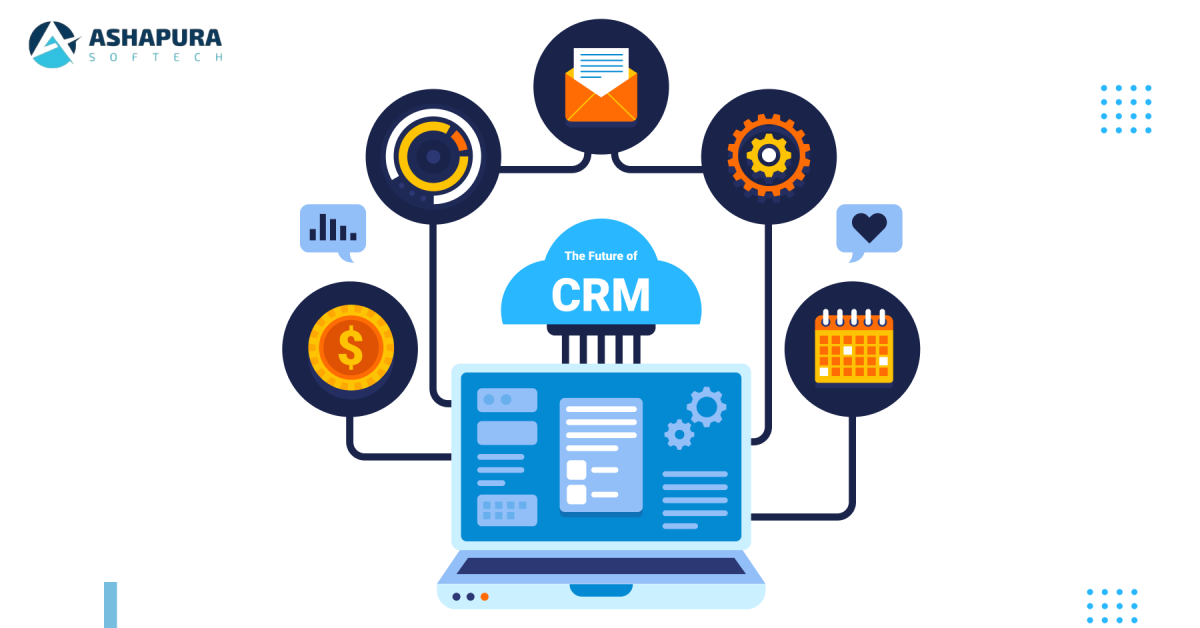
The Future of CRM: Trends and Innovations in Zoho CRM Development

Introduction

Customer relationships must be carefully tended to as never before in this fast-paced and highly competitive marketplace of today. Firms, therefore, will require the resources to manage and analyze customer interactions, smooth out workflows, and maximize profitability. Among all the other CRM solutions that are available today, Zoho CRM is the strongest, most flexible, and scalable business solution option for any size company.

Zoho CRM is purely working toward creating a future trend and innovation with advancement in CRM technology. In the article that follows, we discuss how the latest trends and innovations in Zoho CRM development have built a future for CRM involving AI integration, automation, mobile-first strategies, data analytics, CRM integration, and personalization. These innovations are remolding the way businesses relate to customers and run their services.

1. Evolution of Customer Relationship Management

Customer relationship management, or CRM, has undergone tremendous transformation over the last few years. Gone are the days when it was just an ordinary depository of customer information. Instead, it has evolved into a whole business management platform that encompasses marketing, sales, service, analytics, and more in one place. All these transformations have helped organizations use CRM as a tool to derive actionable insights, free up repetitive tasks, and connect with customers across all touchpoints.

Ever since its launch, Zoho CRM has been at the front of innovation with its new offerings and features empowering businesses to use customer data in strategic growth. Starting from lead generation to post-sales service, the CRM systems like Zoho CRM are fast becoming a backbone for successful operations of a business.

AI-Powered Features of Zoho CRM:
  • Lead Scoring : Zia ranks the leads with respect to their conversion likelihood through AI, therefore allowing time on the most promising opportunities for the sales team.
  • Sales Forecasting : From historical data and past trends, Zia shows what would be the future trend of sales, therefore giving enough information that a business needs to make the right decision.
  • Sentiment Analysis : This feature analyzes the emails, chats, and messages to determine the sentiment of the customers. It makes sales and support teams become better friends with response due to it.

AI will continue to lead future CRM systems as firms seek ways of automating routine processes in more intelligent means, data analysis, and developing a customized experience for their customers.

2. Development and Customization of CRM Software

With diverse business workflows and requirements, customisability and flexibility have been the focal points of CRM software development. In this context, Zoho CRM enables organizations to tailor it to their need created with respect to customizable modules, workflows, and dashboards. This is critical to those businesses that are mandated to change very quickly in response to changing market circumstances or shifting customer requirements.

Customization Capability of Zoho CRM
  • Custom Modules : Information that pertains specifically to an organization can be tracked with the help of custom modules such as industry-specific information.
  • Automating Workflows : With it, an email sender might be automated along with updates of records or assignments of tasks to the team member based on pre-defined triggers.
  • Customer-Facing Dashboards : There are options that users have to create customer-facing dashboards that can report the relevant data for real-time views into key metrics.

This ability to customize allows firms to use Zoho CRM centrally for every activity that has anything to do with customers and thus enables the CRM system to evolve in accordance with the needs of a company.

3. Mobile-First CRM Systems: The Future of Business Operations

The most important trend shaping the future of customer relationship management would be going mobile-first about solutions for CRM. Sales teams and customer support agents are perpetually on the move, and access to such crucial information at one’s fingertips using mobiles is no more a luxury but a necessity.

That replicates all the functionalities of Zoho CRM to the desktop version so customers can interact with customers, monitor sales pipelines, and access data at any time from any location.

Zoho CRM: Mobile First-Features
  • Real-time Notifications : Update instantly on new leads, new deals, and customer interactions so that no opportunity falls through the crack.
  • Geo-Tracking : Track on-ground agents in real time while optimizing routes to ensure that the sales teams do things in the most efficient way possible.
  • Offline Access : Whatever is the case, the work continues and the data syncs itself when online again.

Against the fast-evolving mobile technology, the CRM software like Zoho CRM will prove of paramount importance for the organizations in order to stay connected and responsive towards any change in scenario.

4.Importance of CRM Integration

A CRM system cannot work in isolation in the modern integrated business world. Information is flowing between different departments of an organization only when there is integration with other software and platforms. A great opportunity to integrate third-party applications like ERP systems, email marketing, e-commerce, and many more can easily be integrated through Zoho CRM.

Best Zoho CRM Integrations:
  • Zoho Books and Zoho Inventory : This integration allows businesses to merge under a transaction and level of stock management because it ultimately provides all-around business-oriented insights into the operations.
  • G Suite and Office 365 : Zoho CRM seamlessly integrates with popular applications such as e-mail or calendar, which can eliminate any communication or scheduling barriers.
  • Mailchimp and Campaigns : With the close integration of an email marketing tool, businesses can start campaigns directly from the CRM and track engagement and ROI in real time.

Tomorrow, CRM will be building this kind of a hybrid ecosystem where data flows freely between systems, enhancing collaborations, informing better decision-making, and delivering more personalized experiences for customers.

5. Data-Driven Insights and Advanced Analytics

Data is the lifeblood of any CRM system, and the future of CRM software will be heavily focused on enhancing data analytics capabilities. Zoho CRM’s analytics and reporting features are designed to provide businesses with deep insights into their customer behavior, sales performance, and operational efficiency.

Analytics Features in Zoho CRM:
  • Custom Reports : Users can create custom reports to analyze specific metrics, such as sales performance, lead conversion rates, and customer satisfaction.
  • Dashboards : Real-time dashboards provide a visual representation of key business metrics, allowing users to make informed decisions quickly.
  • Predictive Analytics : By analyzing historical data, Zoho CRM can predict trends and help businesses identify potential growth opportunities or areas that need improvement.

As businesses collect more customer data, the ability to extract actionable insights will be crucial. CRM systems like Zoho will continue to evolve their analytics capabilities, helping companies turn raw data into valuable business intelligence.

6. Personalization: The Way to Customer Loyalty

As customers have become more aware and demanding, personalization experiences have to be the way of doing business. Not a choice but a must, to establish long-term customer relationships and loyalty. Segment your audience, design tailored workflows that work for them, and respond accordingly based on their preferences, behaviors, and history using the personalization features in Zoho CRM.

Personalization Features in Zoho CRM
  • Customer segmentation : Businesses might segment their customers based on geographics, purchase history, or involvement levels so that the communications they are making are of relevance in terms of time and have maximum impact.
  • Automated emails : Flows for sending personalized automated emails to customers with regard to abandoned carts or follow-up queries can be initiated based on automated triggers.
  • Behavioral tracking : Use of cross-channel tracking for customers helps businesses understand their needs and preferences in much depth, thereby enabling marketing with much precision.

Indeed, one of the key differentiators in future CRM systems will be personalization. Therefore, businesses that make use of it will have a competitive edge in providing exceptional customer experiences.

7. Security and Data Privacy in CRM Systems

As more data is collected through CRM systems, the importance of data security and privacy is paramount. Businesses must ensure that their CRM systems comply with data protection regulations such as GDPR and CCPA, and that customer data is stored and processed securely.

Zoho CRM takes data security seriously, offering features such as data encryption, multi-factor authentication, and audit logs to ensure that customer data is protected at all times.

Security Features in Zoho CRM:
  • Encryption : All customer data is encrypted, both at rest and in transit, to protect against unauthorized access.
  • Role-Based Permissions : Zoho CRM allows administrators to control who has access to specific data, ensuring that sensitive information is only available to authorized personnel.
  • Audit Trails : Detailed logs track every action within the CRM, allowing businesses to monitor access and changes to customer data.

As data privacy concerns continue to grow, businesses must prioritize security in their CRM software development, ensuring that customer trust is maintained.

8. The Future of CRM: What to Expect

The future of CRM is exciting. The CRM system will evolve more in integrating emerging technologies such as AI, IoT, and blockchain to offer businesses even more potent means of handling relationships with customers.

Future Rationale for CRM Much of the future rests on the automation of these systems as well as an interface that is more intuitive. They will be less cluttered and accessible with seamless integrations that cross-cut all business functions. Thus, businesses that embrace such innovations are better placed to meet changing customer needs, streamline operations, and achieve long-term growth.

Conclusion

The future of CRM is colorful and bright: as far as the game setter in this direction, Zoho CRM is the one, focusing on its new capabilities and features. From AI-powered automation to mobile-first solutions, CRM integration, and advanced analytics, Zoho CRM is rewriting the rules on how businesses relate with customers, and also how their operations are run. At Ashapura Softech, we specialize in developing CRM applications on Zoho. Whatever is your need-be it customized solutions and smooth integrations or the powerful analytics capability within Zoho-we are here to take you through every step to get the best out of your powerful platform. Better CRM approach? Contact us Ashapura Softech today at [email protected] to get tailor-made solutions for extraordinary results and improved customer experience. Let’s help you be ahead of the game with ever-changing technology in the CRM world.

Categories
CRM Custom Software

Best CRM Software in 2024: Top 7 Platforms

Introduction –

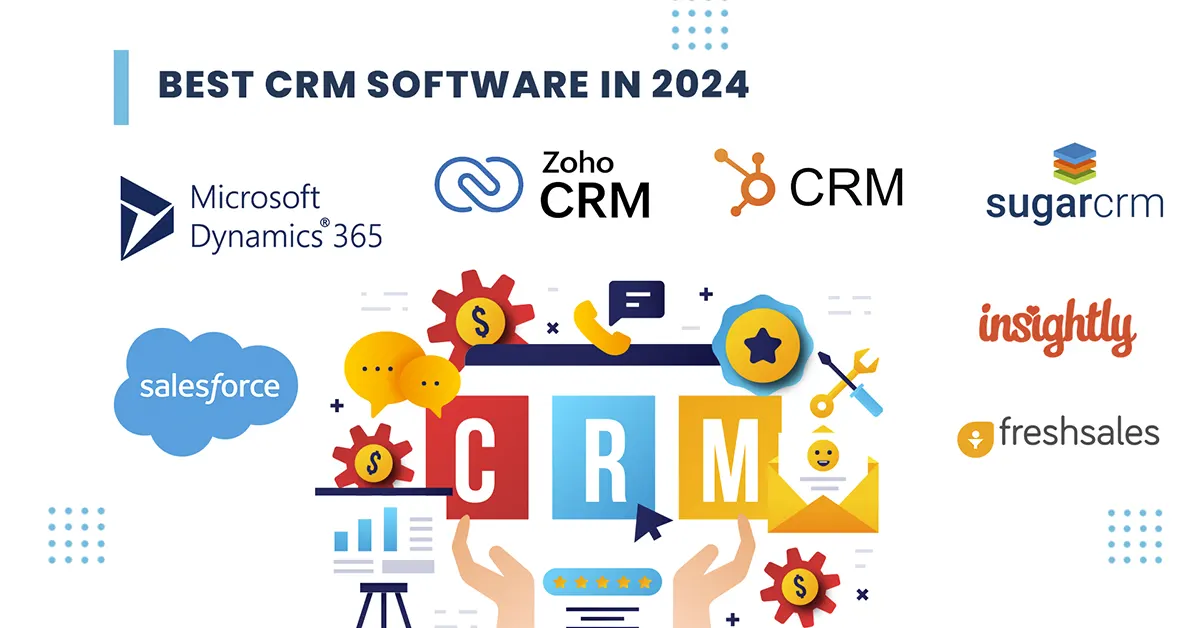
In today’s hyper-connected digital era, managing customer relationships has become more critical than ever for businesses striving to stay competitive. Enter (Customer Relationship Management) CRM software development – the cornerstone of modern business operations. As we step into 2024, the landscape of CRM solutions continues to evolve, offering a myriad of features and benefits to businesses worldwide. Let’s delve into the top 7 CRM software platforms of 2024, each offering unique capabilities to streamline processes, enhance customer engagement, and drive growth.

1. Salesforce

Salesforce stands as the undisputed leader in the CRM development, offering a comprehensive suite of tools designed to streamline sales, marketing, and customer service processes. From lead management and opportunity tracking to advanced analytics and AI-driven insights, Salesforce provides unparalleled customization and scalability.

Salesforce’s feature-rich platform includes lead management, sales forecasting, marketing automation, and customer service functionalities. Its scalability, extensive third-party integrations, and user-friendly interface make it a top choice for businesses seeking a versatile CRM solution.

2. Microsoft Dynamic 365

Microsoft Dynamics 365 is a powerhouse CRM platform that integrates seamlessly with the Microsoft ecosystem, including Office 365 and Azure. Its modular approach allows businesses to tailor the platform to their specific needs, whether it’s sales, marketing, customer service, or operations.

Dynamics 365’s AI-driven insights, customer journey mapping, and predictive analytics enable organizations to gain deeper insights into customer behavior. Its flexible deployment options, enterprise-grade security, and seamless integration with Microsoft’s suite of productivity tools make it a preferred choice for large enterprises.

3. Zoho CRM

Zoho CRM caters to businesses of all sizes with its extensive range of features, including sales automation, workflow automation, social media integration, and AI-driven insights. The platform’s flexibility and customization options make it adaptable to diverse business requirements.

Zoho CRM’s affordability and scalability make it an attractive option for businesses looking to enhance their customer relationships without breaking the bank. With built-in telephony features and a plethora of add-on apps, Zoho CRM offers a comprehensive solution for managing sales and marketing processes. Its affordability, scalability, and seamless integration with third-party apps make it an attractive option for businesses looking to enhance productivity and drive growth.

4. HubSpot CRM

HubSpot CRM excels in simplifying complex tasks with its intuitive interface and powerful automation capabilities. Features like contact management, email tracking, lead scoring, and marketing automation are seamlessly integrated. HubSpot CRM enables businesses to nurture leads and track customer interactions effortlessly.

HubSpot CRM’s free version offers essential features, making it accessible to startups and small businesses. Its comprehensive reporting tools, customizable workflows, and exceptional customer support. HubSpot CRM is a preferred choice for businesses looking to optimize their sales and marketing efforts.

5. SugarCRM

SugarCRM Platform offers a highly customizable platform with features like sales automation, marketing automation, and customer support. Whether deployed in the cloud or on-premises, SugarCRM adapts to the unique needs of each business, providing flexibility and control.

SugarCRM’s open-source availability and extensive customization options make it a preferred choice for businesses seeking tailor-made CRM solutions. With a focus on customer experience and flexible deployment options, SugarCRM empowers organizations to deliver exceptional customer service and drive loyalty.

6. Insightly

Insightly combines CRM and project management capabilities, providing a holistic solution for businesses managing both customer relationships and projects. With features like contact management, email integration, task automation, and reporting tools, Insightly helps teams stay organized and productive.

Insightly’s robust project management features and seamless integration with G Suite and Office 365 make it an ideal choice for service-based businesses and project-driven organizations. Its user-friendly interface and customizable workflows enable businesses to streamline processes and drive collaboration across teams.

7. Freshsales:

Freshsales leverages AI technology to provide actionable insights and automate repetitive tasks, enabling sales teams to focus on building relationships and closing deals. With features like lead scoring, email tracking, and a built-in phone, Freshsales empowers businesses to drive efficiency and productivity.

Freshsales’ ease of setup and use, integration with third-party apps, and robust customer support make it an attractive choice for businesses seeking a modern CRM solution. Its customizable options and focus on user experience enhance productivity and drive meaningful interactions with customers. Freshsales adapts to the unique needs of each business, driving better outcomes and higher ROI.

Conclusion

In the ever-evolving landscape of CRM software, the year 2024 presents businesses with an array of innovative platforms designed to revolutionize customer relationship management. Each of the CRM software platforms discussed above offers a unique blend of features, functionalities, and benefits, catering to diverse business needs and objectives.

1. Salesforce: As businesses navigate the complexities of the modern marketplace, choosing the right CRM solution is paramount to success. Salesforce leads the pack with its comprehensive suite of tools, scalability, and extensive third-party integrations, making it a top choice for businesses of all sizes.

2. Microsoft Dynamic 365: It’s empowering enterprises with its modular approach, seamless integration with Microsoft’s ecosystem, and AI-driven insights, enabling organizations to deliver personalized experiences at scale.

3. Zoho CRM: It offers affordability, flexibility, and extensive customization options, making it a preferred choice for businesses seeking to streamline sales and marketing processes without breaking the bank.

4. HubSpot CRM: HubSpot CRM stands out for its user-friendly interface, powerful automation capabilities, and free version, making it an attractive option for startups and small businesses looking to optimize their sales and marketing efforts.

5. SugarCRM: It provides a highly customizable platform with a focus on customer experience, flexibility, and open-source availability, empowering businesses to deliver exceptional customer service and drive loyalty.

6. Insightly: Its CRM and project management capabilities, cater to service-based businesses and project-driven organizations with its robust features and seamless integration with G Suite and Office 365.

7. Freshsales: Freshsales leverages AI technology to provide actionable insights and automate repetitive tasks, enhancing efficiency and productivity for businesses seeking a modern CRM solution.

In conclusion, the best CRM software platforms of 2024 offer businesses a wealth of opportunities to optimize customer relationships, streamline processes, and drive growth. By carefully evaluating their unique needs, objectives, and budgetary constraints, businesses can choose the CRM solution that best aligns with their goals and aspirations, propelling them toward success in the competitive marketplace of today and tomorrow. CRM development Company.