Maximize your social media impact by leveraging CRM strategies for real-time engagement and lasting connections.
In today’s hyperconnected world, social media isn’t just about likes, shares, and retweets. It’s where your customers live, talk, and make decisions. Maximizing customer engagement with social media CRM (Customer Relationship Management) strategies is no longer a choice; it’s a necessity. Here’s how you can unlock the true potential of these platforms to build lasting relationships and drive your business forward.
Why Social Media CRM is the Game-Changer for Businesses
Let’s set the stage with a hard truth: traditional CRM systems are great, but they’re like a one-way mirror. Social media CRM, on the other hand, breaks the wall and lets you interact with customers in real-time.
With tools that integrate seamlessly into platforms like Facebook, Twitter, and Instagram, businesses can now collect invaluable insights while responding directly to customer concerns. The result? More personal, authentic, and engaging relationships.
Key Benefits of Social Media CRM Strategies
1. Real-Time Engagement
Imagine this: You post a product update on Instagram, and within minutes, customers flood the comments section with questions. A robust social media CRM allows your team to respond instantly, turning curious onlookers into loyal customers.
2. Personalized Marketing
With the data from your CRM, you can understand customer preferences better. This means you can offer tailored deals, send birthday greetings, or recommend products they actually care about.
3. Boosted Customer Retention
Engaged customers are loyal customers. By addressing complaints quickly or even joining in on a fun meme thread, you humanize your brand and make customers feel valued.
4. Measurable ROI
Gone are the days of blind campaigns. Social media CRMs allow businesses to track engagement metrics, conversion rates, and customer satisfaction, making every marketing dollar count.
Step-by-Step Guide to Implementing Social Media CRM
Step 1: Choose the Right CRM Platform
Not all CRMs are created equal. Platforms like Salesforce, HubSpot, or Zoho integrate seamlessly with social media channels. Look for one that matches your business size, goals, and industry needs.
Step 2: Integrate Social Media Channels
Connect your CRM to all your active social media accounts. This ensures that every message, comment, or tag is captured and logged for future use.
Step 3: Train Your Team
Technology is only as good as the people who use it. Train your team to navigate the CRM, analyze the data, and engage effectively on social platforms.
Step 4: Automate Where Possible
Use automation features for repetitive tasks like scheduling posts, sending follow-ups, or analyzing engagement metrics. This frees up your team to focus on higher-value interactions.
Best Practices for Maximizing Engagement
1. Be Responsive
Think of social media as a live conversation. Customers expect quick replies, so make sure you have a dedicated team to monitor and respond.
2. Create Value-Driven Content
Your content should do more than promote—it should educate, entertain, or solve a problem. This keeps customers coming back for more.
3. Leverage User-Generated Content
Encourage customers to share photos or reviews featuring your products. Not only does this build trust, but it also creates a sense of community.
4. Use Analytics to Refine Strategies
Your CRM will provide a treasure trove of data. Use it to identify trends, understand customer behavior, and fine tune your campaigns.
Overcoming Challenges in Social Media CRM Implementation
Data Overload
With so much information flowing in, it’s easy to feel overwhelmed. The solution? Clear segmentation and prioritization of data.
Maintaining Authenticity
Automation is great, but customers still crave authentic human interactions. Strike a balance between efficiency and personalization.
Handling Negative Feedback
Criticism is inevitable, but it’s also an opportunity to show your commitment to customer satisfaction. Use your CRM to track and resolve issues quickly.
A Personal Take on Social Media CRM
Years ago, I worked with a small e-commerce brand struggling to keep up with customer inquiries on social media. We implemented a social media CRM, and within weeks, engagement soared by 70%. Not only did customers feel heard, but the team also had more time to focus on creative strategies. It was a game-changer—a lightbulb moment for all of us.
FAQs About Social Media CRM
What is Social Media CRM?
Social media CRM is the integration of customer relationship management tools with social media platforms, enabling businesses to engage with customers, gather insights, and manage interactions in real time.
How Can Small Businesses Use Social Media CRM?
Even with limited resources, small businesses can use affordable CRM tools to schedule posts, respond to comments, and analyze engagement to improve marketing strategies.
Which CRM Tools Are Best for Social Media?
Popular options include Salesforce, HubSpot, and Zoho CRM. Each offers unique features tailored to different business needs.
Conclusion
Social media CRM strategies are the future of customer engagement. By integrating the right tools and practices, businesses can foster stronger relationships, drive meaningful interactions, and achieve long-term success. At Ashapura Softech, we specialize in providing tailored CRM solutions that maximize engagement and streamline operations. Contact us today at [email protected] to transform your social media strategy into a powerhouse of customer connection.
Enhance customer engagement and business growth using Ashapura Softech’s AI-driven CRM.
Introduction
They are continually evolving as more artificial intelligence improves. So far, AI is becoming more efficient and user-friendly in CRM. CRM remains highly invaluable in today’s competitive business environment primarily because it involves AI-powered CRM solutions that power hyper-personalized customer experiences, streamlined workflows, and growth that matters. This comprehensive guide will walk you through how AI changes the age of CRM development, CRM integration, and its deployment so that your business can reach unprecedented heights concerning customer satisfaction and operational efficiency.
Understanding CRM and the Role of AI
In other words, CRM is technology helping the organizations maintain multi-dimensional relationships encompassing customers and potential customers through tools which further improvise the relationship, thereby maintaining the customer, and then eventually elevating the sales. It is assumed that if the outlook goes more profound as well as the volume of data, traditional CRMs are not enough. It is at this point that the hypothetical AI capabilities of automation, predictive analytics, as well as intelligent recommendation begin to come together and supercharge the ordinary functions of the CRMs.
Why do contemporary organizations need AI-powered CRM?
Business organizations cannot afford to neglect the inclusion of AI to their CRM systems but something they have to include if they aspire to gain upper hand over their competitors. With AI being offered by them, customers are actually entitled to the following primary advantages:
Better Customer Insights: At the heart of big data processing AI gives companies granular insights into the preferences, behavior, and trends of their customers.
Efficiency: AI-enabled CRM’s automate mundane chores freeing more time for sales and support teams to be involved in activities of greater value.
Predictive Analytics: With the use of AI-based CRMs, the company can understand what future customers would require and behave in terms of which concerning customer issue needs to be addressed.
Customer experience customized using AI: AI helps the CRM develop unique content and custom recommendations for every customer depending on the profile and history of that customer.
AI-based development of CRM: The launching pad for Success
The communication of a company with its clients will be changed as AI brings innovation in the CRMs. The customer data interpreted by an AI-driven CRM system can be from any kind of source; it could be social media, email, purchase history, and much more. According to that, a company can then build an all-round view for strategic decisions.
Key Components of AI in CRMs
Natural Language Processing (NLP): NLP enables the interpretation of customer’s queries, complaints, and sentiments. Only after this, then a CRM can finally converse more effectively and act better in respect of the customers.
Machine Learning Algorithm: The machine learning models on the customer data will become wiser with respect to prediction and suggestion in the exact manner over time.
Data mining and analytics of big data: These tools filter large datasets for a CRM so that it can unearth trends, patterns, and insights that human analysts would dig up into dirt.
An AI-based CRM, therefore, does require very well-understood pieces, besides very strong data infrastructure that supports the operation of an AI. In fact, the development of one typically begins with the development experts of a firm who design specific solutions to assist in meeting some of their specific events in customer interactions.
Streamlining Operations with AI-Powered CRM Integration
However, AI remains the biggest challenge that will be required to be integrated into any CRM system. More technically, CRM integration only links all the existing software applications a company uses with the CRM system. This thus ensures an effective transfer of data between platforms. It also provides a single view of customer data, unified.
AI-Enriched Best Practices on CRM Integration
API Integrations: In APIs, the CRM may integrate and hook into other software systems, such as ERP, marketing platforms, and tools for customer support, thus sharing real-time data.
Data mapping and Synchronization: All of the integrated systems need to maintain integrity in data so that proper AI analysis can be carried out. Using the data mapping tool, which will synchronize fields from multiple databases to ensure that there would be no mismatch, thus this will not result in any loss of data.
Security and Compliance: Severe Data privacy regulations would have to limit leakage of sensitive customer information. The laws are the reality that the business organizations with a CRM system are following standards developed by GDPR and CCPA.
Real-Time Processing: Artificial Intelligence-integrated real-time data processing is enabling CRMs to formulate real-time insights. Such functionalities will allow businesses to respond to an interaction by a customer in real-time.
Hence, proper integration will thus call for a link among IT teams, CRM developers, and third-party vendors to ensure seamlessness in connectivity as well as data integrity. Proper attention in integrating AI with the CRM system makes business better prepared to deliver richer and more consistent customer experiences.
Steps to the Successful Implementation of AI-Driven CRM
A CRM with AI requires planning since this technology disrupts business operations almost everywhere. Some important work has to be done here:
Definition of Goals and Objectives: Define concrete objectives where you would want to implement AI tools with your CRM. Do you want to create leads better, improve support to customers, or completely outsource marketing? The better your goals, the better the selection of AI tools and features of your CRM.
Select the Right AI Tools: Select the AI software that best meets your goals, which are answering customer questions, forecasting sales through predictive analytics, and opportunity for up-selling when the machine learning algorithms were effective.
Preparing and Managing Data: The AI-based CRM system should be prepared with critical data on quality to precisely predict trends that would be coming up. Prepare, clean, and organize data from other sources to make AI work more effectively with a low error probability.
Train Your Team: While implementing a CRM, employees are to be trained on the use of AI with the help of the CRM. There should be perception about understanding as well as appreciation for the benefits of data-driven customer management. Training should be continuous for getting abreast with the development of AI and CRM.
Monitoring and Measurement: It should be monitored periodically to know how it’s working and contributing toward the change in customer engagement. Some relevant metrics that might be looked for would include customer satisfaction, response times, and conversion rates, whereby one can get to know the effectiveness of your strategy with AI toward driving the CRM.
Benefits of AI-Based CRM Solutions to Organizations
AI-based CRM solutions are more than the efficiency of operation; they give measurable inputs towards long-term growth and customer satisfaction.
Customer-centric Personalization: One of the significant characteristics of a great customer relationship is personalization. AI-based CRM is capable enough to analyze consumer behavior, preferences, and history that offer customized interactions and create loyalty and retention with customers.
Data-Driven Decision Making: AI throws lights that help businesses make the right decisions. Through the patterns in their customers’ data, companies can come up with strategic ideas on the product developments and sales and marketing campaigns.
Automation of Sales and Marketing: All these repetitive work will automatically be done, such as lead scoring, customer segmentation, and email marketing. The smooth workflow with a minimum of errors and teams focusing on the most demanding tasks requiring human skills would thus be enabled.
Improved Customer Support: AI-powered CRMs enable efficient customer service by offering features like chatbots, which provide instant responses to customer inquiries. Sentiment analysis tools further help support teams understand customer emotions, allowing them to tailor responses accordingly.
Efficient Resource Management: With the integration of AI, CRMs can help manage resources more effectively. Predictive analytics, for instance, can forecast demand, allowing businesses to allocate resources accordingly. This efficiency results in cost savings and higher ROI.
Overcoming the Implementation Challenges of AI-Based CRM
However, organizations might face great problems in relation to its implementation. Few of the most common problems include issues related to data privacy, high implementation costs, and complexity in the technology used. The failures stated above can be minimized if proper planning and a suitable CRM development partner are maintained.
Data Privacy and Compliance: Organizations will have to comply with the provisions of data protection laws on securing strong controls and scheduled audits on customer data when processing large amounts of customer information.
Implementation Costs for Control: High-cost expenditure is always associated with AI-based CRMs, especially for small and medium enterprises. Easy access to return on investment, with a CRM provider that offers flexible pricing and support options, shall be selected.
Technical Complexity and Training: Implementing AI requires special technical expertise, and most companies will need experts or CRM consultants for a competitive edge. Also, good training systems for employees are indispensable.
Future Trends in AI-Driven CRM
The AI technology is also expected to continue gaining development. This capacity of AI in CRM systems keeps increasing as well. An essential trend to note is the following:
Voice-Activated CRMs: Voice technology is probably one of the most intuitive ways to interact in the CRM systems and highly optimize the process of data entry and, for that matter, any customer interaction as well.
Hyper-Personalization: It will be powered through advanced algorithms and CRMs capable of personalising experiences nearly at the individual level in the near future. This will be done based on the specific requirements of individual customers in near real-time.
Proactive Customer Engagement: Business houses will be in very good position to proffer timely solutions over a period of time when AI-driven CRMs start predicting the needs of customers even before they arise.
The business houses that are tracking such trends will better be posed to derive the AI-driven CRM technology to its full advantage and remain competitive in their markets.
Conclusion
CRM systems revolutionize the way in which companies interact with customers, bring powerful tools and means for enriching customer experience, optimization of operations, and economic growth. Companies that begin to use AI during building integration or implementation of a CRM will get an important advantage in the struggle for market competitiveness in the data-driven world. Want to tap the full potential of AI in your CRM strategy? We at Ashapura Softech are always there with our expertise. Just contact us at [email protected] for more on our complete solution sets in CRM that can take your business to the next level of smart and efficient management.
Choose Custom CRM Development to drive growth, streamline workflows, and improve customer engagement.
Introduction:
Custom CRM Development is the most innovative tool in today’s market where the business scene is so competitive and customers are driving it. A custom solution to a CRM will allow a business organization to get closer to a streamlined customer relationship along with gaining operational efficiency and maximization of profits. Thus, it holds much over the off-the-shelf system. Custom CRM Software Development meets the needs of a business that addresses every workflow. This represents uniqueness and personalization in terms of functionality along with scaling abilities. This is because business houses have a much stronger chance to maintain a very solid and long-term relationship with customers for further growth. Following is the write-up describing the main reasons for why business houses need to look after hiring a good and trustable CRM Development Company in Ashapura Softech.
Understanding the Role of CRM in Modern Business
Amongst all other applications that enable organizations to interact with customers or prospects, CRM stands for customer relationship management. Centralized data along with analytics will enable the team to form lasting relations with the customers and provide improvements to customer satisfaction. Further, opportunities to increase are well identified with CRM systems, though all systems cannot be alike. In many instances, a CRM system would have been specifically tailored according to the unique business process followed by the organization in its various operations, as that gives some functionalities directly relating to a specific operation being required in some companies.
Key Benefits of Custom Enterprise CRM Development
Better Perception and Customization for the Customer
Since the main aim of a custom CRM software is the capture of directly relevant data to the needs of a specific business for a specific organization, it consists of data in relation to the customer activities, history of purchase, issues of concern, and preference. A custom enterprise CRM solution may monitor crucial KPIs that are most relevant to the customer lifecycle of an enterprise. Such deep insights allow organizations to craft very highly personal experiences. The outcome always is higher customer satisfaction and retention. A CRM Development Company like Ashapura Softech ensures that every module of CRM is optimized, permitting customer data to be tapped for effective segmentation, targeting, and personalization.
Efficient Flows and Operational Flow
Customized CRM software is able to align specific workflows. The first and foremost of customized CRMs is about the automation of specific business processes and smooth flow of work across departments. Such elaborate automation will ensure a smaller chance of human errors and quicker turn-around times so that the employees are allowed to do more strategic jobs. For example, Order Processing Operations, Lead Tracking, Customer Support Workflows, daily operations all will be much more productive and efficient by using CRM Development Services by Ashapura Softech.
Scalability and Flexibility for Business Growth
As businesses grow, their needs change. Custom CRM software is very scalable; therefore, companies can add new functionalities and modules without affecting the normal running of the business. A custom CRM solution could grow with the growing customers base, additional product lines, or increased geographic reach. For that matter, pre-built CRMs often require expensive up-gradation or replacement sometimes that will definitely hurt the business as it grows up. Ashapura Softech primarily deals with scalable CRMs that could provide long-term value by adapting to those changing business demands and responding accordingly.
Seamless Interface with the Existing System
It would easily integrate with the existing business systems, which can range from ERP, marketing automation tools, to accounting software, because of integration, as every department comes in the alignment and free flow data across systems will bring business environments together. Ashapura Softech ensures complete compatibility of the CRM system with the business’s existing technology stack that means, it absolutely avoids silos of data and brings in cross-functional collaboration.
Improved Data Safety and Security
In the present scenario, expanding business organizations are concerned with the security and privacy issues of data. Therefore, the firm requires a CRM that will ensure security along with data protection. Personalized CRMs provide strong security features in the form of encryption, access control, and strict compliance to data protection act. That’s where generic CRMs have vulnerability as their user base is more extensive in range. Custom solutions would ensure that a business still maintains absolute control over the strategy to protect data and other confidential information about customers. Ashapura Softech offers secure CRM systems, created in accordance with particular requirements of compliance by an organization, so that data on the customer is never at any risk.
Quality Customer Support and Problem Resolution
An effective CRM system directly supports customer care by providing support teams with quick access to customer information and all their interactions with that customer. Custom CRM solutions enable businesses to customize features like automated ticketing, chatbots, and self-service portals towards improving the customer experience support. Under a custom CRM, businesses can design the support process to customer expectations; this results in faster issue resolution and increased customer satisfaction.
Choosing the Right CRM Development Company
Custom CRM development is a big decision. The right partner makes all the difference. A reputed CRM Development Firm like Ashapura Softech brings industry expertise, a client-centric approach, and technical proficiency to the table. So, the right CRM development company should:
Understand Your Industry: Every industry has its own different requirements, ranging from compliance to customer engagement strategies. A seasoned firm will have experience in developing CRM solutions for various industries so that your system is fit for your business model.
Offer Post-Deployment Support: The deployment of a custom CRM is only the beginning. A reliable CRM development agency provides continuous support, updates, and troubleshooting to keep the CRM running smoothly.
Provide a Clear Development Process: From initial consultation to final implementation, a CRM development firm should involve you in every step of the process. Clear communication and a structured development plan ensure that your business requirements are fully met.
Why Ashapura Softech for CRM Development
Ashapura Softech is one of the top CRM development companies that deliver comprehensive CRM solutions for all businesses, big or small. High on CRM software development, our skilled experts offer a bespoke CRM system, ensuring improvements in customer experience and operational efficiency and contributing to business growth. Here is what makes Ashapura Softech stand out:
Custom Solutions: We tailor our CRMs with the specifics of your business workflows and objectives in such a way that every feature holds value within your operation.
Total Support: Our support is dedicated to the fact that your CRM system will run at its maximum levels, constantly maintained and updated according to your business needs over time.
Security and Scalable Systems: Focusing on security and scalability ensures that we are building scalable CRM systems that can protect data and scale the business with it.
Conclusion: Custom CRM Development as Strategic Investment
Custom CRM development is not a new software adoption; it is a commitment toward delivering a seamless, personalized customer experience that leads to brand loyalty and business growth. It is the tool and source of insights that give enterprises the ability to provide outstanding customer service, streamline operations, and make data-driven decisions. As business continues to prioritize customer-centric strategies, a tailored CRM solution will prove invaluable. We here at Ashapura Softech ensure you a uniquely customized CRM system from all the resources we own along with commitments needed in a custom-made product; that is just to take benefits to your full-scale extent. Feel free to get in touch with us now to discuss how you will be benefiting your businesses and achieving more from CRM with our innovative solutions of the times. Contact us at Ashapura Softech today at [email protected] to get tailor-made solutions for extraordinary results and an improved customer experience. Let’s help you be ahead of the game with ever-changing technology in the CRM world.
Zoho CRM vs. Salesforce: Find the right CRM solution for your business needs with our detailed comparison of features, pricing, and integrations.
Introductions:
Growth in the present competitive business environment demands the right CRM solution. Among many popular ones, two of the most popular ones that have different features, integration, and pricing options that cater to different business needs are Zoho CRM and Salesforce CRM. It becomes very challenging to choose between Zoho CRM and Salesforce CRM, as each offers unique tools that can have a great impact on how a business manages customer relationships and drives sales. Now let’s go through both and see how they compare using characteristics like pricing, integrations, customization options, or anything else that might just allow you to figure out whether a CRM system is better for your business.
Overview of Zoho CRM and Salesforce CRM
Zoho CRM
Zoho CRM is an inclusive CRM system that is affordable, scalable, and built in a manner that is specifically fit for small to medium businesses. It offers a robust set of tools for dealing with sales, marketing, customer support, and analytics. The user-friendly nature of Zoho CRM also makes it very popular because companies want a simple solution yet robust. Zoho applications integrate well with the other products, allowing them to form a seamless ecosystem that is efficient.
Salesforce CRM
The Salesforce CRM is a very robust and powerful CRM used by most of the big enterprise organizations and industry leaders. It is one of the well-known solutions with numerous feature sets; hence, it is somewhat customizable, and businesses may tailor the CRM to match the specific needs of operational activity. Even though it comes with a high price, Salesforce CRM offers extensive integration, advanced analytics, and automation tools, making it much more suitable for companies which have a complex requirement with resources to invest in a premium solution.
Major Feature Comparison
Sales and Lead Management
Zoho CRM emphasizes on lead management through lead scoring, assignment, and also through AI assistant named Zia that gives insights and recommendations. It helps business track leads through different stages and gives important information that helps to better engage with the lead and convert them.
It features Salesforce CRM’s Sales Cloud, which manages the pipeline of sales, makes forecasts, and nurtures leads. Advanced artificial intelligence used by Salesforce, Einstein predicts lead score, allowing for easy selection of the best, high-value deals by a sales team. This is recommended for organizations that deal with highly complex processes in addition to the need for straight-line real-time insight into delivering revenue.
Customization and Scalability
Zoho CRM offers wide-ranging customization options, including custom fields, page layouts, and dashboards, through which companies can tailor the CRM to their needs. However, its customization options may be limited compared to Salesforce, especially for enterprises with highly specific workflows.
Salesforce CRM is the best in customization, providing a robust ecosystem where companies can design custom apps, workflows, and automation rules. The AppExchange marketplace provides access to thousands of third-party applications, ensuring Salesforce can grow alongside any business as needs evolve. This makes Salesforce the preferred choice for companies with complex requirements or those expecting rapid expansion.
User Interface and Ease of Use
Zoho CRM is designed in such simplicity that does not scare away new users by its interface that is user-friendly. A clean, well-structured layout easily minimizes learning curves hence suitable for small teams or businesses that may lack dedicated IT support.
Salesforce CRM offers feature-rich interface that is complex on the first go but will be highly efficient once you get familiar with it. Its Lightning Experience allows designing a dynamic, customizable interface for users. Although, it may need more time for training initially, its advanced functionality will greatly pay off in the long run.
Pricing and Value for Money
Zoho CRM Pricing
Zoho CRM is very affordable, and its pricing is segmented into different tiers to accommodate various business models and budgets. For instance, the free version supports three users, and it can be a very good starting point for start-ups. The paid versions start at a very low price and rise according to features such as analytics, automation, and AI.
Salesforce CRM Pricing
Salesforce CRM is at the top of the pricing spectrum. The pricing plans target more considerable teams and organizations. Add-ons are for extra functionalities. That would make it less accessible for small businesses, but oftentimes, the features and support provided by Salesforce justify this cost for large companies or more complex CRM requirements.
Integration Capabilities
It seamlessly integrates with all Zoho products: campaigns, desks, analytics. Business is simple because all tools for work are used in other areas of operations of that company. On top of this, integration also allows third-party such as Google Workspace and Office 365 with Mailchimp while comparing options are less extended in scope as compared with that provided by Salesforce.
The strength of Salesforce CRM is its wide integration capabilities because of its AppExchange marketplace. It integrates with major software solutions such as Microsoft Dynamics, HubSpot, QuickBooks, and SAP. It also integrates with most industry-specific applications, meaning that businesses can centralize operations. Integration options make it ideal for large organizations which require a CRM that could connect to multiple software ecosystems.
Customer Support and Training
Zoho CRM offers customer support available 24/7 with the more expensive plans and allows contact via phone, chat, and email. There is a significant amount of training available with this software through documentation, webinars, and online forums. Support from Zoho, however, can be less responsive for the customers with lower-tier plans.
Salesforce CRM is also known for customer support: it provides 24*7 support, dedicated account managers, and many training options through Trailhead, Salesforce’s interactive learning platform. This support, along with the massive community that exists in Salesforce, makes Salesforce a good fit for those companies that truly value strong support.
Advantages and Disadvantages
Zoho CRM
Advantages:
Lower price
Easy to navigate
Good integration with the Zoho apps
Recommended for small to medium enterprises
Disadvantages:
Less customization compared to Salesforce
Fewer third-party integrations
Salesforce CRM
Advantages:
Full customization options
Advanced AI capabilities with Einstein
Large marketplace (AppExchange) for integrations
Superb customer support and training
Disadvantages:
More expensive
Steeper learning curve
Which CRM System Is Right for Your Business?
The right CRM depends on your business’s size, budget, and specific needs:
If your company is a small to medium-sized business looking for an affordable and scalable CRM solution, Zoho CRM might be the best choice.
Salesforce CRM is a better fit for large businesses or companies having intricate business processes that would need major customization.
Conclusion: Zoho CRM vs. Salesforce CRM – The Best Choice
In simple words, to cut all this long story short, Zoho CRM and Salesforce CRM both bring something new and better into the market. There’s affordability, as well as ease of use, through Zoho CRM, for smaller organizations or a simple CRM implementation. While on the other hand, Salesforce CRM will be satisfying large corporations in order to cater to all the needs it offers very strong features, numerous integrations, and broad customization facilities. Ultimately, it will be upon each choice to decide which one will best suit your business, according to the size, needs, and budget of your business. An investment in the right CRM solution can make a big difference in customer satisfaction, sales, and growth. If you are looking for the best CRM solution implementation, Ashapura Softech provides expert guidance along with a wide range of CRM development services. Just Contact us at [email protected] to find out how we can tailor the perfect CRM system for your business.
AI and custom CRM software development are reshaping customer experiences. From automated lead scoring to personalized recommendations, AI enhances efficiency and boosts customer satisfaction. Build the future of your customer relationships with a custom CRM solution today.
Introduction
Customer expectations are at an all-time high in the world of hyper-connectivity today. What was previously a battleground for competing only on prices and product quality has evolved into a customer experience battlefield. Companies cannot afford to miss this cue, using cutting-edge technologies such as Artificial Intelligence in their Customer Relationship Management (CRM) systems. Applied to customized CRM software, AI can dramatically change the way a company communicates with its customers-through higher engagement, better personalization, and greater efficiency.
In this blog, we explore how adding AI to custom CRM systems will change the rules of the game for customer relationships, business growth, and competitive edges. We will also discuss the role of CRM software development services and how collaboration with a trustworthy CRM software development agency can assist businesses in tailoring solutions to their specifications.
Rise of AI in CRM
Artificial Intelligence is spreading fast with a huge momentum in most industries. CRM is not an exception. AI-based CRMs are no longer a luxury, but a business imperative for the organizations needed to keep pace with the rapidly changing landscape of customer interaction. Be it automation of mundane tasks or delivering personalized customer experiences, AI brings unparalleled benefits.
Why AI is Revolutionizing CRM
Personalization at Scale: AI can read through massive data collections and identify patterns that can deliver highly tailored customer experiences, hence ensuring that businesses are ready to cater to individual preferences of its customers for better engagement and satisfaction.
Predictive Analytics: This AI-powered custom CRM system shall predict customer behavior including purchase intent, product preference, and churn risk and allow taking proactive measures in advance.
Automation and Efficiency: AI-driven automation of routine activities like data entry, lead scoring, and email responses frees the human resources for strategic activities, hence improving productivity.
Primary AI-Powered Features for Custom CRM Software
AI-powered chatbots and virtual assistants are now very much a part of custom CRM systems. They can provide 24/7 customer support help to resolve frequent questions, and interact in real-time with customers. Other than significantly reducing response time, they produce immediate resolution for the more engaging customer experience.
AI-Driven Lead Scoring While tradition-based CRMs rely on manual entry and judgment to assign lead scores, AI analyzes this information to understand a customer’s behavior patterns and prioritize leads depending on their conversion capability, thus allowing sales teams to concentrate efforts on best-qualified leads while improving conversion rates.
Predictive customer insights AI algorithms can analyze the customer data in terms of trends and future behavior to enable a business to make the right decisions. They can tell prospects for upselling or cross-selling as well as design customized marketing programs. Predictive analytics even help a business retain their customers by identifying those who might churn based on high scores before it is too late.
Customer feedback is critical to any business, but sorting through volumes of data has proven to be a daunting task. AI-powered sentiment analysis automatically assesses what customers say through emails, social media posts, and reviews to determine whether they are happy or dissatisfied.
AI recommendation engines assist in the delivery of personalized suggestions for a product or service by a business after learning the patterns of individual customer behavior and preferences. As such engines are known to enhance the customer experience by delivering relevant recommendations, the possibilities of repeat purchases and long-term loyalty further increase.
Benefits of Implementing AI with Customized CRM Software
AI will also be personalizing the interactions, automating responses, and even predicting customer needs, so that every touch point with a customer feels impactful and engaging and leads to stronger customer relationships and to higher overall satisfaction levels.
AI automatically deals with repetitive tasks, which increases efficiency and productivity. It saves time too because without artificial intelligence, the team has to manually enter data, increasing the time to do high-value work. This generally increases efficiency and enables the business to respond more promptly to the queries of a customer.
AI Power helps businesses make much better, better-informed decisions with the use of a custom CRM bringing insights and predictive analytics in real time. Whether an organization is identifying trends, following customer behaviors, or trying to find better marketing strategy values, this is something AI helps equip decision-makers with to drive growth.
Cost Reduction Customers are cut with the help of AI-based solutions such as chatbots for customer care, doing away with the need for huge teams of customer care personnel. AI can further hone in on tasks and help in using resources more effectively, saving businesses costs.
Custom CRM Software Development: Why Custom?
While there are so many pre-developed CRM solutions, businesses usually require a system that fits their specific needs. This is where the development of customized CRM software takes place. A custom-built CRM ensures that all business requirements are met without any unnecessary features or limitations that prevail in generic systems of CRM systems.
Benefits of Customized CRM
These would be tailored solutions: a custom CRM system is created to match the differentiated needs of the business. In this way, the CRM can harmoniously fit your workflow and deliver better customer experiences for you.
Scalability: A customized CRM system is pretty easy to scale. You’d be able to grow your business without the weight that pre-built solutions can create.
Integrations with Other Systems: Custom CRMs can be easily integrated with other enterprise-level systems, such as ERP, marketing automation, or e-commerce platforms.
Data Ownership: In a custom CRM, you are in control of your data and thus can better protect and comply with whatever regulations apply to your business.
Role of a CRM Software Development Agency
The success of your custom CRM project depends on the right agency with which you choose to develop your CRM software. A seasoned agency like Ashapura Softech can enable businesses in designing, developing, and finally implementing an AI-driven custom CRM system that helps them achieve their target.
How Can a CRM Software Development Agency Help?
Knowing Business Requirements: A valued agency spends time understanding what you want to achieve in business through which customer relationship strategies and builds a tailored CRM solution.
AI Integration Expertise: An experienced CRM software development agency is knowledgeable about the integration of AI to a CRM system and ensures that the full potential of the AI-driven tools and features can be exploited by businesses.
Seamless Implementation: The agency ensures that the CRM system is implemented from development to deployment without a glitch, hence impacting the operations with minimum disruptions.
After deployment, the agency will provide support and maintenance services to make sure that your CRM system is kept up-to-date and fully functional.
Challenges of AI integration in CRM
Although there are advantages of AI in custom CRM, challenges are also involved. For instance, features that may be simple are reasonably complex to implement when AI is used, and there is a need to ensure that a business should have the appropriate technical infrastructure for it or should have the right expertize, especially in the areas concerned with data security and privacy since, often, customer data forms the root subject matter, and proper care needs to be taken to handle such data responsibly. A trusted relationship with an agency developing CRM software would help overcome the various challenges and ensure smooth success when using AI.
Conclusion
The integration of AI in personal CRM software is transforming the way businesses go about customer relationships, offering personalized experiences as well as improved efficiency in tasks and predictive insights. Businesses are thus better placed to improve customers’ satisfaction as well as make efficiency in their operations and grow their revenues. We at Ashapura Softech have expertise in the development of custom CRM software empowered with the power of AI. so as to help businesses unlock their maximum potential. Our CRM development services are customized in meeting unique business needs, hence you remain ahead of others in today’s aggressive marketplace. Now, with us, comes the real customer relationship revolution. This is because we are ready to revolutionize customer relationships using AI-powered CRM solutions. To know more about how we can help your business succeed, contact us today at [email protected].
Custom CRM drives engagement by delivering personalized solutions that fit your business needs. Explore real-life success stories of growth and retention.
In today’s hypercompetitive marketplace, engagement has become the foundation on which business success depends. An engaged customer is more likely to be loyal, buy more from you again and again, and become your brand ambassador. This is now possible through increasing dependence on custom CRM systems tailored to meet your specific needs. Not only does a custom CRM streamline interactions with customers, but it also allows for the tracking of customer preferences, behavior, and feedback in real time. We will go through this article in which we will talk about how customized CRM is changing the face of customer engagements and successful case studies; then we will discuss why businesses need to spend some money on development services on the CRM.
Introduction
A personalized CRM implementation is not a different product from a standard one. It is the same platform, set up around how your business actually sells and serves rather than around how the vendor assumed you would work. That difference is where most of the value sits, and it is also where most CRM projects quietly fail.
The businesses below did not buy better software than their competitors. They spent the time to make the software match the work. Here is what that looked like in practice, and what changed once the system stopped fighting the team.
Engaging customers is not a buzzword-it is the heart of contemporary marketing and customer retention strategies. However, inconsistency in engagement often plagues businesses at more than one touchpoint with their customers. CRM is the answer. Though CRM can be used as a data-driven tool for managing customers, when developed to suit specific business needs, it helps in maximizing the quality of a customer’s interaction, boosts efficiency, and drives engagement.
We delve into how businesses are creating meaningful connections with their customers by using a custom CRM. At the same time, we look into stories of success cases about businesses that transformed customer-engagement processes with the help of a powerful custom-built CRM solution.
Role of CRM in Modern Businesses
In the digital age, customers expect much from their companies: personalized interactions and quick responses to their needs. CRMs help businesses honor exactly what they expect by handling customers’ data, monitoring interactions, and automating workflows. The game-changer arises when the CRMs are made specialized for a business’s unique procedures.
A customized CRM system can offer a 360-degree view of a customer and automate tasks like follow-up emails and customer segmentation.
Along with integration of other products, such as marketing automation software, sales, and customer service platforms.
Analyzing customers’ behavior for forecasting future trends and needs.
Benefits of Custom CRM Development
Custom development of CRM lets the business tailor the workflow and ways in which it manages its customer engagement. Some of the key benefits are as follows:
Personalized Customer Engagement: Custom-built CRMs let businesses tailor their communication according to the specific preference of a given individual customer about his purchase history and feedback.
Improving the Sales Process: Custom CRMs can optimize the sales funnel by giving real-time insights about behaviors from customers as well as automating all the important aspects of the sales process.
Scalable: Off-the-shelf CRM solutions can be limiting. Custom CRMs are scalable, so you can just expand them when your customer base grows.
Data Integration: Custom CRMs allow for integration with other business systems, creating a unified platform for sales, marketing, and customer support teams.
Standard CRM setup vs a personalized CRM implementation
Both start from the same software. What separates them is how much of your own process goes into the configuration before anyone logs in.
Standard CRM setup
Personalized CRM implementation
Starting point
Vendor default objects and stages
Your actual sales and service process, mapped first
Fields
Whatever ships out of the box
Only the fields your team will really fill in
Adoption
Team works around the tool
Tool follows the steps the team already takes
Reporting
Generic dashboards
Reports built on the numbers leadership already asks for
Time to value
Live faster, useful later
Slower to launch, useful from day one
Best suited to
Small teams with simple pipelines
Businesses whose process does not fit a template
Neither column is wrong. A small team with a straightforward pipeline is often better served by a standard setup and an early launch. The moment your process has exceptions the template does not cover, a personalized CRM implementation stops being a luxury and starts being the reason people use the system at all.
How Custom CRM Engages Customers
Custom CRMs engage customers in the following ways impactful for businesses:
Seamless Communication: channels such as email, phone, or even through social media, Custom CRMs keep track of customer interactions on every channel so no engagement opportunity is missed.
Targeted Marketing Campaigns: With customers’ data analysis, a custom CRM allows businesses to perform market campaign actions close to the heart of individual customer preferences.
Real-Time Customer Feedback: By using a customized CRM, firms can gather real-time feedback, allowing them to respond promptly to customer issues, create loyalty, and increase customer satisfaction.
Customer Journey Mapping: A custom CRM maps the entire customer journey, which enables firms to trace the needs of every customer from the initiation to the end of his or her contact with the firm.
Real-Life Success Stories of Custom CRM Implementation
E-commerce Retailer Revolutionizing Customer Support
The popular online retailer has been facing issues with the management of incoming customer complaints and support queries for a long time. The CRM tool they were using did not assist them in prioritizing urgent issues or monitoring resolution times. A custom CRM service was developed by a CRM software development agency to integrate with their support ticketing system. It helped them in the following ways:
The response time decreased by 40% as tickets automatically got tagged by type.
Higher customer satisfaction rates were also achieved through quicker resolutions.
Maintain a complete history of previous concerns and purchases to have personalized customer contact.
This helped the company retain better customers but saved them extensive operational costs.
Healthcare Organization: Innovating in Patient Experience
This midsize healthcare group needed to update its patient relationship management system. They wanted an in-house CRM that would document the history of patients and automate the scheduling of appointments and their reminders for the scheduled date. The in-house-built custom CRM solution helped them to:
It increased appointment adherence by 30% through automatic reminders.
Patient satisfaction improved because of personal treatment plans based on historical data.
Through integration with the medical record, the CRM improved coordination within the organization.
This redesign led to better patient outcomes and higher levels of engagement.
A financial services firm had extremely poor client retention rates. The off-the-shelf CRM they had was unable to fulfill all the needs that their high-net-worth clients have. Investing in a custom CRM software development service helped them:
Communicate better with clients through the use of personalized financial reports.
Handled to increase client retention by up to 25% by tailoring investment strategies to the client.
Implemented smooth internal processes that let the advisors spend less time on administrative work and more time interacting with their clients.
This saw a clear increase in client trust and loyalty.
Custom CRMs Features
Customized Dashboards: Customized dashboards that give up-to-date information on KPIs.
Advanced Analytics: Predictive analytics for the prediction of customer behavior or utilization of past experiences to control the customers’ experience.
Multi-Channel Integration: Integration of multiple channels such as social media, and email, among others.
Automation Tools: Automating tasks such as customer segmentation, email follow-ups, and sales tracking to improve productivity.
Mobile Access: It should have mobile-friendly platforms so that team members can access the information on customers at any time from anywhere.
CRM Development Company/CRM Software Development Agency
Developing a customized CRM is one thing, and developing it with a CRM software development agency can prove to be another altogether. An agency will be able to ensure you get a customized CRM solution for the following reasons:
Will meet your specific business goals.
Will prove flexible and scalable as well to adapt to the future growth of your business.
Ensure seamless integration with other applications
Ensure the development firm will continue to provide support for future versions and innovations
Choose a development firm, like Ashapura Softech, which will offer the best strategic partners to develop a CRM that fits your business needs to increase interactions and improve business performance.
Choosing the Best CRM Application Development Company
Experience in the industry: A firm that understands the industry challenge.
Customization Capabilities: A group that can design, develop, and maintain a CRM that fits your exact business needs.
Integration Expertise: Ability to integrate CRM systems with other business applications.
Support and Maintenance: Ongoing support to deal with any updates to the software or any problems that may arise.
Challenges to Overcome When Implementing a Custom CRM
While custom CRM has the upper hand in many aspects, there are challenges to be faced:
Development Cost: Custom CRMs are costlier compared to their off-the-shelf version, but often the ROI justifies the cost incurred.
Time Taken to Implement: The time for developing and implementing a custom CRM will take longer, and companies must understand that the time frame involved will be greater.
Training Employees: Some time and effort are expected to train employees effectively to use the new CRM system.
However, the proper CRM software development services would work to reduce these challenges, and subsequently, the long-term benefits will weigh out the initial investment.
Frequently Asked Questions
What does a personalized CRM implementation actually mean? Configuring the CRM around your existing process instead of changing your process to fit the software. That covers custom objects and fields, automation matched to real steps, permissions that reflect how your teams are structured, and reports built on the metrics you already track.
Is a personalized implementation the same as a custom built CRM? No. A custom built CRM is software written from scratch. A personalized implementation takes an existing platform such as Salesforce or Zoho and shapes it to your business. It is cheaper, faster and easier to support, and for most businesses it is the right answer.
How long does a personalized CRM implementation take? It depends on how many processes and how many integrations. A single sales team on one platform is usually a matter of weeks. A multi department rollout with connected finance and support systems takes longer, because most of the time goes on agreeing how the work should run, not on the configuration itself.
Why do these projects fail? Two reasons, repeatedly. Configuring the system before anyone has agreed what the process is, and asking users to fill in fields nobody reports on. Both produce a CRM that people avoid.
Can an existing CRM be personalized after it is already live? Yes, and it is common. Most of the work is auditing what is genuinely being used, removing what is not, and rebuilding the parts the team has been working around.
Conclusion
Custom CRM systems are no longer an optional extra for businesses looking to increase customer engagement and satisfaction. By getting the right services in CRM software development, businesses can make their processes, allow for a personalized customer experience, and generally ensure increased revenue growth. Some particularly great examples of success stories that we have looked into, with regard to changing power by custom CRM solutions designed to the needs of an industry. Are you ready to take your customer engagement to the next level? Call Ashapura Softech. We work with our team of experts to develop solutions that go beyond meeting present needs but grow along with a business. Want a customized CRM for your business? Contact us now at [email protected]!
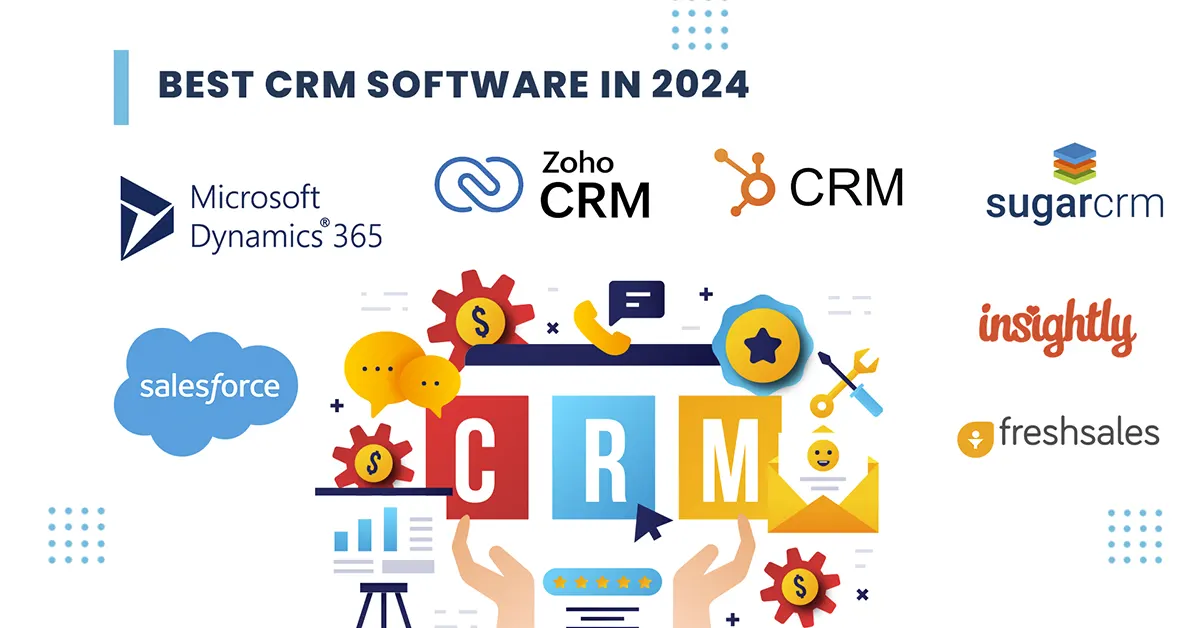
In today’s hyper-connected digital era, managing customer relationships has become more critical than ever for businesses striving to stay competitive. Enter (Customer Relationship Management) CRM software development – the cornerstone of modern business operations. As we step into 2024, the landscape of CRM solutions continues to evolve, offering a myriad of features and benefits to businesses worldwide. Let’s delve into the top 7 CRM software platforms of 2024, each offering unique capabilities to streamline processes, enhance customer engagement, and drive growth.
1. Salesforce
Salesforce stands as the undisputed leader in the CRM development, offering a comprehensive suite of tools designed to streamline sales, marketing, and customer service processes. From lead management and opportunity tracking to advanced analytics and AI-driven insights, Salesforce provides unparalleled customization and scalability.
Salesforce’s feature-rich platform includes lead management, sales forecasting, marketing automation, and customer service functionalities. Its scalability, extensive third-party integrations, and user-friendly interface make it a top choice for businesses seeking a versatile CRM solution.
2. Microsoft Dynamic 365
Microsoft Dynamics 365 is a powerhouse CRM platform that integrates seamlessly with the Microsoft ecosystem, including Office 365 and Azure. Its modular approach allows businesses to tailor the platform to their specific needs, whether it’s sales, marketing, customer service, or operations.
Dynamics 365’s AI-driven insights, customer journey mapping, and predictive analytics enable organizations to gain deeper insights into customer behavior. Its flexible deployment options, enterprise-grade security, and seamless integration with Microsoft’s suite of productivity tools make it a preferred choice for large enterprises.
3. Zoho CRM
Zoho CRM caters to businesses of all sizes with its extensive range of features, including sales automation, workflow automation, social media integration, and AI-driven insights. The platform’s flexibility and customization options make it adaptable to diverse business requirements.
Zoho CRM’s affordability and scalability make it an attractive option for businesses looking to enhance their customer relationships without breaking the bank. With built-in telephony features and a plethora of add-on apps, Zoho CRM offers a comprehensive solution for managing sales and marketing processes. Its affordability, scalability, and seamless integration with third-party apps make it an attractive option for businesses looking to enhance productivity and drive growth.
4. HubSpot CRM
HubSpot CRM excels in simplifying complex tasks with its intuitive interface and powerful automation capabilities. Features like contact management, email tracking, lead scoring, and marketing automation are seamlessly integrated. HubSpot CRM enables businesses to nurture leads and track customer interactions effortlessly.
HubSpot CRM’s free version offers essential features, making it accessible to startups and small businesses. Its comprehensive reporting tools, customizable workflows, and exceptional customer support. HubSpot CRM is a preferred choice for businesses looking to optimize their sales and marketing efforts.
5. SugarCRM
SugarCRM Platform offers a highly customizable platform with features like sales automation, marketing automation, and customer support. Whether deployed in the cloud or on-premises, SugarCRM adapts to the unique needs of each business, providing flexibility and control.
SugarCRM’s open-source availability and extensive customization options make it a preferred choice for businesses seeking tailor-made CRM solutions. With a focus on customer experience and flexible deployment options, SugarCRM empowers organizations to deliver exceptional customer service and drive loyalty.
6. Insightly
Insightly combines CRM and project management capabilities, providing a holistic solution for businesses managing both customer relationships and projects. With features like contact management, email integration, task automation, and reporting tools, Insightly helps teams stay organized and productive.
Insightly’s robust project management features and seamless integration with G Suite and Office 365 make it an ideal choice for service-based businesses and project-driven organizations. Its user-friendly interface and customizable workflows enable businesses to streamline processes and drive collaboration across teams.
7. Freshsales:
Freshsales leverages AI technology to provide actionable insights and automate repetitive tasks, enabling sales teams to focus on building relationships and closing deals. With features like lead scoring, email tracking, and a built-in phone, Freshsales empowers businesses to drive efficiency and productivity.
Freshsales’ ease of setup and use, integration with third-party apps, and robust customer support make it an attractive choice for businesses seeking a modern CRM solution. Its customizable options and focus on user experience enhance productivity and drive meaningful interactions with customers. Freshsales adapts to the unique needs of each business, driving better outcomes and higher ROI.
Conclusion
In the ever-evolving landscape of CRM software, the year 2024 presents businesses with an array of innovative platforms designed to revolutionize customer relationship management. Each of the CRM software platforms discussed above offers a unique blend of features, functionalities, and benefits, catering to diverse business needs and objectives.
1. Salesforce: As businesses navigate the complexities of the modern marketplace, choosing the right CRM solution is paramount to success. Salesforce leads the pack with its comprehensive suite of tools, scalability, and extensive third-party integrations, making it a top choice for businesses of all sizes.
2. Microsoft Dynamic 365: It’s empowering enterprises with its modular approach, seamless integration with Microsoft’s ecosystem, and AI-driven insights, enabling organizations to deliver personalized experiences at scale.
3. Zoho CRM: It offers affordability, flexibility, and extensive customization options, making it a preferred choice for businesses seeking to streamline sales and marketing processes without breaking the bank.
4. HubSpot CRM: HubSpot CRM stands out for its user-friendly interface, powerful automation capabilities, and free version, making it an attractive option for startups and small businesses looking to optimize their sales and marketing efforts.
5. SugarCRM: It provides a highly customizable platform with a focus on customer experience, flexibility, and open-source availability, empowering businesses to deliver exceptional customer service and drive loyalty.
6. Insightly: Its CRM and project management capabilities, cater to service-based businesses and project-driven organizations with its robust features and seamless integration with G Suite and Office 365.
7. Freshsales: Freshsales leverages AI technology to provide actionable insights and automate repetitive tasks, enhancing efficiency and productivity for businesses seeking a modern CRM solution.
In conclusion, the best CRM software platforms of 2024 offer businesses a wealth of opportunities to optimize customer relationships, streamline processes, and drive growth. By carefully evaluating their unique needs, objectives, and budgetary constraints, businesses can choose the CRM solution that best aligns with their goals and aspirations, propelling them toward success in the competitive marketplace of today and tomorrow. CRM development Company.
Empower your business with CRM software tailored to your goals. Learn the benefits of each CRM type with our expert team.
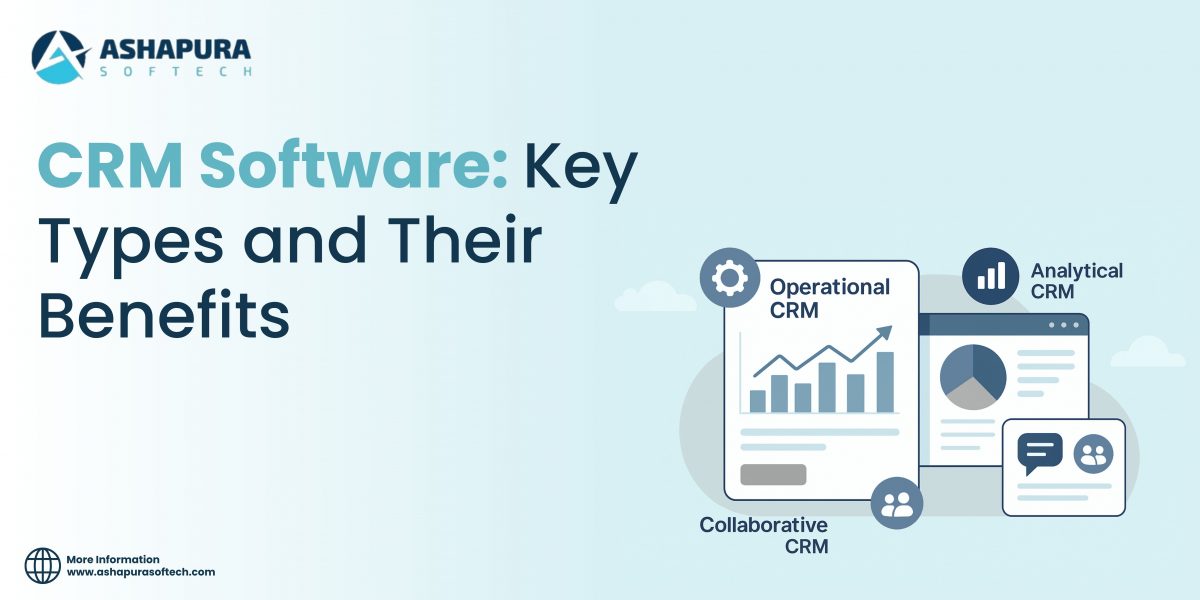
Customer Relationship Management, or CRM, is a system that may help you grow your business by generating leads and converting them into sales. As a result, there are many types of CRM software for various functions.
1. Customer Relationship Management Software
Customer relationship management software is software that helps customer service teams manage their customer interactions. Not only is this software limited to helping companies with customer service, but it can also provide other features such as marketing automation, sales forecasting, and e-commerce solutions. The main purpose of this type of CRM is to help companies prioritize their customers or sales channels based on certain metrics.
There are different types of CRMs. They range from the simplest one-off contact management solutions to more complex customer experience platforms for e-commerce websites. These platforms are intended to provide an integrated overview of all information about a company’s customers or customers in order to improve the efficiency and effectiveness of the organization.
2. Contact Tracking Software
This software is used to keep track of the contacts you make with potential leads. They can be used to plan, manage, and record information about these people. Contact tracking software is more than just a tool for tracking the people you contact. It can be used to organize your public relations and record data on how effective those efforts have been.
The goal of contact tracking software is usually to make it easier to keep track of all of your contacts and their interactions with you. Different types of contracts require different features such as CRMs or sales automation tools that are tailored to their needs. Before making a purchase decision for a product, you should find out whether certain functions you want are supported by the available contact management software.
3. Marketing Automation Software
Marketers can use marketing automation software to automate and streamline their workflow. Marketing automation software is a set of tools that help run marketing campaigns for small and large businesses. It helps companies save time and money by automating the repetitive tasks involved in running a campaign.
The advantages of marketing automation software are:
Time-saving in manual work
Generate content automatically
Building new customer relationships
Tracking campaigns
4. Customer Feedback Systems CRM
A customer feedback system is a software program that tracks customer reactions to products, services, or marketing campaigns. Information about the customer can be gathered from surveys and telephone interviews, as well as from online sources such as reviews. The feedback data is then used by the company to improve its service quality. There are many different types of feedback systems that have been developed over the years. Some are geared towards collecting qualitative data, while others provide quantitative data to analyze trends in customer satisfaction.
One of the most popular ways to collect data about customers is through surveys on social media platforms like Facebook, Google+, LinkedIn, Twitter, and Reddit. There are also other ways to collect feedback, such as closed online surveys or personal speaker groups, where consumers come together and discuss their experiences with a product with an interviewer.
Conclusion:
Which CRM Should I Choose For My Company?
Choosing a CRM is difficult. It depends on your business needs and preferences. However, each CRM must have its advantages and disadvantages. Therefore, consider all the factors that are important for your company before making your final decision. So to check which CRM software is best for your company, you can contact any CRM consulting company, They will research your business, leads, and everything else and then suggest the best-performing software. Choosing the right type of CRM software is crucial for optimizing your business operations and enhancing customer relationships. Need expert guidance on CRM software? Contact us at [email protected] to find the perfect CRM solution for your business.
Why Cloud-Based CRMs Are the Future
One also needs to consider that when it comes to CRM-based solutions, managing customer relationships may be too expensive if one implements products that do not scale easily to higher volumes. Cloud-based CRM services hosted on remote servers via the internet provide unmatched scalability and flexibility. They allow scaling your business with the actual solution rather than having solutions that outgrow your needs.
For instance, there is Salesforce. It’s the gold standard in cloud-based CRMs, allowing businesses to integrate sales, marketing, and customer service into one seamless platform. And here’s the kicker: all you need is a browser and an internet connection.
Key Benefits of Cloud-Based CRMs
Scalability to Match Your Growth
Scaling a business is no small feat, and legacy software can prove to be a roadblock. Cloud-based CRMs allow upgrading the subscription to add new users, functionalities, or data storage. Whether you are a startup or an enterprise, cloud CRMs scale with your needs.
Accessibility and Remote Work Readiness
All cloud-based CRMs can grant every client 24/7 critical customer data accessibility from virtually anywhere. Your support team and all your sales can be somewhere while attending a conference, still on the same page at all times.
Seamless Integration and Customization
Modern businesses function on integration. Cloud-based CRMs integrate perfectly with marketing automation tools, e-commerce platforms, and analytics software. In addition, they provide easy customization to suit your unique workflows and objectives.
Cost Efficiency Without Compromise
Heavy investment in infrastructure is so yesterday. With cloud-based CRMs, you pay for the subscription that carries all the maintenance, upgradation, and security in itself. Also, with minimal IT burden, your team will have adequate time to focus on strategic moves rather than debugging a problem on the server.
Common Cloud-Based CRM Misconceptions
“They’re only for big companies.”
Not necessarily. Cloud-based CRMs have options for businesses of all sizes, including tiered plans for small startups and huge enterprises.
“They’re too difficult to implement.”
Not really. Most vendors provide guided setup and ongoing support to get the transition as smooth as possible.
“Data in the cloud isn’t secure.”
Actually, this is just the opposite of what really is: cloud providers throw lots of money at security measures that oftentimes are superior to in-house systems.
How to Choose the Right Cloud CRM for Your Business
Define Your Needs
Determine which core functions your business needs, which may include lead management or customer support and more.
Scalability Evaluation
Ensure that CRM can scale with your business in terms of features and user capacity.
Integration Capability
Verify if the CRM can be integrated with your existing tools, like ERP systems or email marketing platforms.
Evaluate Vendor Credibility
Evaluate some reviews, case studies, and testimonials to determine their credibility and customer satisfaction.
Unlock CRM potential with Ashapura Softech! From implementation to automation, we deliver consulting that drives results.
#TopCRMServices #SmartSolutions
WHO ARE WE
Ashapura Softech is a CRM software development company specializing in the implementation of Salesforce, the smartest client engagement platform in the world. A platoon of Ashapura Softech professionals that helps you make or integrate a successful CRM software for you to maintain your company relations with guests, using the stylish and most innovative technology but always putting people first. We know how to get you the most out of the stylish technology on request, but we prefer our guests to tell it. Ashapura Softech is one of the TOP CRM Consulting Agencies in the, you might have known about CRM (Client Relationship Operation), a bit important it is all up to your working experience with CRM software. But at the moment we’re going to learn about tools offered during CRM software implementation. These tools help you to get good leads or again help to convert leads to your client.
Enforcing a CRM platform is a process that deserves special attention. This system used by the most stylish and most competitive companies in the world is designed to optimize business conditioning and ensure that associations achieve the loftiest position of marketing and deals strategies. Still, enforcing this type of system is a point that requires further than will on the part of those involved. It’s important that during this process certain former ways are fulfilled that help guarantee the success of the software and for that, you can calculate on a CRM consulting company. Thus, in this composition, we will explain what the value of a CRM consultancy is.
A CRM consulting service is made up of a group of experts in the area who are in charge of helping you plan and carry out the perpetration and deployment of this system, examining the different aspects of the association, and detecting openings and pitfalls to guarantee the success of the design. Unfortunately, some business leaders or directors still misdoing the value of a CRM consultancy and decide to skip this service during perpetration with the false idea that it saves coffers when the reality is the opposite. However, we will explain the value of this service and everything it can help you achieve If your company is about to apply this tool.
Training
One of the main problems faced by companies that avoid the support of expert advisers during the perpetration of a CRM is that their leaders don’t have the tools to educate and train each druggies who are in contact with the tool. When you have a quality consulting service, you have experts devoted to transmitting knowledge to each member of the company or at least to those who use the software. A CRM consulting company handles furnishing all the educational material that’s necessary to ensure that all workers master the system and make the utmost of each of its functionalities.
Take into account that having the support of an acceptable CRM consulting company can help you optimize time and coffers in a perpetration design thanks to its expansive knowledge of the tools, processes, and methodologies to carry it out. Let yourself be guided by a good and devoted company to give you the support you bear ahead, during, and after the perpetration.
Remember that the success of your design depends largely on a good perpetration process and the correct training of your staff in the use of CRM, an educated adviser can help you achieve it. At Ashapura Softech we offer you our consulting service to support you and guarantee the success of your investment. We’re a consulting and perpetration company of Salesforce results for medium and large companies, so we can support you so that you can get the most out of CRM through:
Knowledge About Result
Process Optimization
Quality In Perpetration
Technical Support – CRM Software
Support During and After Preparation
Conclusion
CRM consulting is essential for businesses looking to optimize their customer relationship management processes. Whether you’re implementing a new CRM system or improving an existing one, expert CRM consulting can provide the insights and strategies needed to maximize efficiency, enhance customer interactions, and drive growth. A CRM consultant helps you choose the right platform, customize it to your unique needs, and ensure that your team is fully trained and equipped to use it effectively. With the right guidance, your business can harness the full power of CRM to improve sales, marketing, and customer service. At Ashapura Softech, we specialize in providing comprehensive CRM consulting Services. Our team of experts will work closely with you to understand your business objectives and tailor a CRM strategy that meets your specific needs. Ready to transform your customer relationships? Contact us at [email protected] to learn how our CRM consulting services can help your business thrive.