Categories
CRM

CRM Software: Key Types and Their Benefits

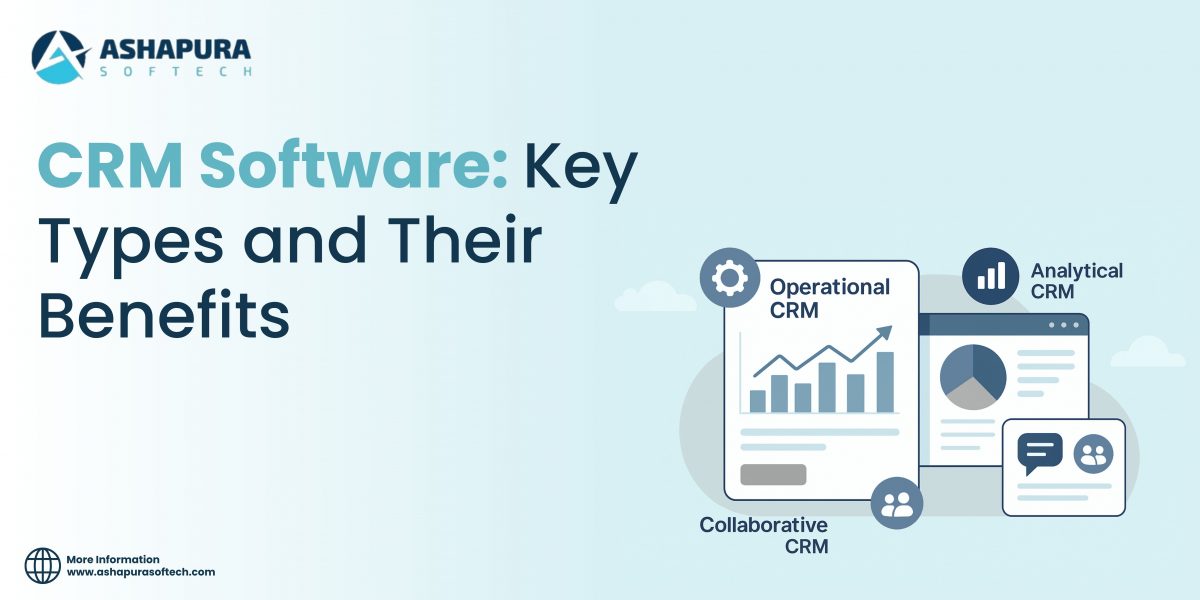
Customer Relationship Management, or CRM, is a system that may help you grow your business by generating leads and converting them into sales. As a result, there are many types of CRM software for various functions.

1. Customer Relationship Management Software

Customer relationship management software is software that helps customer service teams manage their customer interactions. Not only is this software limited to helping companies with customer service, but it can also provide other features such as marketing automation, sales forecasting, and e-commerce solutions. The main purpose of this type of CRM is to help companies prioritize their customers or sales channels based on certain metrics.

There are different types of CRMs. They range from the simplest one-off contact management solutions to more complex customer experience platforms for e-commerce websites. These platforms are intended to provide an integrated overview of all information about a company’s customers or customers in order to improve the efficiency and effectiveness of the organization.

2. Contact Tracking Software

This software is used to keep track of the contacts you make with potential leads. They can be used to plan, manage, and record information about these people. Contact tracking software is more than just a tool for tracking the people you contact. It can be used to organize your public relations and record data on how effective those efforts have been.

The goal of contact tracking software is usually to make it easier to keep track of all of your contacts and their interactions with you. Different types of contracts require different features such as CRMs or sales automation tools that are tailored to their needs. Before making a purchase decision for a product, you should find out whether certain functions you want are supported by the available contact management software.

3. Marketing Automation Software

Marketers can use marketing automation software to automate and streamline their workflow. Marketing automation software is a set of tools that help run marketing campaigns for small and large businesses. It helps companies save time and money by automating the repetitive tasks involved in running a campaign.

The advantages of marketing automation software are:

  • Time-saving in manual work
  • Generate content automatically
  • Building new customer relationships
  • Tracking campaigns

4. Customer Feedback Systems CRM

A customer feedback system is a software program that tracks customer reactions to products, services, or marketing campaigns. Information about the customer can be gathered from surveys and telephone interviews, as well as from online sources such as reviews. The feedback data is then used by the company to improve its service quality. There are many different types of feedback systems that have been developed over the years. Some are geared towards collecting qualitative data, while others provide quantitative data to analyze trends in customer satisfaction.

One of the most popular ways to collect data about customers is through surveys on social media platforms like Facebook, Google+, LinkedIn, Twitter, and Reddit. There are also other ways to collect feedback, such as closed online surveys or personal speaker groups, where consumers come together and discuss their experiences with a product with an interviewer.

Conclusion:

Which CRM Should I Choose For My Company?

Choosing a CRM is difficult. It depends on your business needs and preferences. However, each CRM must have its advantages and disadvantages. Therefore, consider all the factors that are important for your company before making your final decision. So to check which CRM software is best for your company, you can contact any CRM consulting company, They will research your business, leads, and everything else and then suggest the best-performing software. Choosing the right type of CRM software is crucial for optimizing your business operations and enhancing customer relationships. Need expert guidance on CRM software? Contact us at [email protected] to find the perfect CRM solution for your business.
Categories
CRM

Top CRM Consulting Services for Optimal Results

WHO ARE WE

Ashapura Softech is a CRM software development company specializing in the implementation of Salesforce, the smartest client engagement platform in the world. A platoon of Ashapura Softech professionals that helps you make or integrate a successful CRM software for you to maintain your company relations with guests, using the stylish and most innovative technology but always putting people first. We know how to get you the most out of the stylish technology on request, but we prefer our guests to tell it. Ashapura Softech is one of the TOP CRM Consulting Agencies in the, you might have known about CRM (Client Relationship Operation), a bit important it is all up to your working experience with CRM software. But at the moment we’re going to learn about tools offered during CRM software implementation. These tools help you to get good leads or again help to convert leads to your client.

Enforcing a CRM platform is a process that deserves special attention. This system used by the most stylish and most competitive companies in the world is designed to optimize business conditioning and ensure that associations achieve the loftiest position of marketing and deals strategies. Still, enforcing this type of system is a point that requires further than will on the part of those involved. It’s important that during this process certain former ways are fulfilled that help guarantee the success of the software and for that, you can calculate on a CRM consulting company. Thus, in this composition, we will explain what the value of a CRM consultancy is.

A CRM consulting service is made up of a group of experts in the area who are in charge of helping you plan and carry out the perpetration and deployment of this system, examining the different aspects of the association, and detecting openings and pitfalls to guarantee the success of the design. Unfortunately, some business leaders or directors still misdoing the value of a CRM consultancy and decide to skip this service during perpetration with the false idea that it saves coffers when the reality is the opposite. However, we will explain the value of this service and everything it can help you achieve If your company is about to apply this tool.

Training

One of the main problems faced by companies that avoid the support of expert advisers during the perpetration of a CRM is that their leaders don’t have the tools to educate and train each druggies who are in contact with the tool. When you have a quality consulting service, you have experts devoted to transmitting knowledge to each member of the company or at least to those who use the software. A CRM consulting company handles furnishing all the educational material that’s necessary to ensure that all workers master the system and make the utmost of each of its functionalities.

Take into account that having the support of an acceptable CRM consulting company can help you optimize time and coffers in a perpetration design thanks to its expansive knowledge of the tools, processes, and methodologies to carry it out. Let yourself be guided by a good and devoted company to give you the support you bear ahead, during, and after the perpetration.

Remember that the success of your design depends largely on a good perpetration process and the correct training of your staff in the use of CRM, an educated adviser can help you achieve it. At Ashapura Softech we offer you our consulting service to support you and guarantee the success of your investment. We’re a consulting and perpetration company of Salesforce results for medium and large companies, so we can support you so that you can get the most out of CRM through:

Knowledge About Result

Process Optimization

Quality In Perpetration

Technical Support – CRM Software

Support During and After Preparation

Conclusion

CRM consulting is essential for businesses looking to optimize their customer relationship management processes. Whether you’re implementing a new CRM system or improving an existing one, expert CRM consulting can provide the insights and strategies needed to maximize efficiency, enhance customer interactions, and drive growth. A CRM consultant helps you choose the right platform, customize it to your unique needs, and ensure that your team is fully trained and equipped to use it effectively. With the right guidance, your business can harness the full power of CRM to improve sales, marketing, and customer service. At Ashapura Softech, we specialize in providing comprehensive CRM consulting Services. Our team of experts will work closely with you to understand your business objectives and tailor a CRM strategy that meets your specific needs. Ready to transform your customer relationships? Contact us at [email protected] to learn how our CRM consulting services can help your business thrive.

Categories
ERP System

Healthcare with Advanced ERP Systems

What Is ERP?

Before talking about ERP systems in the healthcare industry, I just wanted to give some information about ERP. ERP stands for enterprise resource planning, but what does ERP mean? The simplest way to define ERP is to think about all the core processes needed to run a company: finance, manufacturing, HR, supply chain, services, procurement, and others. At its most basic level, ERP integrates these processes into a single system.

ERP in healthcare industry uses the latest technologies – such as machine learning and artificial intelligence (AI) – to provide intelligence, visibility, and efficiency across every aspect of a business.

Any ERP software will have a long list of features based on the industry they serves. However, all ERPs should have these characteristics:

Up-to-date information and alerts, with self-service reporting across all operations

Visual presentation of the information with analytics to help

The choice of types of ERP, such as cloud, on-premise, or hybrid

Standard and advanced business processes, like, automation with AI and Machine learning,

Configuration tools for processes and users (including customers and suppliers), as well as for business units, locations, and product lines, for example

easy integration with other software solutions, including third-party systems

Technology platform that is fast, proven, and stable for this long-term investment

Technology support for the (IoT), security and privacy, mobile, e-commerce, and other business priorities

Multinational support including languages and business practices, as well as cloud, training, help desk, and implementation services

Benefits Of ERP In Healthcare Industry:

Higher productivity: automate your core business processes to help everyone

Deeper insights: Eliminate information mismatch and get fast answers to mission-critical business questions.

Accelerated reporting: Fast-track business and financial reporting and easily share results. Act on insights and improve performance in real time.

Lower risk: Maximize business visibility and control, ensure compliance with regulatory requirements, and predict and prevent risk.

Improved agility: With efficient operations and ready access to real-time data, you can quickly identify and react to new opportunities.

Due to All of these benefits, ERP is now a Modern-day essential.

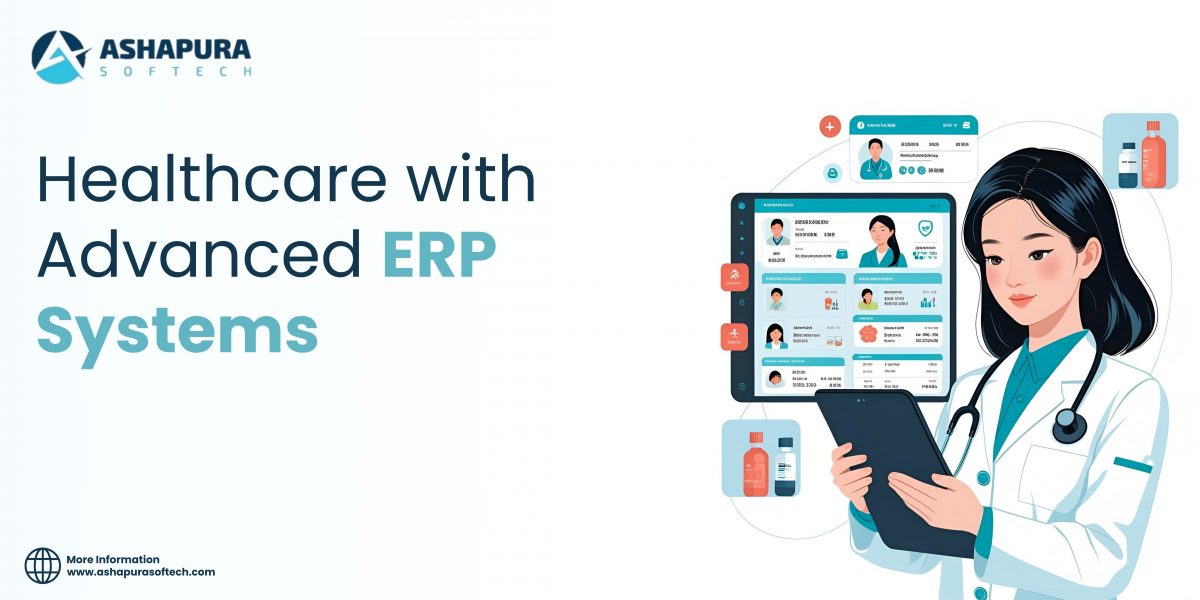
The business needs of ERP software in the healthcare industry are no different. Healthcare providers around the world are under intense pressure to achieve two goals: high-quality care and significant cost reductions. To date, healthcare facilities are increasingly investing in the development of their ERP systems to improve the availability and quality of patient care. In addition, reducing clinical errors and increasing the productivity of healthcare providers are key reasons for adopting ERP solutions.

The emergence of more patents and technologies has necessitated the need for hospitals and other healthcare providers to compile a database of patients with important information for doctors and staff. Physicians and nurses need real-time information on their patient’s diagnostic reports to facilitate communication and make their treatments more effective. In addition, various hospital departments require automated solutions to integrate their primary services, support services, and back-office operations. Reducing costs and overwork is one of the main reasons for adopting an ERP solution. Dissemination of information throughout the pharmacy, laboratory system, radiology, imaging and communication system (PACS), and electronic medical records (EMRs) for patients is essential. Patients, on the other hand, gain access to the consolidated information of their medical reports to plan timely appointments and make immediate decisions.

Some Of The Main Benefits Of Using ERP Solutions Are:

Improved patient care: ERP software enables healthcare providers to provide patients with remote access to critical information resources and reports. It helps patients to be informed about treatment and to make quick decisions. Advanced automated software scheduling simplifies follow-up tests and treatment procedures. The ERP solution ensures the availability of critical patient information across multiple systems.

Reduce maintenance costs: ERP as part of automated IT software leads to improved process efficiency. ERP offers a wide variety of services, such as accounting, finance, and human resources, and brings them under a single domain. It helps to perform various backup functions such as staff management, account management, and asset management.

General health care policies: This is achieved by integrating basic services such as patient registration, electronic medical records management, the radiology department, OPD, and emergencies.

Financial Planning: ERP ensures that payments from various operating care providers are fair, which becomes a win-win situation for providers and payers. It helps maintain healthcare facilities and benefits in less expensive patient care.

Following best practices: Health facilities can better manage all policies and procedures related to member benefits, claims, registrations, and provider networks, which will eventually be updated with the best industry practices.

Patient Safety: ERP software gives healthcare providers the ability to improve safety by making the communication between physicians and patients visible. Many organizations view interactive ERP as an organization’s mandate to provide a culture of patient safety.

Conclusion

ERP systems in the healthcare industry are revolutionizing the way medical institutions operate. By integrating various functions such as patient management, billing, supply chain, and human resources, ERP solutions streamline processes, reduce errors, and improve overall efficiency. With real-time data access and improved communication across departments, healthcare providers can enhance patient care, manage resources better, and make more informed decisions. As the industry continues to evolve, adopting an ERP system becomes crucial for staying competitive and delivering high-quality care. At Ashapura Softech, we offer tailored ERP solutions for the healthcare industry, designed to meet the unique needs of medical institutions. Looking to optimize your healthcare operations? Contact us at [email protected] to explore our ERP solutions and take your healthcare services to the next level.