
A DTC beauty and personal care brand replaced Klaviyo, Zendesk, and a disconnected subscription app with a unified Salesforce platform — delivering skin-type personalization at scale, automated subscription replenishment, and omnichannel service across Instagram, WhatsApp, and phone.
Project Overview
Our client is a fast-growing beauty and personal care eCommerce brand selling serums, moisturizers, supplements, and personal care essentials through a direct-to-consumer Adobe Commerce storefront as well as Amazon Beauty, Sephora marketplace, and Ulta marketplace.
The brand had built a loyal subscriber base of 500,000+ email contacts and 110,000 active subscription customers — but its marketing stack was generating diminishing returns. Every promotional email went to the full list regardless of skin type, purchase history, or whether the customer even used the product category being promoted. Unsubscribe rates were climbing.
Ashapura Softech was engaged to replace Klaviyo, Zendesk, and Shopify with a unified Salesforce platform — one that could turn the brand's rich customer data into personalized experiences rather than generic broadcast campaigns, while unifying subscription management, service, and marketplace operations in a single environment.
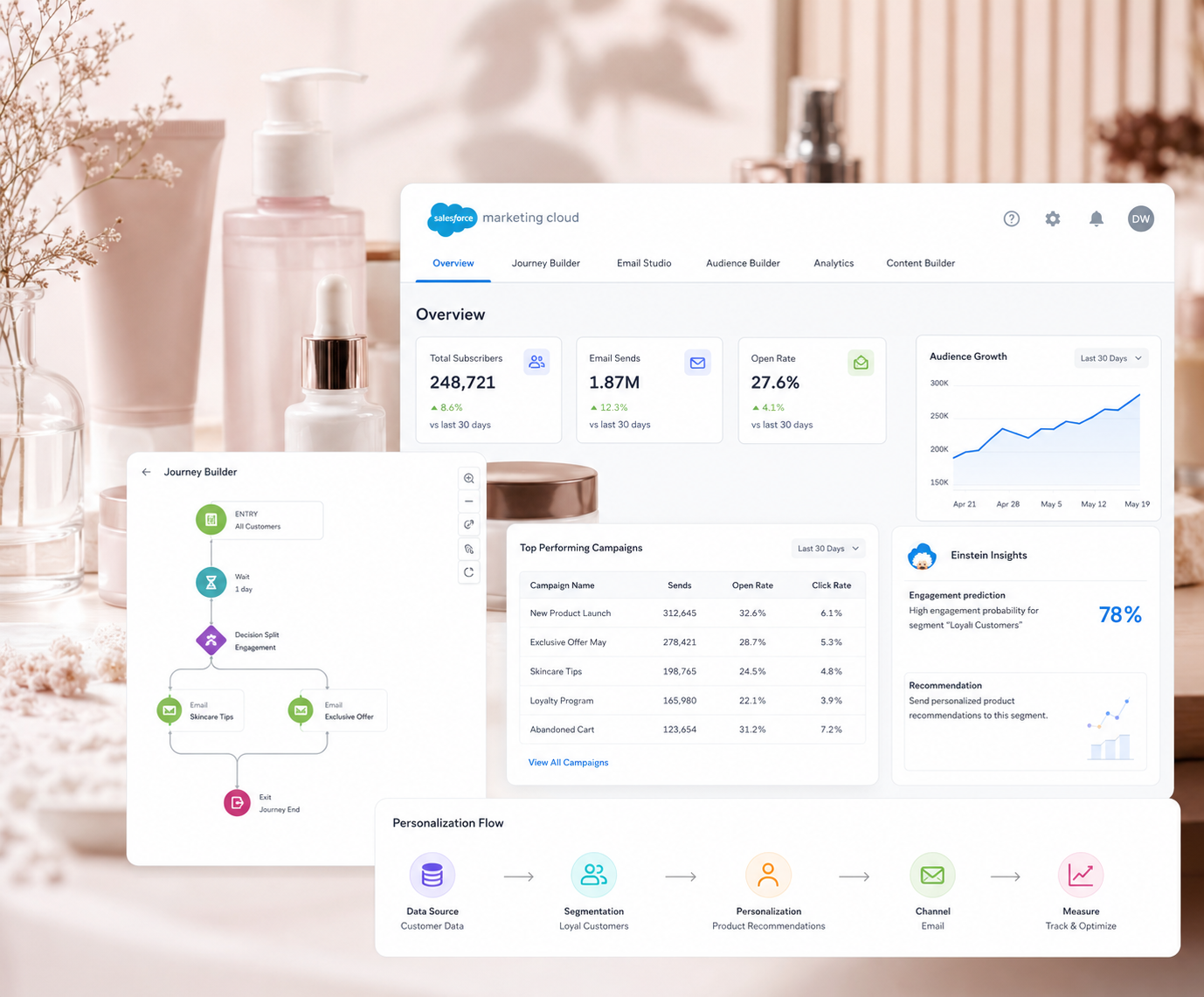
"We had half a million email subscribers and were treating them all the same. Ashapura Softech helped us build a system where a customer with oily, acne-prone skin gets a completely different journey than someone focused on anti-aging — and both feel like the message was written just for them."— VP of Marketing, beauty and personal care eCommerce brand
The Business Challenge
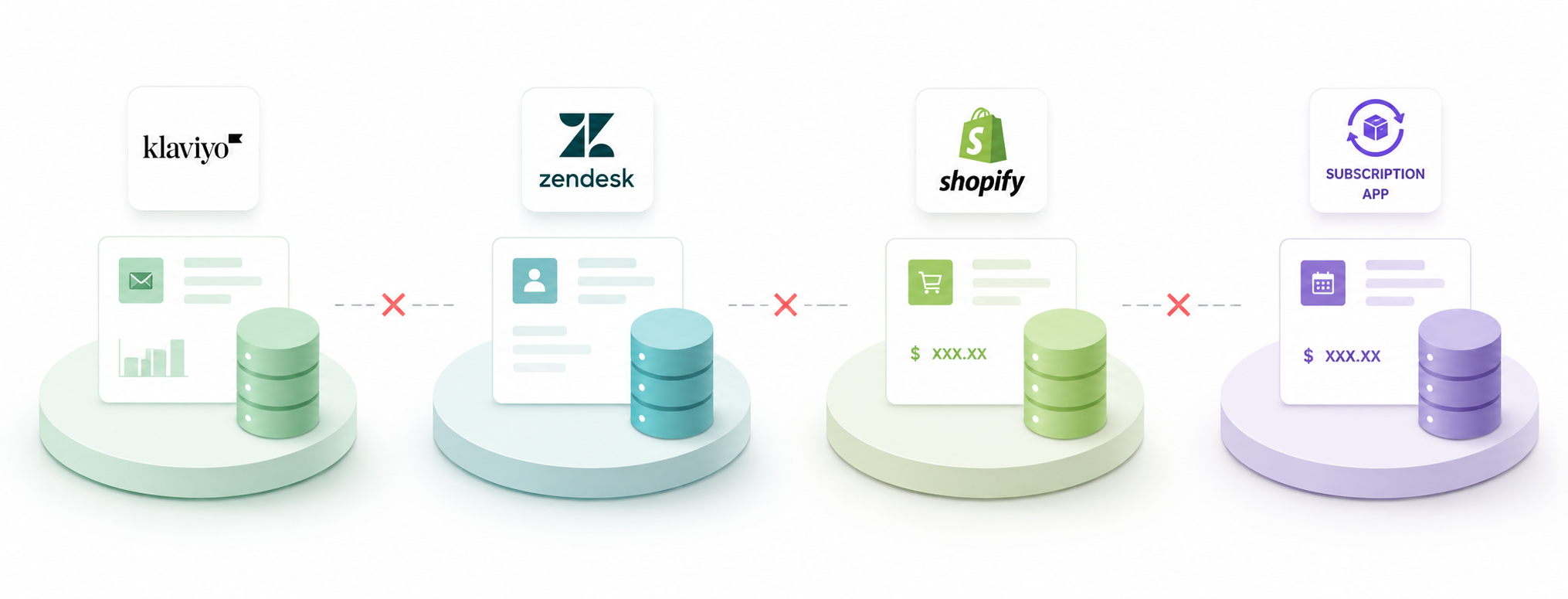
Despite strong product-market fit and a loyal repeat-purchaser base, our client's technology stack was fragmenting the customer relationship and limiting the brand's ability to grow intelligently.
Every promotional email — whether for a vitamin C serum, a hair mask, or a supplement — went to all 500,000 subscribers regardless of skin type, product affinity, or purchase history. Open rates were declining and unsubscribe rates were climbing quarter over quarter.
The brand's 110,000 active subscription customers were managed in a separate subscription app with no connection to the main CRM. Churn was invisible until after cancellation — there was no mechanism to identify at-risk subscribers based on usage behavior before they churned.
Influencer-driven campaigns regularly generated hundreds of Instagram DM inquiries and WhatsApp messages. With no routing system, these messages were handled inconsistently — or not at all — creating a poor experience for the customers most likely to be high-value new purchasers.
Influencer posts and paid social campaigns drove significant traffic spikes to the storefront. When visitors abandoned their carts — as many first-time visitors do — there was no automated recovery sequence. Every traffic spike was also an unrecovered abandonment spike.
Customer service reps handling calls and emails had no visibility into a caller's subscription status, product purchase history, or skin type profile. Every support interaction started from scratch, increasing handle time and limiting the quality of advice agents could provide.
The brand had identified significant opportunity in Spanish- and Portuguese-speaking markets in the US, Mexico, and Brazil. Klaviyo could send emails, but it had no infrastructure to manage multi-language campaigns based on customer locale or to route service interactions across languages automatically.
The Solution
Ashapura Softech designed a platform where every interaction — from an abandoned cart to an Instagram DM to a subscription renewal — is informed by a complete, unified customer profile.
Salesforce Marketing Cloud | Data Cloud | Adobe Commerce (Magento) | Journey Builder | Multi-Language Campaigns | Social Publishing Custom Action
The core of this implementation is a real-time connection between the Adobe Commerce storefront and Salesforce Data Cloud. Every behavioral event — product page views, add-to-cart actions, checkout steps, quiz completions, and repurchase patterns — is streamed into Data Cloud and structured into a unified customer profile for each of the brand's 380,000+ contacts.
That unified profile combines skin type (captured at account creation or via the product recommendation quiz), purchase history across all channels, routine preferences, and seasonal behavioral signals. Marketing Cloud Journey Builder uses these profile attributes to deliver campaigns that are genuinely differentiated for each subscriber segment:
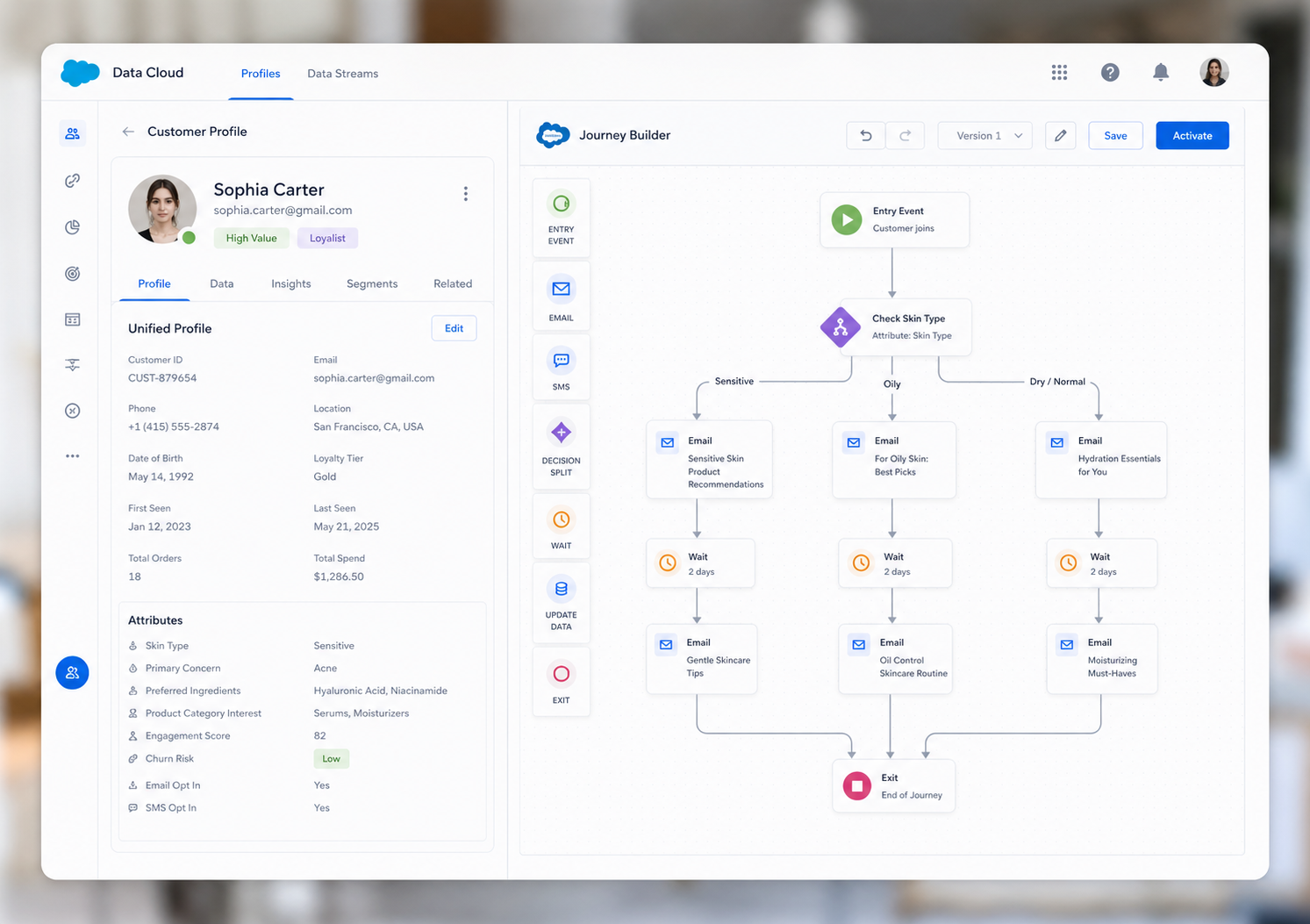
Marketing Cloud Journey Builder | Data Cloud Behavioral Triggers | Adobe Commerce | Subscription Replenishment Journeys | SMS + Email
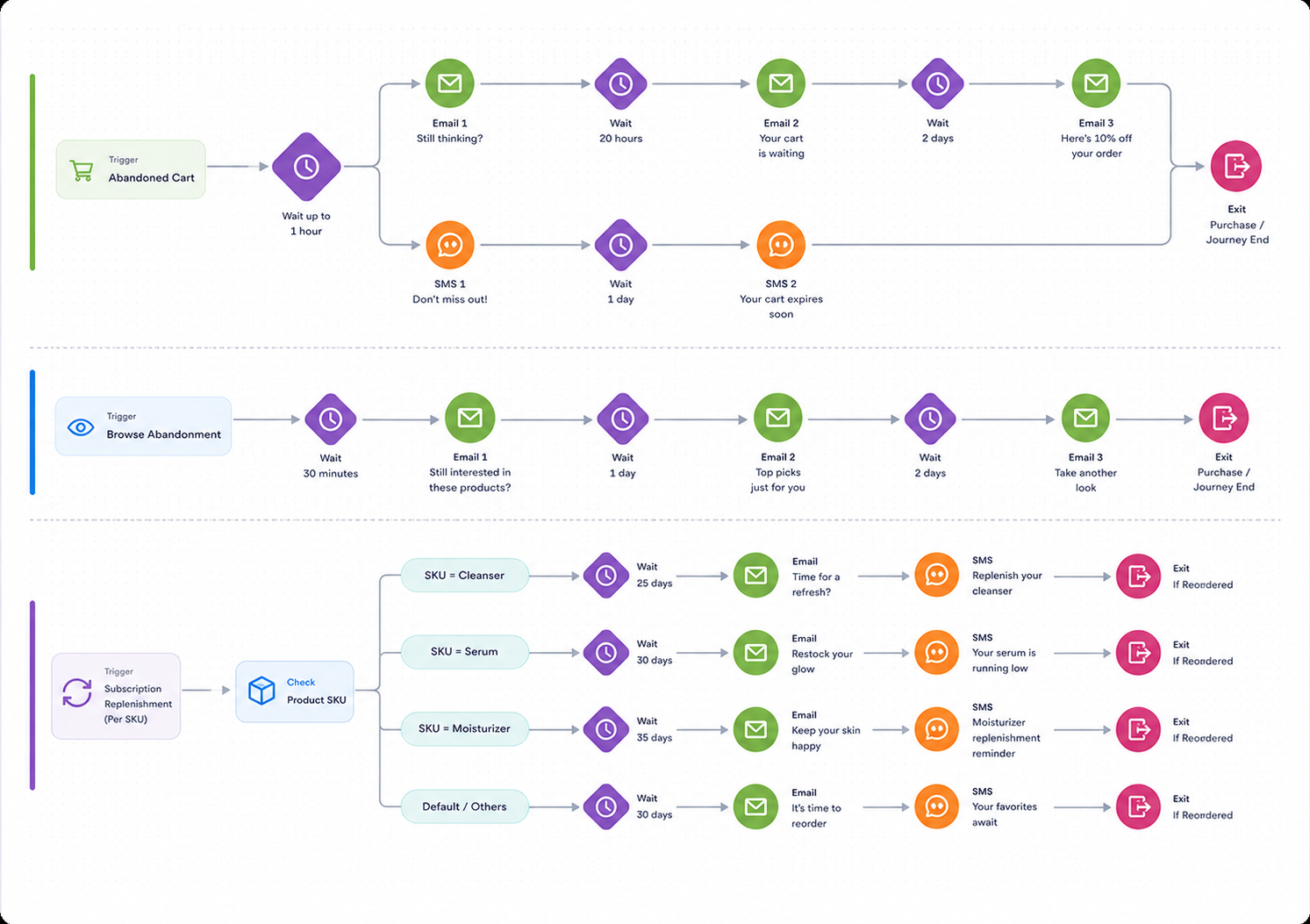
Ashapura Softech built two high-impact automation streams on top of the Data Cloud behavioral foundation: abandoned cart recovery and subscription replenishment.
Abandoned Cart & Browse Abandonment: Adobe Commerce behavioral data streams into Data Cloud in real time. When a shopper adds a product to their cart or begins checkout without completing the purchase, a Journey Builder flow fires within one hour. The recovery sequence includes the specific products left in cart, skin-type-relevant social proof, and a clear return-to-cart path. A separate browse abandonment journey targets customers who viewed product pages without adding to cart — with a longer, softer cadence appropriate to the earlier stage of intent.
Subscription Replenishment: Each product category has a calculated usage cycle stored in Data Cloud — a 30ml serum used daily exhausts in approximately 30 days; a 60-count supplement taken twice daily runs out in a similar timeframe; a larger moisturizer may last 60–90 days. Journey Builder fires an automated replenishment reminder at exactly the point the customer is likely running low — before they have a gap in their routine, and before they start evaluating alternatives.
Agentforce | Service Cloud | Digital Engagement | Instagram DMs | WhatsApp | SMS | Email | Einstein Product Recommendations
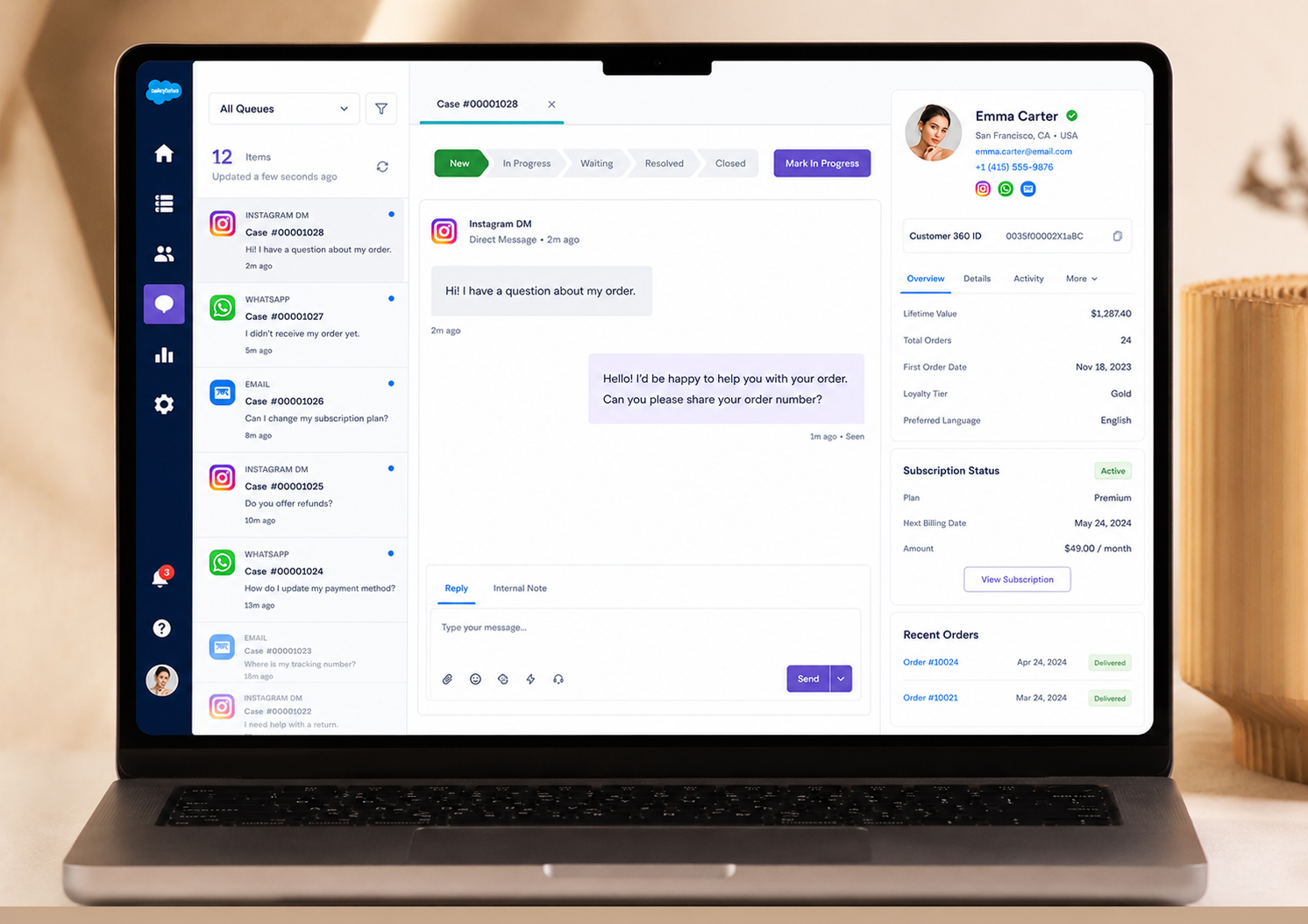
The brand's customers reach support through every channel: Instagram DMs, WhatsApp messages, email, phone, and SMS. Previously, Instagram and WhatsApp messages had no routing system — they were handled ad hoc and often missed entirely after influencer campaigns drove inquiry surges.
Ashapura Softech implemented Salesforce Digital Engagement to route all incoming Instagram DMs, WhatsApp messages, SMS, and email into a single Service Cloud queue. Every agent now works from one interface regardless of which channel the customer used — and the customer's full profile, purchase history, and subscription status are visible in the same screen before the agent types their first response.
Agentforce is deployed as the first-line service layer on the Adobe Commerce storefront chatbot. Before any human agent sees a message, Agentforce handles:
Service Cloud Voice | Amazon Connect | Amazon Transcribe | Agentforce Sales Coach | Channel Engine | Amazon Beauty | Sephora | Ulta
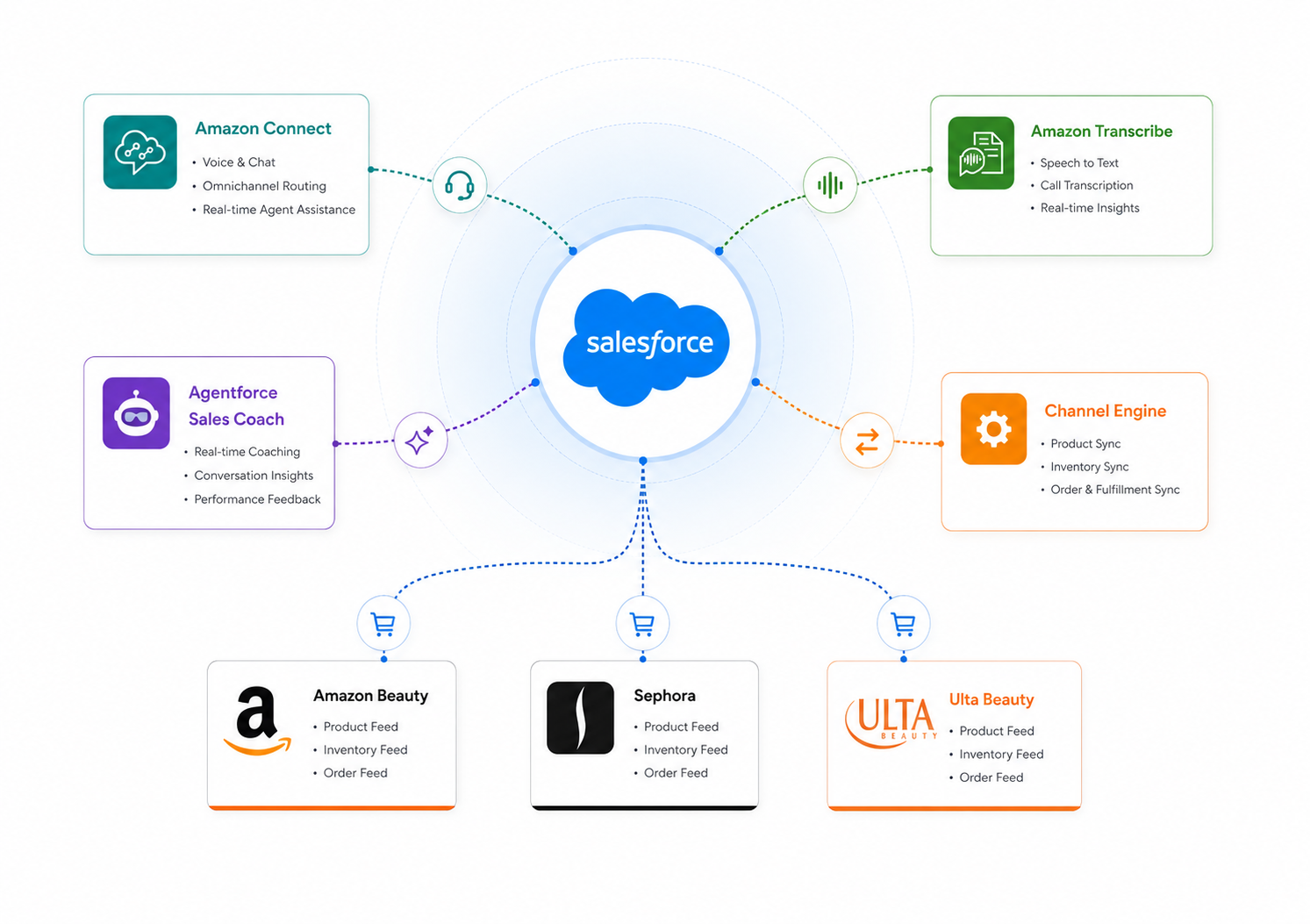
For phone support, Ashapura Softech implemented Salesforce Service Cloud Voice with Amazon Connect as the cloud contact center engine. Amazon Transcribe generates real-time call transcripts, which Agentforce Sales Coach analyzes post-call to grade representative performance, identify coaching opportunities, and surface common customer complaints or product questions for the product and marketing teams.
On the commerce operations side, Channel Engine synchronizes orders from Amazon Beauty, Sephora marketplace, and Ulta marketplace directly into Salesforce — giving the customer service team a complete order history regardless of where the customer purchased. When a customer calls about an order placed through Sephora's marketplace, the agent sees it in the same record as orders from the brand's own DTC storefront.
The Migration Challenge
Migrating from Klaviyo, Zendesk, and Shopify to Salesforce required solving a challenge unique to subscription commerce: moving active billing relationships — with payment tokens — without causing a single missed renewal or billing error.
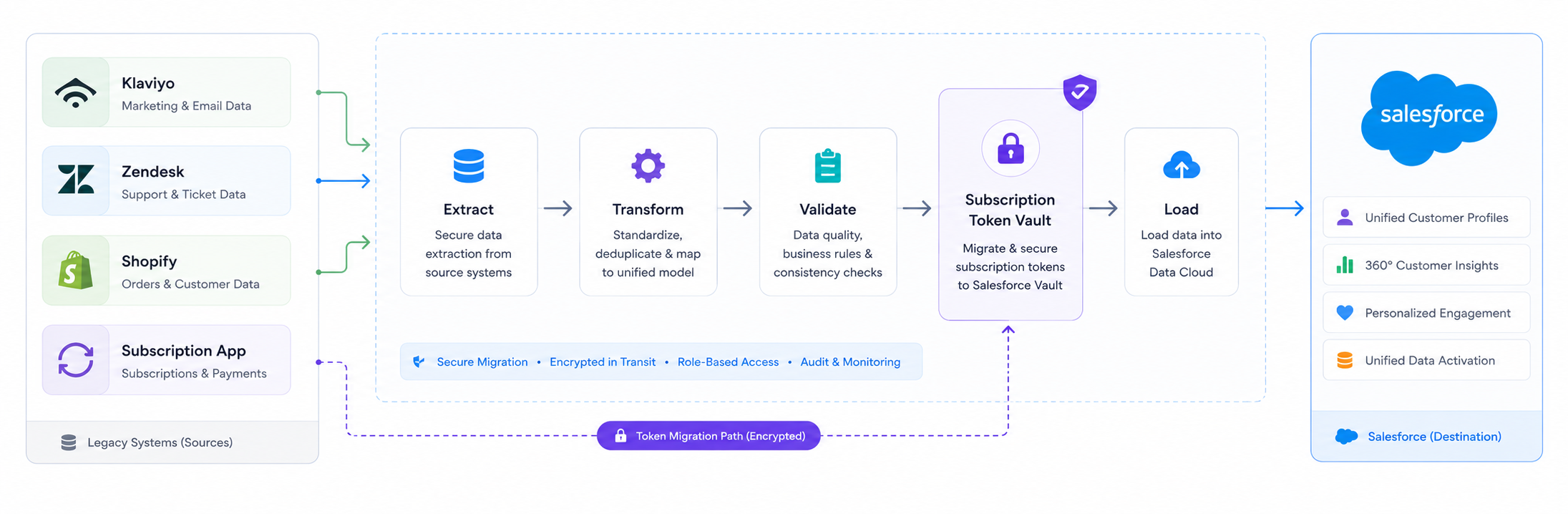
The highest-risk element of the migration was the 110,000 active subscription records — each carrying a payment vault token tied to a renewal date and product configuration. Rather than treating these as static records, Ashapura Softech coordinated directly with the payment processor to perform a vault-to-vault token transfer. Legacy tokens were remapped to new vault references in the subscription records before any renewal attempts occurred in Salesforce. A short read-only freeze window on the legacy platform ensured no in-flight subscription edits created reconciliation conflicts during cutover. Zero billing cycles were missed or delayed.
Klaviyo's engagement data — open history, click history, and list membership — was migrated into Salesforce Marketing Cloud as subscriber attributes rather than individual activity records. This preserved each contact's historical engagement signal (active vs. unengaged) so Marketing Cloud journey suppression rules and re-engagement journeys could be configured accurately from day one. Contacts already unsubscribed or hard-bounced in Klaviyo were migrated with the correct suppression status to prevent deliverability risks on the new platform.
Order history from Shopify was migrated to Adobe Commerce first, then synced into Salesforce as order records linked to their corresponding contact profiles. Product variant data — shade, size, formulation — was preserved in the order line items so Marketing Cloud personalization and Agentforce product recommendations could reference what a customer had actually purchased, not just which product family. A custom deduplication pass reconciled contacts who appeared in both Shopify and the subscription platform under slightly different email addresses or name spellings.
75,000 Zendesk support tickets including full chat transcripts were migrated to Service Cloud cases and linked to the corresponding customer contact records. This gave the service team a complete support history from day one — agents handling returning customers could immediately see previous issues, resolutions, and escalation patterns. Tickets closed as resolved were migrated with that status preserved. Open tickets at the time of migration were prioritized and transitioned to Service Cloud active queues before the Zendesk platform was retired.
Technology Architecture
| Salesforce Product / Integration | Role in the Implementation |
|---|---|
| Marketing Cloud | Skin-type and purchase-history-segmented campaign automation; abandoned cart and browse abandonment journeys; subscription replenishment sequences; multi-language campaigns (EN, ES, PT); one-click social publishing via custom Journey Builder action |
| Data Cloud | Unified customer profile aggregating skin type, purchase history, routine preferences, behavioral signals from Adobe Commerce, and subscription status — the data engine for all Marketing Cloud personalization and Agentforce service responses |
| Agentforce (Storefront Chatbot) | AI-powered product consultation chatbot on Adobe Commerce; handles skin type queries, order status lookups, return requests, and subscription management (pause, swap, cancel); transfers context to Service Cloud agents on escalation |
| Agentforce Sales Coach | Post-call AI analysis of Amazon Transcribe transcripts; grades rep performance on resolution quality, empathy, and upsell compliance; generates structured coaching recommendations for managers |
| Service Cloud | Omnichannel case management across Instagram DMs, WhatsApp, email, SMS, and phone — all routed into a single queue with the customer's full profile and purchase history visible to agents |
| Digital Engagement | Routing layer that ingests Instagram DMs, WhatsApp messages, and SMS into Service Cloud cases automatically — eliminating manual, inconsistent handling of social and messaging channel inquiries |
| Service Cloud Voice | Cloud contact center for phone support; integrated with Amazon Connect for intelligent routing and Amazon Transcribe for real-time call transcription feeding Agentforce Sales Coach |
| Amazon Connect | Call routing engine with skills-based routing (product specialists, subscription team, general support) and queue management inside Service Cloud Voice |
| Amazon Transcribe | Real-time transcription of every customer support call; transcripts stored as Service Cloud case notes and analyzed by Agentforce Sales Coach |
| Adobe Commerce (Magento) | DTC eCommerce storefront; behavioral events stream to Data Cloud in real time; Agentforce chatbot deployed on-site; order data synced bidirectionally with Salesforce |
| Channel Engine | Automatic order sync from Amazon Beauty, Sephora marketplace, and Ulta marketplace into Salesforce — agents and reporting see a single unified order history across all sales channels |
| Einstein Product Recommendations | Surfaces relevant upsell and cross-sell products within the agent's case and order flow based on the customer's skin type profile and purchase history from Data Cloud |
| Journey Builder Custom Action | Single-step social publishing action in Marketing Cloud that simultaneously posts campaign content to Instagram, Facebook, TikTok (linked account), and Pinterest from one content creation step |
Outcomes & Business Impact
The Salesforce implementation delivered measurable change across marketing performance, service operations, subscription retention, and commerce coverage — not just technology modernization.
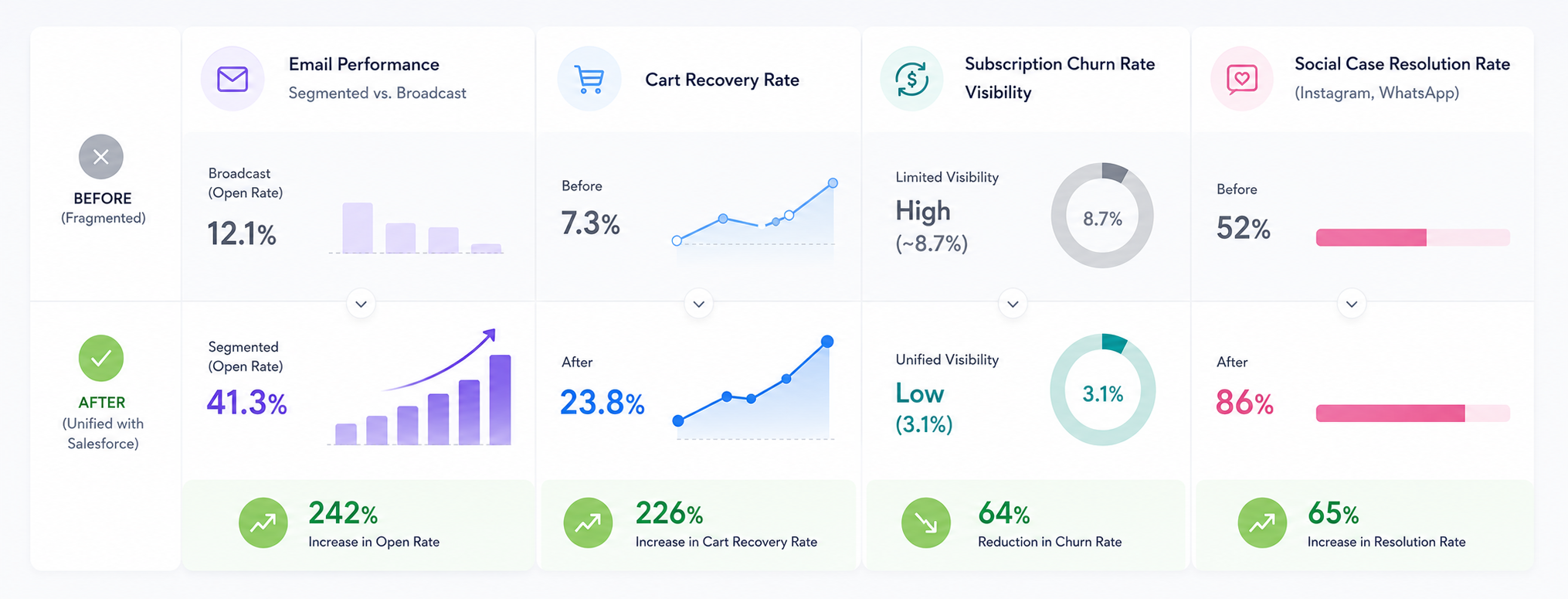
Campaigns segmented by skin type and purchase history achieve significantly higher open and click-through rates compared to the previous broadcast approach. The brand now has clear data confirming that skin-type relevance is the primary driver of email engagement — and the platform is built to deliver it consistently at scale.
Data Cloud flags at-risk subscribers before they cancel — based on deviation from expected repurchase timing, reduced product review activity, and changes in browsing behavior. The subscription team can now intervene proactively with personalized outreach rather than reacting to a cancellation that has already occurred.
Abandoned cart sequences now fire automatically within one hour of a cart abandonment event, triggered by Adobe Commerce behavioral data streamed into Data Cloud. The recovery email includes the specific products left in cart alongside skin-type-matched social proof — a level of personalization that was not achievable in Klaviyo without significant manual segmentation effort.
Digital Engagement routes all Instagram DM and WhatsApp messages into the Service Cloud queue alongside email and phone cases. Agents handle every channel from one interface and can see a customer's open orders, active subscriptions, and prior support history before responding — regardless of which channel the inquiry arrived on.
The Agentforce chatbot on the Adobe Commerce storefront handles a material share of product consultation inquiries and subscription management requests without human agent involvement. Customers can pause, swap, or cancel subscriptions through Agentforce at any time without waiting in a service queue — which itself reduces cancellation rates by making self-service frictionless.
English, Spanish, and Portuguese campaign templates are live in Marketing Cloud, with locale-based routing that automatically assigns subscribers to the correct language variant. The brand can now run coordinated North American and Latin American promotional campaigns from a single Marketing Cloud instance without managing separate email platforms per market.
Channel Engine delivers orders from Amazon Beauty, Sephora marketplace, and Ulta marketplace into Salesforce within minutes of placement. Service agents, Einstein recommendations, and Marketing Cloud personalization all draw from the same complete purchase history — whether the customer bought from the brand's own site or from a retail partner's marketplace.
Agentforce Sales Coach analyzes every Amazon Transcribe transcript to evaluate how representatives handle product consultations, subscription objections, and escalated complaints. Managers receive structured coaching recommendations rather than needing to manually review call recordings — building service quality systematically rather than episodically.
Frequently Asked Questions
Salesforce Marketing Cloud personalizes beauty eCommerce emails by pulling unified customer profiles from Data Cloud, which aggregates skin type, purchase history, product routine preferences, and browsing behavior from the Adobe Commerce storefront. Journey Builder then uses these data points to segment subscribers and trigger individualized emails — for example, sending a dry-skin serum recommendation to customers who purchased a hydrating toner, or a seasonal SPF campaign only to customers who have previously bought sun-care products. This replaces the broadcast approach of sending every promotional email to the full subscriber list regardless of relevance. Unlike an ESP such as Klaviyo, which requires marketers to manually build segments, Data Cloud maintains the unified profile automatically and updates segment membership in real time as customer behavior changes.
Salesforce Data Cloud is a real-time customer data platform that ingests behavioral, transactional, and preference data from multiple sources — Adobe Commerce, subscription apps, social platforms, and support channels — and consolidates them into a single unified customer profile. For DTC beauty brands, this means every marketing journey, service interaction, and product recommendation is driven by a complete picture of the customer: their skin type, purchase cadence, routine preferences, and seasonal needs. Data Cloud feeds Marketing Cloud for campaign personalization, Agentforce for intelligent service chatbot responses, and Einstein for in-agent product recommendations. It replaces the manual segmentation work that ESP platforms like Klaviyo require marketers to perform by hand for every campaign.
Salesforce automates abandoned cart recovery by streaming behavioral events from Adobe Commerce (Magento) into Data Cloud in real time. When a shopper adds a product to their cart or begins checkout without completing the purchase, Data Cloud captures the event and triggers a Marketing Cloud Journey Builder flow within one hour. The recovery sequence includes the specific products left in the cart, relevant skin-type-matched social proof or reviews, and a clear return-to-cart call to action delivered via email and SMS. Browse abandonment journeys — triggered when a customer views a product page without adding to cart — can be configured with a softer, longer follow-up cadence suited to the earlier stage of purchase intent. The personalization in the recovery message draws on the full Data Cloud customer profile, not just the cart contents, making the communication more contextually relevant than standard cart recovery emails.
Salesforce Marketing Cloud manages subscription replenishment by calculating the expected usage cycle for each product category and storing it in Data Cloud alongside each customer's subscription record. A 30ml serum used daily exhausts in approximately 30 days; a 60-count supplement taken twice daily runs out in a similar window; a full-size moisturizer may last 60–90 days. Journey Builder fires an automated replenishment reminder at exactly the point a customer is likely running low — before they experience a gap in their routine. Data Cloud also flags subscribers whose repurchase timing deviates from their expected cadence, allowing the subscription team to intervene proactively with personalized outreach before a customer cancels. This unified approach is only possible when subscription data, purchase history, and marketing automation share the same underlying data platform — which a disconnected subscription app cannot provide.
Agentforce is deployed on the Adobe Commerce storefront as an AI-powered first-line service layer. For a beauty brand, Agentforce asks customers about their skin type, primary concerns (acne, hyperpigmentation, sensitivity, anti-aging, hydration), and existing routine — then recommends specific products from the catalog based on that profile, drawing on the customer's Data Cloud record if they are a returning purchaser. Agentforce also handles order status lookups, return and refund requests, and subscription management actions (pause, skip, swap, or cancel) without human agent involvement. When escalation is necessary, the full Agentforce conversation context transfers to the Service Cloud agent so the customer does not need to repeat their concern. This deflects a significant share of routine service volume while improving the quality of first contact for complex inquiries that do require human resolution.
Ashapura Softech brings 12+ years of Salesforce implementation experience with deep expertise in DTC eCommerce, subscription commerce, and omnichannel marketing automation. Our team has certified Salesforce consultants across Marketing Cloud, Data Cloud, Agentforce, Service Cloud, and Service Cloud Voice — and has delivered complex integrations with Adobe Commerce, Channel Engine, Amazon Connect, and subscription platforms for consumer brands. Our Irving + India delivery model provides U.S.-based project management and senior consulting with cost-effective offshore execution. We specialize in migrations from legacy stacks — including Klaviyo, Zendesk, and Shopify — to Salesforce without disrupting active billing cycles, marketing journeys, or service operations during the transition period.
About the Partner
Founded in 2012 and headquartered in Irving, Texas, Ashapura Softech is a certified implementation partner for Salesforce, Zoho, Microsoft, and Odoo — serving 100+ businesses across North America. Our team of certified consultants has handled every phase of digital transformation: from requirements discovery and system design through data migration, user training, and long-term support.
For beauty, personal care, and consumer DTC brands, we bring specialized experience in Marketing Cloud personalization at scale, subscription commerce data architecture, omnichannel service operations, and migrations from fragmented legacy stacks to a unified Salesforce platform — without disrupting active subscriptions, ongoing campaigns, or open service queues during the transition.
Ready to Start?
Whether you're replacing Klaviyo with Marketing Cloud, connecting your subscription program to Salesforce, or building an Agentforce chatbot for product consultations — let's talk about what's possible for your brand in 15 minutes.